





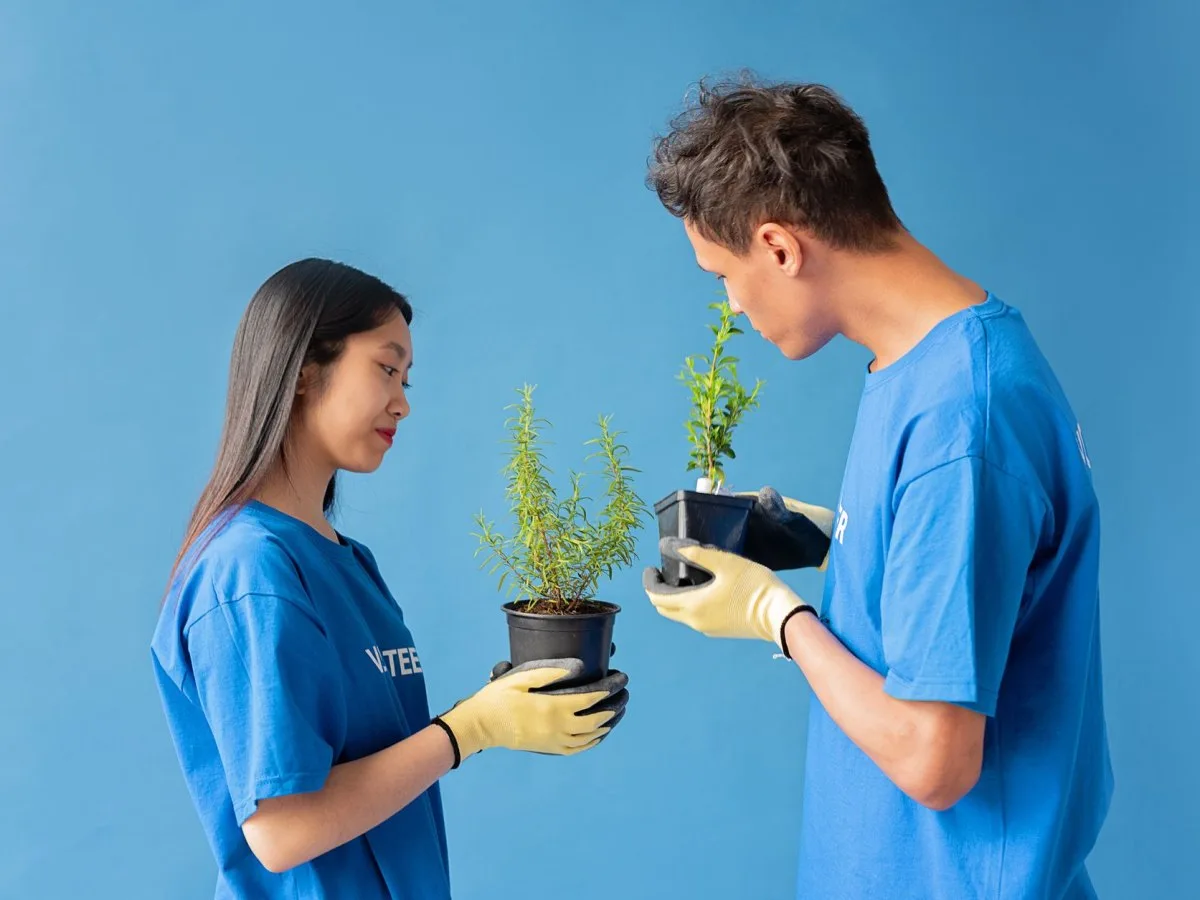
A garden as a place for learning
Growing Together proposes reconsidering the Dame Sylvia Crowe Garden at London’s Design Museum as a green space that can bring together learning, research and participation in its care. Initiated in partnership with the Design Age Institute in 2021, it explores design and horticulture as catalysts for positive social change and community connections in response to the planetary emergency.
The initiative relates the garden’s immediate setting to broader questions: how green spaces are cared for, which sustainable horticulture and design practices are considered, and how that work relates to local biodiversity. This connection expresses the project’s framework and aims, not a measured ecological impact.
A history alongside new uses
The garden is named after Dame Sylvia Crowe, the landscape architect who designed the landscaping for the former Commonwealth Institute in 1962. That historical reference sits alongside the intention to make the site an inclusive space for learning and research.
Reconsidering and reshaping the garden, and sharing its stewardship, frames design as an open process: observing a place, discussing its possibilities and exploring forms of collective care. The museum’s documentation notes the involvement of local residents in this work, without describing specific interventions or establishing how stewardship is currently shared.
Horticulture, participation and biodiversity
Growing Together connects horticulture with community ties, interdisciplinary dialogue, collaboration and action. An Opportunity Kensington job description mentions a volunteer group that met weekly to care for the space and develop skills. Because this information appears in a recruitment document, it cannot confirm whether the group is still active today.
The project also foregrounds sustainable design and horticultural practices and is linked to the Royal Borough of Kensington and Chelsea Biodiversity Action Plan 2022–2027. The documentation does not specify species, horticultural interventions or ecological outcomes, so concrete improvements to biodiversity cannot be attributed to the garden.
What an everyday space can reveal
A garden can provide a starting point for considering who takes part in its care, how decisions are shared and what knowledge can circulate among those involved. Here, that reading stems from the stated intention to make the site an inclusive space for learning and research and to involve local residents in reconsidering and sharing stewardship of it.
Maintenance can also be understood as part of design: what matters is not only the form of a space, but the relationships and practices that help sustain it. This is an interpretation of the documented approach, not an evaluation of outcomes or a claim that the approach can be transferred unchanged to other contexts.
The documented scope is specific: a garden at the Design Museum, an initiative carried out in partnership with the Design Age Institute, and a connection with the local biodiversity plan. Its interest lies in bringing care, learning and participation together around an everyday space, while leaving open questions about its practices and outcomes.
At a glance
Scope
Editorial reading; this is not a visit or a technical assessment.
Sources and references
Growing Together: Dame Sylvia Crowe Garden ↗21/11/2026
Design Museum Research - Design Museum ↗21/11/2026
Photograph · Photo by Mikhail Nilov on Pexels · Pexels License · Sources and references · Centred crop to 4:3, resizing and conversion to JPEG for House Angle.