





What this guide can help you do
Saving energy at home involves two related but distinct issues: reducing the electricity used by appliances and reducing the energy needed to heat the building. Changing the lighting does not replace an assessment of insulation or heating, and thermal renovation alone does not determine which heating system is suitable.
This guide focuses on homes in Germany. It helps you organize information and questions to gather; it does not replace an individual assessment of the building or the procedures for official programs.
Start by gathering information
Before deciding what to change, collect bills or consumption data, information about the equipment and, if available, the building’s energy performance certificate. Clarify your priority: reducing electricity use, improving comfort, planning thermal renovation, or preparing to replace the heating system.
An energy performance certificate provides indicators of a building’s efficiency and may include modernization recommendations. Certificates based on measured consumption and those based on calculated demand use different data and procedures; their values are not directly interchangeable. The certificate can be a starting point, but it is not necessarily a complete renovation plan.
Review electricity use room by room
Walk through the home and note which appliances are used in each room, which are left on or on standby, and what energy-saving options they offer. Simple measures include using switched power strips to turn off certain appliances, installing LED lighting, and using the energy-saving programs on household appliances.
Check that switching a device off completely will not interfere with how you use it. The effect depends on the appliances and each household’s habits; the information available does not make it possible to calculate an individual saving.
Plan insulation as part of the home
The roof, external walls, and basement ceiling can affect heat loss. Good insulation helps reduce the energy needed to heat the home, improves comfort near interior surfaces, and can help keep heat out in summer. The appropriate measure and its priority depend on the property.
When comparing proposals, assess the solution and how it will be carried out, not just the insulating material. Airtightness and reducing thermal bridges are important aspects of insulation planning. The proposal should explain which elements will be worked on and how the junctions between them will be handled.
If façade repairs are already planned, it may be useful to consider their scope together with the insulation work. Before contracting, ask for a proposal that describes the work and responsibilities for planning and execution.
Coordinate heating with renovation work
Reducing heat loss can change heating requirements. When planning a system, it is therefore worth considering the condition of the building envelope and heat distribution rather than assuming the building will remain unchanged.
Technologies covered in German heating-grant documentation include heat pumps, solar thermal systems, biomass, and connections to heating networks or building networks. The KfW grant for individuals, product 458, covers the installation of efficient heat generators or connection to a building or heating network. A technology’s inclusion in a program does not show that it is suitable for a particular home. Suitability depends on the building and the system design; request an assessment tailored to the property before contracting.
Check grants before making a commitment
The available documentation describes the KfW heating-grant program for individuals in residential buildings. The grant brochure, product 458, states that it is valid from 24 September 2026 and details eligibility requirements and conditions for the measures. The federal directive for individual energy-efficiency measures in buildings entered into force on 21 July 2026, according to its official publication. These are documents with different dates and scopes: for a specific application, consult the applicable official version and check that your measure and circumstances meet its requirements.
Before relying on a grant or signing a contract for work, check the current official documentation for:
- which body administers the specific grant;
- which work, equipment, and costs are eligible;
- which technical and eligibility requirements apply;
- which steps must be completed before work begins;
- which conditions must be included in the contract;
- which invoices and supporting documents you will need to keep.
Under the heating grant described here, KfW administers the grants, except for assistance with connecting a building to a building network, which is handled by BAFA. This allocation applies to that program; do not assume it applies to other grants. Confirm the responsible body and procedures for the specific measure in the official instructions.
How to find energy advice
The Individueller Sanierungsfahrplan (iSFP), or individual renovation roadmap, organizes recommendations for a complete or staged renovation and makes it possible to integrate specific measures into an overall view of the building. In Germany’s residential energy advice program (Energieberatung für Wohngebäude, EBW), funded consultations must be carried out, since July 2023, by experts listed in the energy-efficiency experts register. Since 2023, the iSFP has been the only report format funded by the EBW. These requirements apply to funding under that program; check the current conditions before contracting.
The KfW experts’ portal allows users to create confirmations related to applications and completion of work for heating-grant products. Consult the current official portal and documentation to determine which procedures apply to your case. When choosing an adviser, confirm that the person or company has experience with the specific work you need: planning a comprehensive renovation, designing a heat-pump system, and issuing an energy performance certificate may be different assignments.
When requesting a proposal, ask in writing:
- what information will be collected and what the home assessment includes;
- whether you will receive staged recommendations and an explanation of priorities;
- which planning or supervision tasks are included and which cost extra;
- whether the person or company can prepare the documentation required for the grant you are interested in;
- how insulation and heating will be coordinated.
Compare the scope and expected outcomes, not just the price. If the home has complex construction features, damp, heritage protection requirements, or other limitations, check that the proposal takes them into account.
Planning example: a home with an uninsulated roof
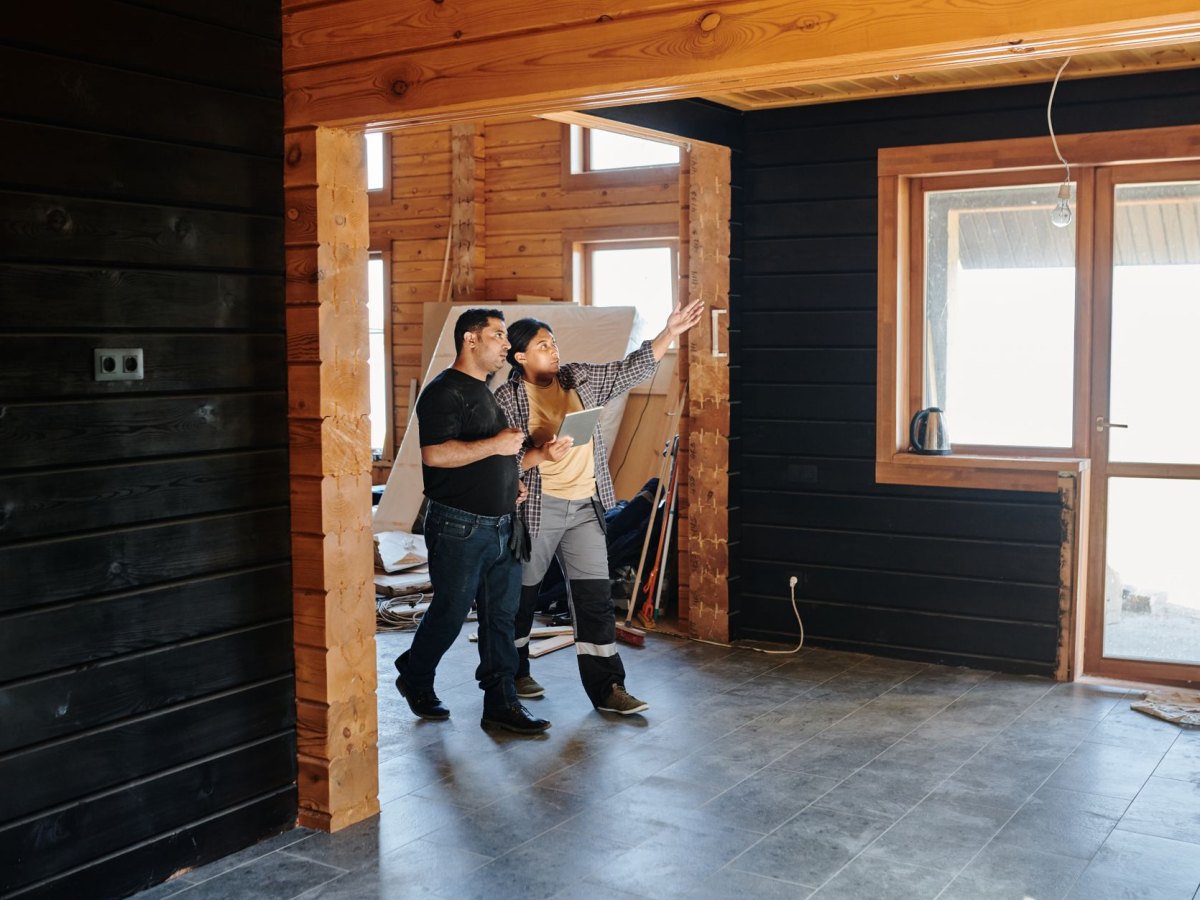
Imagine a house with an uninsulated roof, an old heating system, and electrical appliances from different generations. Its owners could first gather bills and available documentation; then review electricity use room by room and request an assessment that considers both thermal measures and heating. Before signing a contract for work, they could check the official conditions of any grant they intend to apply for.
This is an organizational method, not a technical recommendation for a specific home. Without information about the building and its equipment, it is not possible to determine which measure should come first, which heating system is suitable, or how much could be saved. Those questions require an assessment of the actual home.
Next step
Gather bills or consumption data, the energy performance certificate if available, and any information you have about the roof, façade, windows, heating, and electrical appliances. Choose one goal for your first review. Before contracting work or services, confirm the current requirements and procedures with the body responsible for the specific grant.
At a glance
Nexo request
- 1108
- nexo:broken-link:1108:priority:v1
- Energy Efficiency Initiative (dena)
- es
- Article in German about saving energy at home and energy-efficient renovation: energy audits, insulation, heating and heat pumps, public grants, and how to find an energy adviser. It would replace the link ‘Energy Efficiency Initiative (dena)’, whose page no longer exists.
- https://www.eainhorb.de/service/n%C3%BCtzliche-links/
- https://www.dena.de/themen-projekte/energieeffizienz/private-haushalte/
- 2a9b20a15bd6cd0f8a6c09bbf8a1d36fe76e5ebcbf4c263ba77281c48c0a3346
Priority authorization
- explicit_owner_instruction
- 1108
- highest_native
- 1
- 1
- 1
Required locales
- es
- en
- fr
- it
- de
- pt
Research required
1
Sources and references
Heizungsförderung für Bestandsgebäude: Heizen mit Erneuerbaren Energien | Verbraucherzentrale.de ↗19/11/2026 Verbraucherzentrale, “Heating grants for existing buildings: Heating with renewable energy”.
Tipps: So packen Sie die Wärmedämmung richtig an | Verbraucherzentrale.de ↗19/11/2026 Verbraucherzentrale, “Tips: How to approach thermal insulation properly”.
Energieausweis: Was sagt dieser Steckbrief für Wohngebäude aus? | Verbraucherzentrale.de ↗19/11/2026 Verbraucherzentrale, “Energy performance certificate: What does this profile for residential buildings tell you?”.
Energetische Sanierung | Verbraucherzentrale.de ↗19/11/2026
Für wen ein Energieausweis zur Immobilie Pflicht ist | Verbraucherzentrale.de ↗19/11/2026
Broschüre: Strom sparen im Haushalt - Anleitung für Verbraucher. | dena ↗19/11/2026 dena, “Brochure: Saving electricity at home — a guide for consumers.”.
Initiative EnergieEffizienz (der DENA) ↗19/11/2026 KfW, “BEG heating grant for individuals — residential buildings,” grant no. 458.
Informationen zum Expertenportal für die Heizungsförderung | KfW ↗19/11/2026 KfW, “Information about the experts’ portal for heating grants”.
Heizungsförderung für Unternehmen – Wohngebäude (459) | KfW ↗19/11/2026
Energieberatung und individueller Sanierungsfahrplan (iSFP) | dena ↗20/11/2026 dena, “Energy advice and the individual renovation roadmap (iSFP)”.
Initiative EnergieEffizienz (der DENA) ↗20/11/2026
Neue Heizung – welche ist die Richtige? | Verbraucherzentrale.de ↗20/11/2026
Heizung optimieren und Heizkosten sparen - so geht's | Verbraucherzentrale.de ↗20/11/2026
Individueller Sanierungsfahrplan (iSFP): Modernisieren mit Köpfchen | Verbraucherzentrale.de ↗20/11/2026
Wärmedämmung für Dach, Fassade und Keller spart Energie | Verbraucherzentrale.de ↗20/11/2026
Heizung tauschen – so geht's Schritt für Schritt | Verbraucherzentrale.de ↗20/11/2026
Initiative EnergieEffizienz (der DENA) ↗20/11/2026 Federal Ministry for Economic Affairs and Energy, “Funding directive for the Federal Funding for Efficient Buildings — Individual Measures (BEG EM)”.
Photograph · Photo by Mikael Blomkvist on Pexels · Pexels License · Sources and references · Centred crop to 4:3, resizing and conversion to JPEG for House Angle.