





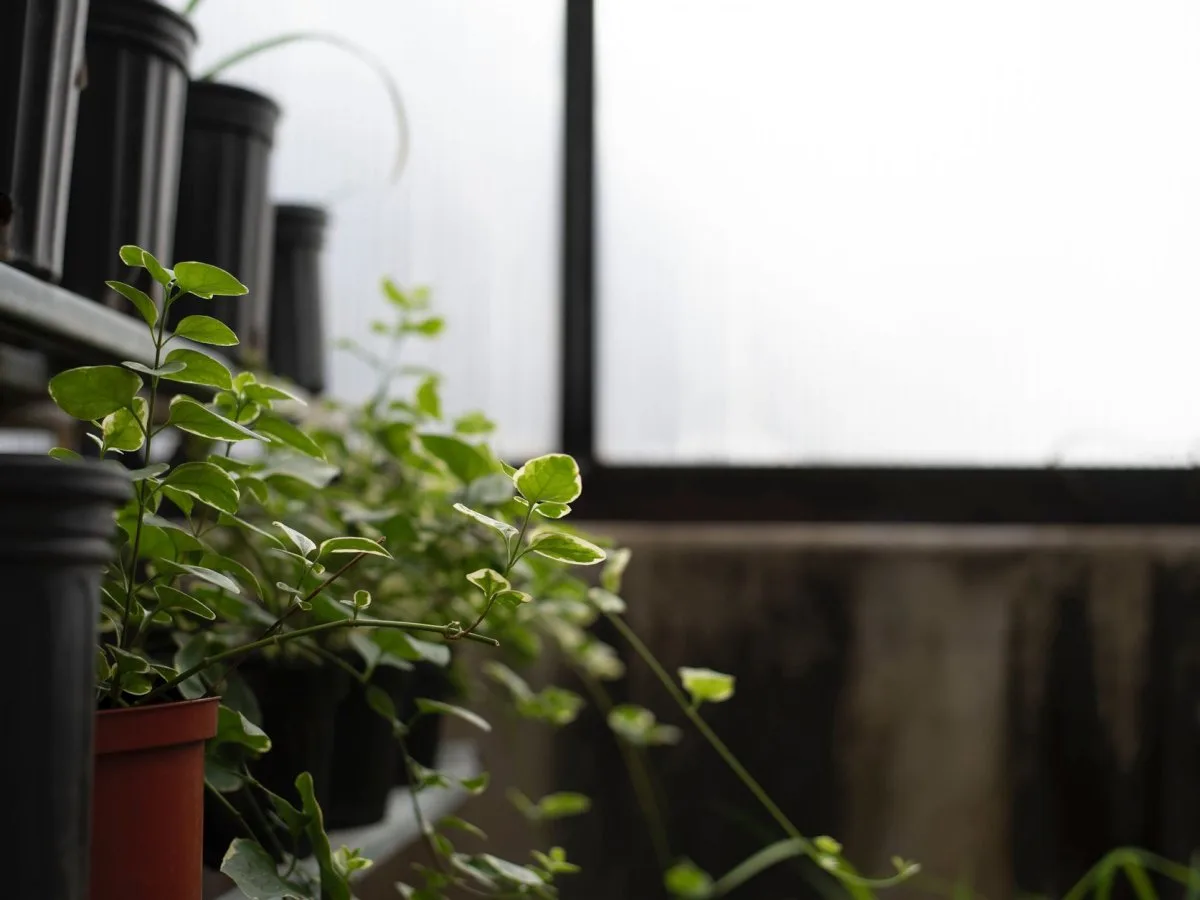
Gardens do not all dry out in the same way
When planning to be away, it is better to think less about following a uniform watering schedule and more about how the garden is arranged. Plants in pots have a limited amount of growing medium and generally need more attention than plants growing in the ground. Hanging baskets and small containers can lose moisture particularly quickly; potted edible crops and recent plantings also deserve priority.
By contrast, established trees, shrubs and herbaceous perennials are usually more resilient during short periods of dry weather. That does not mean they never need water: weather, soil and how well established they are all affect their needs. The age of a planting matters, as do its exposure to sun and wind.
Before you leave: organise plants and reduce exposure
Grouping pots in a sheltered, shady spot can reduce their exposure to the sun and help create a slightly more humid environment between the containers. If they can be moved, it is preferable to take them out of the strong afternoon sun. Heavy pots can be partly shielded with taller plants or garden prunings, without completely blocking ventilation.
The size and material of a container also affect how quickly it dries out. Large pots usually retain moisture longer than small ones; unglazed terracotta pots may dry out sooner because the material is porous. These differences help determine what to check first, but they do not replace checking the growing medium itself.
Before watering, check moisture below the surface: light rain does not always reach beyond the upper layers. When watering is needed, water slowly and directly onto the growing medium so that it reaches the roots rather than being lost on the leaves or through runoff. On hot days, watering early or in the late afternoon can reduce evaporation.
Removing faded flowers before you leave can also be part of the preparation. Light pruning may suit some vigorous plants, but it is not a universal task: avoid cutting back plants in full flower or those that have only just started flowering. The aim is moderate preparation, not imposing the same treatment on the whole garden.
What to prioritise
If someone can check the garden, the request will be more useful if it identifies vulnerable plants rather than asking them to water everything equally:
- Hanging baskets and window boxes.
- Pots, especially small or exposed ones.
- Tomatoes and other vegetables grown in containers.
- Newly planted trees, shrubs and herbaceous perennials.
- Houseplants, especially during long absences or warm periods.
Hanging baskets are particularly exposed to wind and can dry out quickly. If possible, taking them down and placing them in a sheltered, shady spot reduces that exposure. For absences of more than a few days, asking someone you trust to check on them is a more flexible option than relying on an improvised water reserve.
With tomatoes, irregular moisture can contribute to blossom-end rot, a dark, sunken lesion at the base of the fruit. Picking ripe or ripening fruit and watering around the roots before leaving are preparation measures described for this crop; they do not guarantee that problems will be avoided if conditions change.
Houseplants: light and moisture reserves
For a short summer absence, watering houseplants thoroughly before leaving may be enough for some plants. Moving them away from a very sunny window and into a cooler room can slow moisture loss. Needs vary from plant to plant, so there is no single solution that suits them all.
For a collection of small pots, damp capillary matting can provide a reserve: place the pots on the material, making sure it touches the drainage holes. Another option is to run a wick from a water container into the growing medium. These methods depend on the wick or matting staying in place and the reserve not running out or keeping the roots too wet. Plants that do not tolerate constant moisture may not be suitable for permanent reservoir systems.
Automating watering without overlooking its limits
A timed drip-irrigation system can be useful for people who are away frequently. Water is applied near the roots, but installing a system does not remove the need to understand each plant’s needs and check that the system is working. If it rains while you are away, an automatic supply that is too generous can keep the growing medium excessively wet.
Watering should be adjusted to the plants and the site, not to a rigid schedule. Before installing or using an automatic system, check local rules on water use. Collecting rainwater for the garden can also be useful when a suitable storage tank is available.
When you return: check before acting
A drooping plant is not necessarily dead. First check the condition of the growing medium and remove any parts that are clearly dry or damaged. If a pot has dried out completely, water poured from above may run through gaps at the sides without soaking the root ball properly. Submerging the pot may help rehydrate it, but take care not to leave it saturated.
After a period of stress, let the plant recover in a shady spot before returning it to a sunnier position. Plants will not all respond in the same way: recovery depends on the species, how long it has been dry and the conditions afterwards.
The most sensible preparation combines observation and priorities: protect containers and recent plantings first, check moisture rather than follow a fixed schedule, and ask for help when the absence will be long. That way, care can be adapted to the garden’s different areas, without assuming that all plants have the same needs.
At a glance
Scope
Editorial reading; it does not constitute a visit or a technical assessment.
Sources and references
How to look after your garden on holiday ↗21/11/2026
Container maintenance: Expert Guide | RHS Advice ↗21/11/2026
Growing plants in containers: Expert Guide | RHS Advice ↗21/11/2026
How to water containers: Expert Guide | RHS Advice ↗21/11/2026
Houseplants: Holiday Care Tips | RHS Advice ↗21/11/2026
Watering Plants Wisely | RHS Advice ↗21/11/2026
Photograph · Photo by Julissa Pires on Pexels · Pexels License · Sources and references · Centred crop to 4:3, resizing and conversion to JPEG for House Angle.