





A route between two places
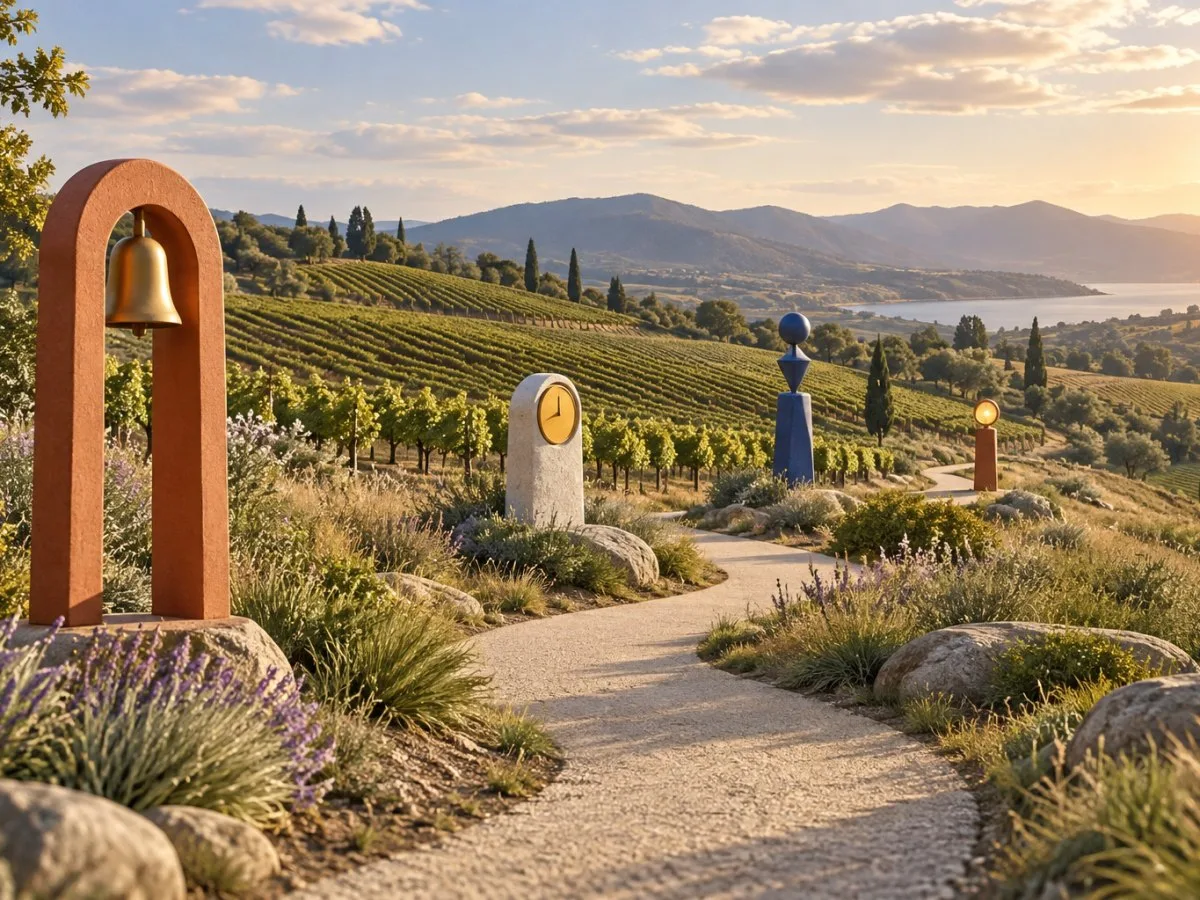
The Rehberger-Weg connected Riehen, Switzerland, with Weil am Rhein, Germany, linking two institutions: the Fondation Beyeler and the Vitra Campus. Along the route, artist Tobias Rehberger created 24 Stops, a series of 24 landmarks that marked the way and also had individual functions. The ten-year project ended on 31 October 2025.
The trail was five kilometres long and crossed a diverse natural and cultural landscape. Starting at the Naturbad Riehen natural swimming pool, the route passed through the vineyards of Tüllinger mountain before reaching the Vitra Campus. The walk was described as taking about an hour and a half; this is an approximate guide, not a substitute for up-to-date information about access or trail conditions.
The initiative originated within the framework of IBA Basel and was jointly developed by the Fondation Beyeler, the municipality of Riehen, Vitra and the town of Weil am Rhein. Swatch supported the production of the objects marking the route. The first twelve landmarks were installed in September 2015; all 24 were in place from June 2016.
Signs that are also objects
The landmarks include bells, birdcages, a waterspout, a weather house, a weather vane, beehives, cuckoo clocks, knots, a signpost, a mural and a billboard. The list also includes a fountain, street lamps, binoculars, a tree, a rubbish bin, a shelter, a high perch and birdhouses. It brings together familiar references and objects not usually associated immediately with wayfinding.
The landmarks are described as objects with functions of their own, capable of stimulating the imagination and telling stories. Their unusual colours and forms, together with their materials, define their visual language. As an interpretation of the project, this combination suggests that a sign can be more than an indication of direction: it can also draw attention to the path and its surroundings.
Landscape as part of the route
The route connected cultural institutions, municipalities and countries, while also offering an opportunity to discover stories about the surrounding area and its inhabitants and to interact with the natural landscape. In this sense, the design extended beyond a gallery: the path and the relationship between the landmarks and their surroundings formed part of the proposed experience.
Rehberger’s work combines disciplines such as painting, sculpture, design, graphic arts and architecture. It includes space-encompassing installations and objects created for specific interior or exterior locations, often with aesthetic and functional qualities. In 24 Stops, the range of pieces—from a bell and a fountain to a mural and a shelter—shows the variety of forms this relationship between object, use and place could take.
The series raises a useful question for thinking about other everyday spaces: can a sign fulfil its function without becoming invisible? One possible interpretation is that these landmarks turned wayfinding into an opportunity to look more attentively. This does not establish anything about the route’s comfort, accessibility or current condition, matters not specified in the available documentation.
A completed project
24 Stops ended on 31 October 2025. The details about the route and walking time therefore describe the documented trail but do not guarantee that it remains open or that all its elements are still in place. Current practical information and conditions may need to be checked before travelling.
At a glance
Scope
Editorial reading; this does not constitute a visit or a technical assessment.
Sources and references
24 STOPS. Rehberger-Weg ↗21/11/2026
24 STOPS. Rehberger-Weg ↗21/11/2026
24 Stops ↗21/11/2026
Tobias Rehberger ↗21/11/2026
The Project ↗21/11/2026