





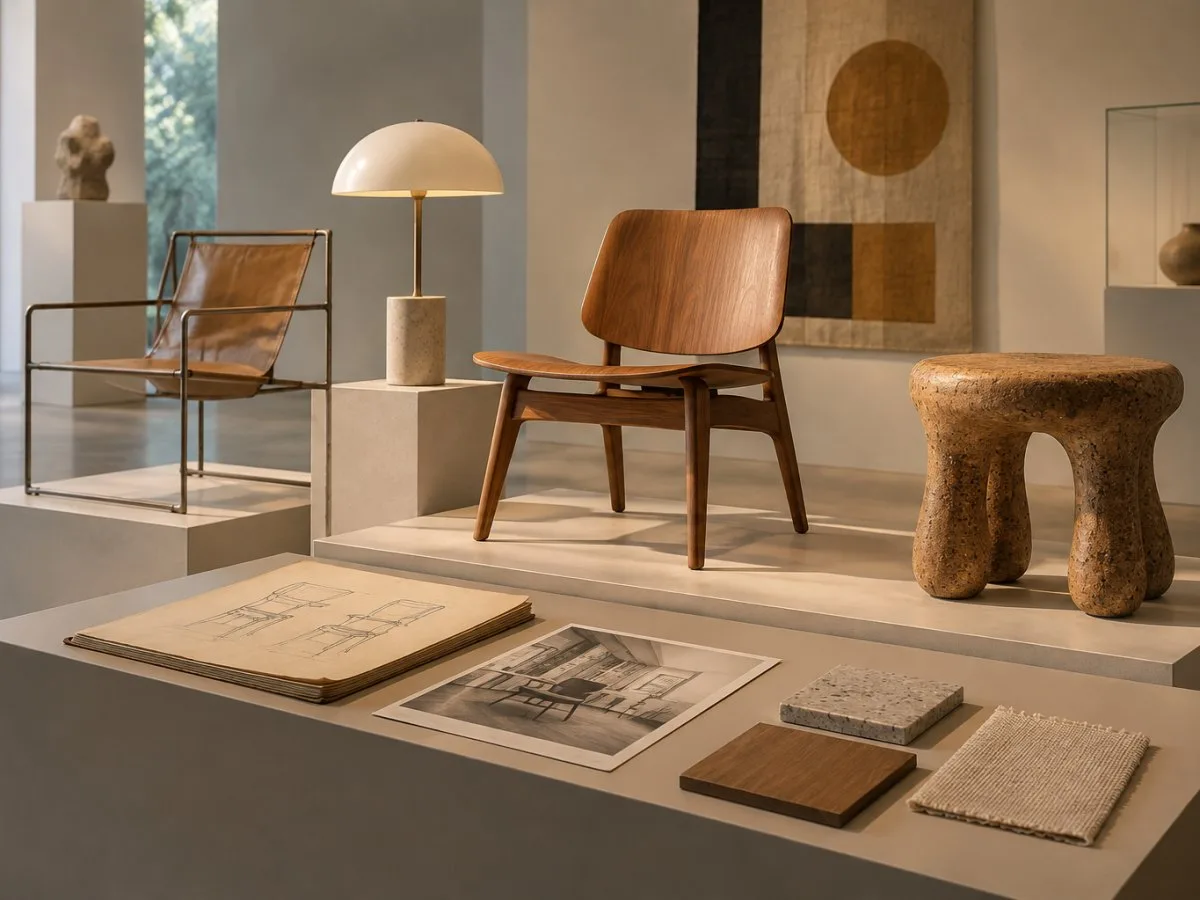
A collection that is also a way of telling stories
The Vitra Design Museum collection brings together design objects, documents and archives, but its significance is not limited to preserving objects. At the Vitra Schaudepot, a selection of more than 400 pieces of modern furniture, from the 19th century to the present, offers a journey through changes in style and technique. The collection also invites reflection on how design responds to social change and relates to architecture, art and technology.
The collection is substantial: the museum puts its total holdings at around 20,000 objects, including some 7,000 pieces of furniture and more than 1,000 lighting objects. It also preserves archives and estates associated with designers such as Charles and Ray Eames, Alexander Girard and Verner Panton. These figures describe the museum’s holdings as a whole, not what is on view in the galleries at any one time.
From a chronological display to research themes
Designed by Herzog & de Meuron, the Schaudepot arranges its presentation across three areas totalling around 1,600 square metres. The main hall contains the permanent exhibition, organised chronologically. The selection ranges from bentwood furniture from the early development of modern design to pieces associated with Le Corbusier, Alvar Aalto and Gerrit Rietveld, as well as 3D-printed objects, prototypes, experimental models and lesser-known or anonymous pieces.
The sequence is not a definitive list of milestones. By bringing objects from different periods and backgrounds into relation, it makes it possible to observe how materials, techniques and ideas about furniture change. Temporary displays of objects from storage expand this account without requiring the entire collection to occupy the galleries permanently.
On the lower level, displays drawn from other holdings are arranged thematically and reveal less visible aspects of museum work. Conservation and curatorial practice are presented as activities connected to the objects, rather than as tasks separate from their public interpretation. The collection also includes smaller groups of objects, such as cutlery, consumer electronics and architectural models, as well as a library and documentary archive.
Conservation also involves research
The collection is not static: it continues to grow, and objects are lent to museums and galleries. Their preservation relies on the museum’s own conservation workshop, which gives particular attention to the problems posed by ageing plastics. This work is a reminder that design history is not only about finished forms; it also involves materials that change over time and require research to understand how they can be preserved.
The archive, in turn, preserves designers’ holdings and documents such as company publications, brochures, posters, patents and drawings. The specialist library for design and architecture complements these materials. Together, objects and documents provide context for the collection and support exhibitions and research projects.
Two buildings, two functions
The way the collection is displayed is connected to the campus architecture. The museum’s main building, designed by Frank Gehry and opened in 1989, was originally conceived to house the collection. Today it hosts major temporary exhibitions. The Schaudepot, by contrast, makes a permanent presentation of a selection from the holdings possible and supports a diverse educational programme.
This arrangement offers a useful way to read the museum: an exhibition building and a collection space do not have to serve the same purpose. One can host changing displays; the other can provide a stable point of reference, even as its visible selection is supplemented by temporary presentations.
Making visible the work that usually happens behind the scenes
The museum experience extends beyond the display cases. At the Schaudepot, detailed information about the objects is available through a digital catalogue that visitors can access on phones or tablets. From the café, visitors can see into the offices and library, which welcomes researchers and students by prior arrangement. The conservation workshop can be visited as part of guided tours of the campus.
These choices give the public clues about how knowledge is built around an object: its appearance matters, but so do its provenance, documentation, conservation and connections with other objects. The exhibition offers a selection; the archives, library and workspaces reveal some of the infrastructure that makes it possible to study that selection.
A way of reading everyday design
The museum’s premise is that design is now part of everyday life, and that an institution devoted to it can do more than collect and display objects. It can open up conversations, reveal social connections and link design with other fields. At the Schaudepot, this approach takes shape in the coexistence of iconic, experimental and anonymous pieces, and in the relationship between public display and research.
Viewing the collection from this perspective helps prevent furniture history from being reduced to a succession of celebrated names. Well-known pieces share space with prototypes, models and less-recognised objects; furniture is considered alongside lighting, archives and conservation practices. The result invites visitors to observe how design takes shape, how it is documented and what questions it leaves open about society.
At a glance
Scope
Editorial reading; it does not constitute a visit or a technical assessment.
Sources and references
The Vitra Design Museum Collection ↗26/10/2026
Vitra Design Museum | Official Vitra® Online Shop ES ↗26/10/2026
Collection ↗26/10/2026