





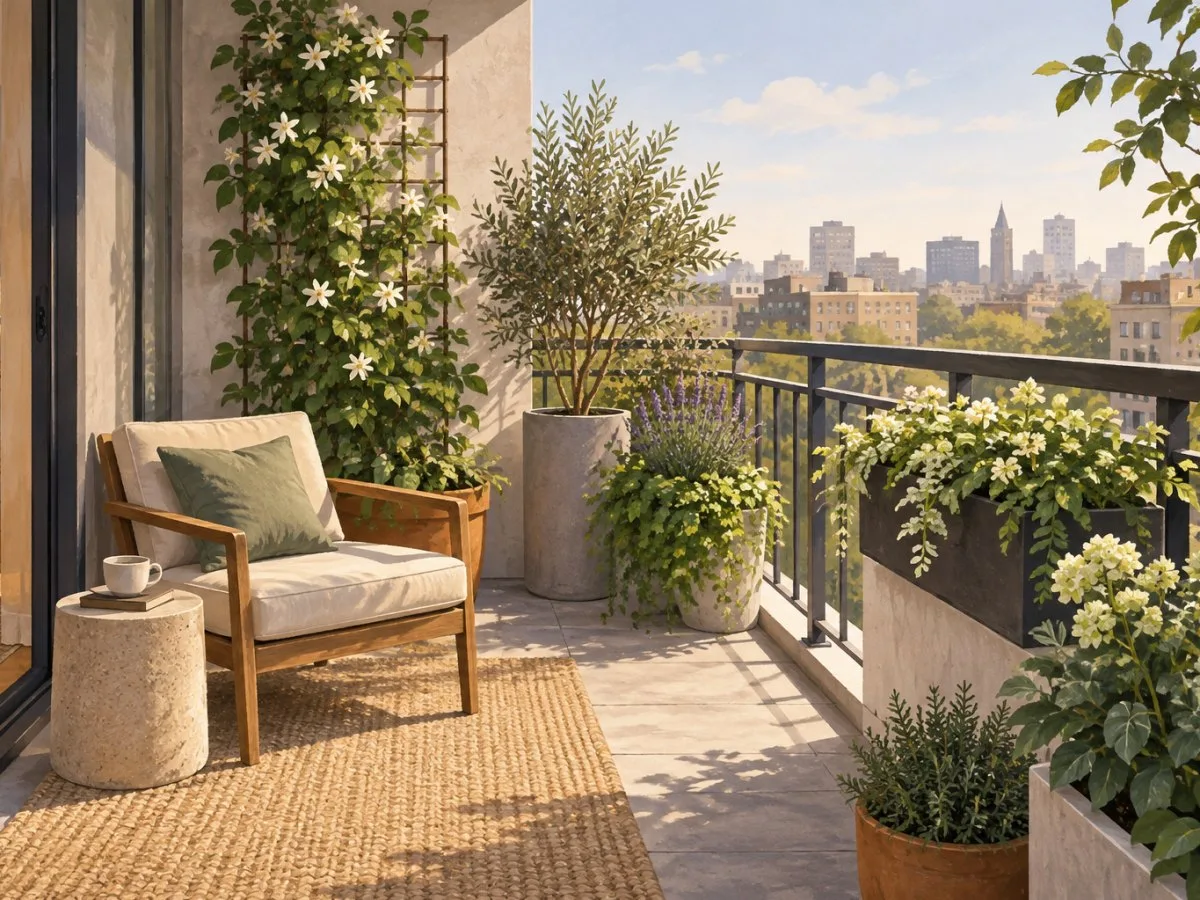
A small outdoor space does not have to accommodate every function of a larger garden. It can be a place to sit, grow plants or observe them. The compact gardens presented at RHS Chelsea 2025 explore different possibilities, from seating and containers at different heights to water features. One way to organise decisions is to start with how you want to use the space rather than trying to include everything.
Start with how you’ll use it
Before choosing pots or plants, consider what role the space will play: will it be somewhere to relax, grow things, read or enjoy the plants? That priority can guide the layout and help you decide which elements are essential.
Among the design tips for Fettercairn Wilderness Retreat, the ssh scapes team suggests focusing on one aspect of how the space will be used, connecting the elements to that goal, and getting the practical details right before making the space beautiful. The designer of MS Amlin Peace of Mind Garden, meanwhile, recommends avoiding unnecessary items: simplicity can create a sense of spaciousness and give the overall design a clear purpose.
Make use of walls and height
When floor space is scarce, walls, railings and structures provide other surfaces for plants. The RHS guide suggests growing climbers on walls and fences, training them along surfaces, and placing plants on shelves or stands. It also recommends thinking in every direction—up, along and around—instead of concentrating plants on the ground or in corners.
Containers at different heights can create a layered composition. For climbers, the guide recommends choosing the largest container that will fit in the space, giving them enough soil to grow in. There is no need to fill every surface: a structure or plant that draws the eye can sit alongside clear areas.
To maintain interest throughout the year, the guide suggests combining features such as evergreen plants, spring bulbs, and colour or texture in other seasons. The choice depends on the conditions in the space and the plants you want to grow.
Choose plants to suit the space
Aspect affects how much sun and shade a space receives, as well as its temperature and exposure to wind. Observing these conditions can help you choose suitable plants. The RHS guide recommends selecting tough plants suited to wind-exposed balconies and extreme weather conditions.
Containers let you choose a growing medium to suit the plants’ needs rather than relying only on the available soil. They need to hold the growing medium and have drainage to prevent water from collecting. Objects can also be reused as planters if they meet these conditions. Hanging baskets make use of overhead space, although they may need more maintenance and can dry out quickly, especially in exposed locations.
Think about how the space will work
A small garden is not just a composition to look at. The Chelsea gardens include seating and corners designed for relaxing, reading or enjoying the plants. When planning your own space, it may be useful to consider how you will access the containers and what layout will make the space comfortable to use. This is a practical design suggestion, not technical advice that applies equally to every space.
Moveable containers can offer flexibility if the way you use the space changes. The design tip associated with Blue Mind Garden notes that movable pots can be set aside to make room for larger gatherings.
Water and biodiversity: examples with limits
Some Chelsea designs incorporate water as part of the garden experience. The tip associated with Blue Mind Garden suggests that even a small bowl can attract urban wildlife and provide a visual and sensory effect; it also advises checking the space’s weight limits. The bowl suggestion does not mean that every balcony is suitable for one.
C6 offers another example, but it is a back garden, not a balcony. Its design includes a copper tank that gently trickles into a channel; the channel forms part of a rainwater collection and sustainable drainage system. This installation illustrates a solution in the specific context of that garden; it does not show that it can be transferred as is to a terrace or balcony.
The permitted load depends on the particular conditions of each structure. The available information is not enough to determine what a specific balcony can support, so do not assume it is suitable before adding water, heavy containers or other installations.
A short method for organising decisions
- Define the main use. Decide whether the space will be used primarily for relaxing, growing plants, reading or enjoying them.
- Consider the conditions. Take aspect, light and exposure to wind into account when choosing plants.
- Think in several levels. Consider the ground, walls and railings, without assuming that every surface is suitable for every installation.
- Choose elements with a purpose. Decide which plants, containers or structures serve the intended use.
- Check practical requirements. Containers need drainage, plants need suitable conditions, and heavy items must remain within the space’s load limits.
The compact gardens show that a small space can accommodate different approaches. A standout plant, a wall put to use or a place to sit can give it character without needing to accumulate things. The question is not how many items will fit, but how well the overall design serves the intended use.
At a glance
Scope
Editorial reading; this is not a site visit or a technical assessment.
Sources and references
Small space garden tips from RHS Chelsea ↗10/11/2026
Planting design for small garden spaces ↗10/11/2026
The Pathway Garden | RHS Chelsea Flower Show 2025 ↗11/11/2026
C6 designed by Joshua Fenton at RHS Chelsea Flower Show 2025 / RHS ↗11/11/2026
Fettercairn Wilderness Retreat | RHS Chelsea Flower Show 2025 ↗12/11/2026