





Before buying: decide whether you need it
A responsible purchase starts by distinguishing a need from the desire for something new. If an object still does its job, you can keep using and caring for it. If it breaks, consider whether it can be repaired safely; if you no longer need it, think about whether another person or organisation could reuse it. Buying second-hand can also be an option when the product is suitable for its intended use and you can check its condition and the information available.
If you are going to buy, compare products that serve an equivalent function. Decide what you will use it for and note what you know—and do not know—about each option. A product’s life cycle comprises connected stages, from obtaining or generating raw materials through manufacture, distribution, use, maintenance and end of life. Considering this journey helps prevent the decision from being reduced to price or a single environmental claim.
You can also ask who produced what you are buying, where and under what circumstances, and what information the company provides about its supply chain and working conditions. You may not always get complete answers. A lack of information does not, by itself, prove that there is a problem, but it is worth noting rather than treating a marketing statement as proof.
Compare price, use and maintenance
The initial price alone does not show how much it will cost to use a product. Depending on the category, relevant factors may include consumption during use, maintenance, spare parts, repairs and end-of-life management. There is no universal figure for how long a product will last: use, care, surroundings and the availability of parts can all have an influence.
Gather the available information and distinguish between manufacturer information, label data and your own estimates. If you calculate a cost of use, use your household’s actual prices and habits, state the period and assumptions, and do not present the result as a measurement or a guarantee. Comparing price and consumption is useful only when the options provide a comparable function and the calculation’s limitations are explained.
| What to compare | Practical question |
|---|---|
| Function | What specific need does it meet? What features do I not need? |
| Price | What is included in the price? Are there documented costs for maintenance, parts or repairs? |
| Use | What consumption or resources does it require, and where does that information come from? |
| Care | What maintenance instructions are provided? Can I follow them? |
| Repair | Are parts, manuals or technical service identified? What is known about their availability and cost? |
| End of use | Can it be sold, given away, reused or taken to a suitable local collection point? |
For claims such as “lasts longer” or “repairable”, check which product and model they refer to, what document supports them, when it was published or updated, and what conditions or limits it states. If there is no comparable data, make that uncertainty clear.
Carbon footprint and other impacts
A product’s carbon footprint expresses the direct and indirect greenhouse gas emissions associated with activities across its life cycle. It is an indicator of climate impact, not a measure of all the product’s environmental, social or economic impacts.
To compare two footprint figures, check that they relate to an equivalent function, use the same units and have comparable life-cycle boundaries. Review which stages they include—for example, raw materials, manufacturing, transport, use and end of life—and what assumptions they apply. An assessment that ends at manufacturing is not equivalent to one that also includes use and end-of-life management. If the method, boundaries or reference unit are not explained, the figures do not support a robust comparison.
Understand labels and environmental claims
Labels answer different questions. For categories covered by EU rules, the energy label provides information about energy consumption and may show other relevant parameters, such as noise, water consumption or capacity; the information depends on the category. The A-to-G scale is used in the relevant categories. Do not compare classes for different product types as though they measured exactly the same thing.
QR codes on the relevant labels link to model information in the European EPREL database. Before opening a QR code, check that the address shown begins with the official ec.europa.eu domain. Also verify that the label matches the product: a fake or overlaid QR code may lead to a fraudulent website. If in doubt, search for the product in EPREL using its identifier. Parameters depend on the category and model.
The EU Ecolabel is a voluntary European Union label for goods and services in groups with established criteria. It indicates that a reduced environmental impact over the life cycle has been demonstrated in accordance with the criteria for that group. Its scope depends on the category and those criteria: it does not certify a particular product lifespan or replace an assessment of whether the product meets your needs.
For any environmental label or claim, check:
- Product and model: Does the information correspond to the option you are considering?
- What is assessed: Does it concern energy consumption, environmental criteria for a category or something else?
- Document and date: Is there an identifiable fact sheet, declaration or set of criteria? When was it published or updated?
- Scope and limits: Which stages, materials or features are included, and which are excluded?
- Verification: Is the claim supported by verifiable criteria and data, or only by a promotional term such as “green”?
A label can be useful within its scope; do not extend its conclusions to aspects it does not assess.
Questions by product type
Furniture
Before choosing a table, chair, wardrobe or other piece of furniture, consider its function, the available space, how often it will be used and the conditions in your home. Compare the available information about materials, cleaning and maintenance. If repairability matters to your decision, ask about replaceable parts, instructions, technical service and specific conditions. Information about parts, services and costs may be limited and depends on the product and provider; check it for the specific model. Do not assume that every component can be repaired or that parts will remain available indefinitely.
A used piece of furniture may be an alternative if its condition and function suit your needs. Take necessary repairs and any information you cannot confirm into account before deciding.
Household textiles
For curtains, bedding, rugs and other textiles, compare the intended use with the care and cleaning instructions. Ask about the composition and any available information on origin or production. If an item wears out, consider whether it can continue to be used, repaired or put to another use before replacing it.
Appliances and lighting
Check whether the product is covered by energy labelling and consult the information for its specific category. Compare relevant parameters for the same function and review consumption, maintenance and available repairability information. An energy class does not predict how long an appliance will last.
If something breaks, consult the instructions and an appropriate technical service. Do not handle electrical appliances while they are plugged in or attempt repairs for which you lack the knowledge or tools. If you have safety concerns, seek help from a qualified professional.
Everyday products
If the product does not have a relevant energy label, compare its function, verifiable information about materials and care, packaging, and options for reuse or collection at the end of its use. Do not assume that a general environmental claim covers all these aspects. If specific documentation is missing, note which claims you cannot verify.
Legal guarantee and commercial guarantee in the EU
When you buy new goods from a professional seller in the EU, EU rules establish a minimum two-year legal guarantee from the date you receive them. If a product is defective or does not match what was advertised, the seller must repair or replace it at no cost. If that is impossible, or the seller cannot do so within a reasonable time and without significant inconvenience, you may be entitled to a full or partial refund, depending on the circumstances. National laws may offer greater protection, and the specific rules depend on the country and type of purchase.
Second-hand goods bought from a professional seller are also covered by the minimum two-year guarantee. In some countries, a shorter period may be clearly agreed at the time of purchase, but it can never be less than one year. Purchases from private individuals are outside these EU consumer guarantee rules. Check the information that applies in the country where you made the purchase.
A commercial guarantee, if offered, is additional protection from the seller or producer; it does not replace or reduce applicable legal rights. Read its written terms: what it covers, for how long, what exclusions or costs apply, and whom to contact. Keep the proof of purchase and the product and guarantee documentation.
If a problem arises, contact the seller and explain the defect and the solution you are requesting. For guidance on national rules, consult the information for the country where you bought the product or contact the European Consumer Centre in your country.
Maintain, repair, reuse or replace
If a product still serves its purpose, you do not need to replace it just because a new model has appeared. Follow the care instructions and address problems before they worsen, provided it is safe to do so.
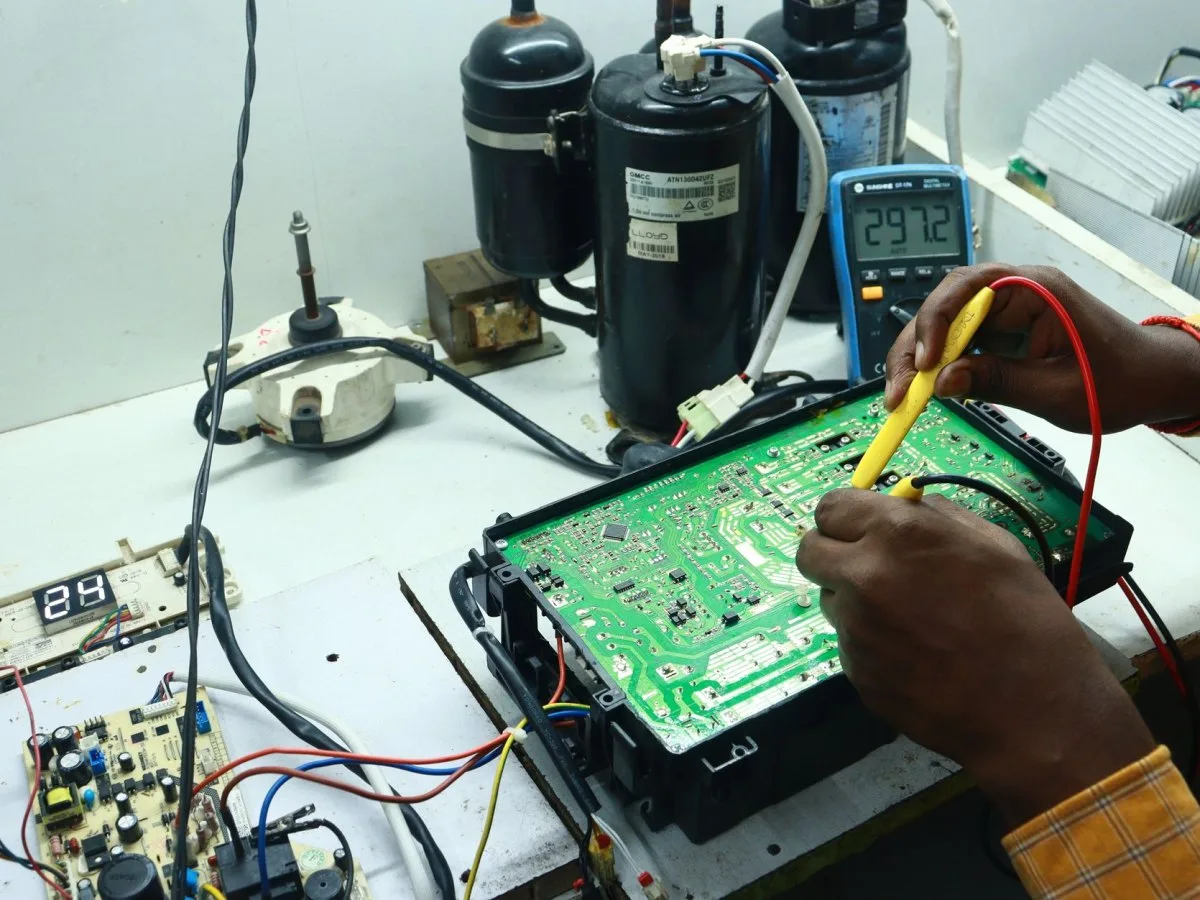
Before carrying out a repair, consult the manufacturer’s instructions and check whether the task requires specific knowledge or tools. Do not handle electrical equipment while it is plugged in or components that may pose a risk. If you cannot repair the product safely, consult a technical service. Repair availability, price and terms depend on the product and service: check them before deciding.
If you no longer need the product, consider selling it, giving it away or passing it to an organisation that can reuse it, provided it is still suitable for that use. If it cannot be repaired or reused, check local collection and recycling options for its category. Reduce, reuse and recycle are different choices: avoiding an unnecessary purchase or extending an item’s use may be preferable to recycling it too soon.
Checklist to copy
| Decision | What to check or note |
|---|---|
| Do I need to buy? | The need it meets; whether an existing object already serves that function; whether it can be maintained, repaired or reused. |
| Which options am I comparing? | Products with equivalent functions; category and model; information that is missing. |
| What does use involve? | Relevant consumption, documented maintenance, parts and services; assumptions behind any calculation. |
| What impact has been measured? | Indicator, unit, life-cycle stages, boundaries, method and date. |
| What do I know about production? | Available information about origin, supply chain and working conditions; aspects without documentation. |
| What does the label mean? | The product and model it applies to, the relevant criteria and what it does not cover. |
| What protection applies? | Legal guarantee based on the type of purchase and country; written terms of any additional commercial guarantee; exclusions, contact details and proof of purchase retained. |
| What will I do at the end? | Maintain, repair safely, sell, give away, reuse or use the relevant local collection service. |
A responsible choice does not require finding a perfect product. It means comparing alternatives using verifiable information, distinguishing what is documented from what is not, and considering an object’s journey before, during and after purchase.
Further resources
- Responsible consumption — Junta de Andalucía: questions and advice for thinking about origin, production conditions, packaging and reuse options.
- Life Cycle Terminology — Life Cycle Initiative: a glossary of terms related to life cycles and life-cycle assessment.
- EU Ecolabel — European Commission: information about the EU’s voluntary label, its product groups and criteria.
- Understanding the Energy Label — European Commission: explains the elements of the energy label and how to look up product information in EPREL.
- International labour standards as human rights — International Labour Organization: background on labour rights and fundamental principles at work.
- Guarantees — Your Europe: information for checking the guarantees applicable where you made your purchase.
These resources cover different areas of information; none replaces checking the data for a specific product or supports conclusions beyond its scope.
At a glance
nexo id
217
Sources and references
Consumo responsable — Junta de Andalucía ↗16/11/2026
Life Cycle Terminology — Life Cycle Initiative ↗16/11/2026
EU Ecolabel — European Commission ↗16/11/2026
Understanding the Energy Label — European Commission ↗16/11/2026
International labour standards as human rights — International Labour Organization ↗16/11/2026
Garantías — Your Europe ↗16/11/2026
Photograph · Photo by Multitech Institute on Pexels · Pexels License · Sources and references · Centred crop to 4:3, resizing and conversion to JPEG for House Angle.