





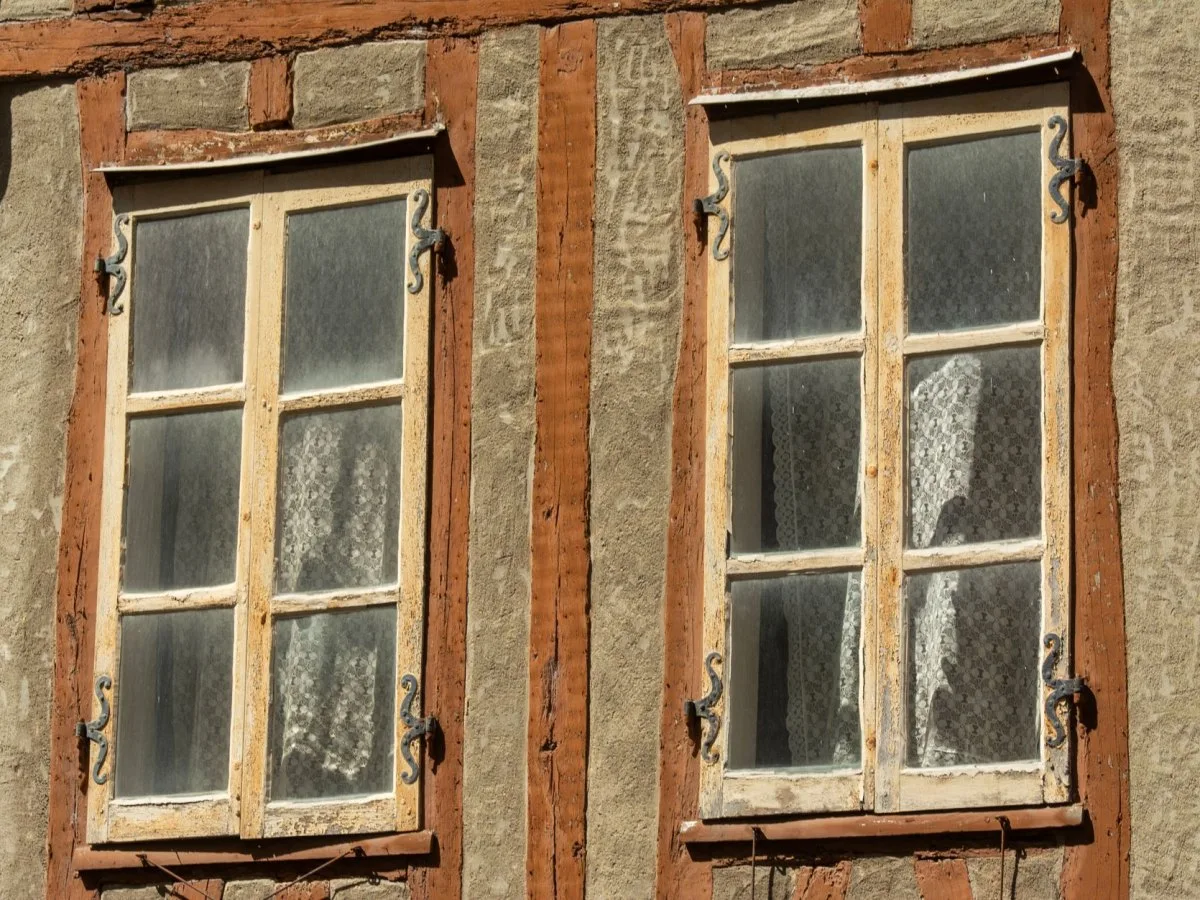
Before planning work: check what is protected
A building’s listed status does not mean it cannot be renovated. It means that some interventions must be assessed in advance and may require approval, depending on the location and type of work. First, check which property is protected and the scope of that protection; do not assume it applies only to the façade.
In Berlin, the list, map and database of listed buildings provide public information about buildings, gardens, groups of buildings and other protected assets. The list is updated periodically, but the information available online is not legally binding confirmation. To obtain an official determination of a property’s heritage status, you can contact the Landesdenkmalamt Berlin with the street, house number and neighbourhood.
Protection may cover elements associated with a building that form a unit of heritage value with it, such as staircases, floors, windows, interior doors or ancillary buildings. In a protected garden, paths, benches, sculptures and their edging may also be included. These elements are not all protected automatically: their status depends on the individual case and the information applicable to the property. If the register does not clarify the status of a particular feature, consult the district heritage authority before designing the work.
Which projects may require approval
In Berlin, alterations, repairs and restorations that affect a listed building’s appearance require approval from the competent authority. The requirement may also cover work inside the building, gardens, ancillary features and the surroundings that affect how the asset is perceived. It is advisable to consult the authority before planning work such as:
- renovations, repairs, upgrades or replacements that alter a listed building;
- work to interior spaces or features associated with the building;
- pruning or new planting in protected gardens;
- ground disturbance in areas with archaeological sites;
- work in the surroundings that define the character of a listed building.
This list is indicative; it does not establish whether a specific project requires a permit. The protection status and the nature of each intervention matter. Even work that seems minor may affect a protected feature. If in doubt, describe the proposed work to the competent authority and ask whether approval is required.
Heritage approval does not replace other permits that may be required under other public regulations, such as building consent or a tree-felling permit. Check separately which requirements apply to your project.
Whom to contact, and in what order
In Berlin, applications are normally submitted to the Untere Denkmalschutzbehörde (district heritage protection authority) for the district where the listed building is located. Before applying, contact that authority for guidance on the procedure and documentation. For listed properties belonging to the Prussian Cultural Heritage Foundation, federal constitutional bodies, foreign diplomatic and consular missions, and the state representations to the Federal Government, the Landesdenkmalamt Berlin performs the functions of the authority.
A practical sequence is:
- Locate the property and check its record. Consult the list, map and database of listed buildings. If you need official certainty about its heritage status, request it from the relevant authority.
- Define the intervention. Note which features will be altered, where they are, what you intend to do and why.
- Speak to the competent authority before commissioning or starting work. Ask whether the proposal requires approval and what specific documentation is needed.
- Submit the application and wait for the decision. In Berlin, do not start work until the relevant approval has been granted.
- Check for other permits. Heritage approval does not remove requirements under other public regulations.
How to prepare a useful application
To assess a proposal, the authority needs sufficient information about the property and the planned work. In Berlin, an application normally includes:
- details of the applicant, the property and the proposed work;
- a declaration of ownership or authorisation to act on the owner’s behalf;
- a description of the measure and its purpose;
- clear photographs of the property as a whole and of the features affected;
- plans or drawings showing the location and scope, such as a site plan, floor plan or elevation.
Depending on the work—for example, work to the building envelope, interior, a garden or an archaeological area—the authority may request additional documents. Unforeseen circumstances may also arise during construction, making further documents necessary to decide how to proceed. Agree in advance which plans, details or technical information are needed: there is no single document list that applies to every project.
In Berlin, you can submit an application through the digital procedure, by email or in writing to the competent district authority. The online service allows you to submit an initial application, request an extension and provide requested documents. Digital submission makes it easier to send an application, but it is not approval: wait for the decision before starting work.
Conservation and energy efficiency: consult official guides
Energy-related work on listed buildings should be considered in light of the property and its heritage value. The Landesdenkmalamt Berlin brings together guidance on energy efficiency, solar energy and protection from summer heat. These materials are for information and for developing a proposal; they do not replace consultation with the competent authority or determine by themselves whether a particular intervention can be approved.
The Berlin guide Denkmale und Energieeffizienz addresses improvements to the building envelope and optimisation of heating and cooling systems, as well as integrated energy planning. It includes diagrams, checklists and practical examples. There are also specific materials on solar installations on listed buildings and protection from heat.
Conservation and repair can help extend the use of existing elements and preserve resources. This does not mean that any particular material, product or solution is suitable for every listed building. To assess a specific measure, consult the heritage authority and, where appropriate, specialist planning professionals.
Example: replacing windows in a listed home in Berlin
Suppose the owner wants to replace the windows. Before commissioning the work, they should confirm which windows and construction phases are covered by the protection, photograph the existing windows and document their locations. They can then describe the proposal and ask the competent authority which plans, details and information about the proposed solution it needs for its assessment.
Window replacement is an intervention worth consulting the authority about and may require approval. It is not possible to determine in advance whether a particular solution will be approved, which material should be chosen or what conditions the authority will impose. The decision depends on the property and the proposed intervention. Do not commission or start the work on the assumption that an informal consultation, a public record or a different permit already authorises the heritage intervention.
Berlin and Brandenburg: do not generalise from local rules
The administrative steps described above apply to Berlin. Heritage law and the competent authorities vary between federal states; do not automatically transfer the Berlin procedure to another territory.
In Brandenburg, regional law distinguishes, among other categories, architectural, technical, garden, group and archaeological monuments. It also provides for protection of a monument’s surroundings when relevant to its preservation, appearance or urban-planning significance. Entry in the monuments list is not a condition for legal protection to apply.
For a project in Brandenburg, consult the current version of the law and the competent authority in that territory. The legal categories and principles described here do not, by themselves, determine which approval applies to a particular project.
Guides and next steps
If the property is in Berlin, start by locating it in the list, map or database of listed buildings. Then contact the competent authority to check the scope of protection, determine whether the intervention requires approval and agree on which documents to submit. For guidance on energy efficiency, solar energy or protection from heat, consult the Landesdenkmalamt Berlin’s guides; for a decision on your project, contact the competent authority.
Pages and procedures may change. Confirm the applicable requirements with the competent local authority before commissioning or starting work.
At a glance
Nexo request
- 749
- nexo:broken-link:749:priority:v1
- Article in German about the conservation of listed buildings (Denkmalpflege): basic principles, which projects require a permit, traditional materials and where to find official technical guides
- es
- Article in German about the conservation of listed buildings (Denkmalpflege): basic principles, which projects require a permit, traditional materials and where to find official technical guides.
- https://lebenmitkulturgut.de/nuetzliche-links/
- https://www.vdl-denkmalpflege.de/veroeffentlichungen
- e86e863a6fb64d23909ffa099b4bef0d74ed6bc0457e403bf456ac4c08a3d2ee
Priority authorization
- explicit_owner_instruction
- 749
- highest_native
- 1
- 1
- 1
Required locales
- es
- en
- fr
- it
- de
- pt
Research required
1
Sources and references
Antrag auf denkmalrechtliche Genehmigung - Berlin.de ↗19/11/2026
Denkmal - Denkmalrechtliche Genehmigung beantragen - Dienstleistungen - Service Berlin - Berlin.de ↗19/11/2026
FAQ - Antworten auf Fragen rund um Ihr Denkmal - Berlin.de ↗19/11/2026
Denkmal und Klimaschutz - Berlin. ... ↗19/11/2026
Energetische Sanierung an Denkmalen - Berlin.de ↗19/11/2026
Denkmalschutz ist Klimaschutz: Aktuelle Neuerscheinung - Berlin.de ↗19/11/2026
Photograph · Photo by Jan van der Wolf on Pexels · Pexels License · Sources and references · Centred crop to 4:3, resizing and conversion to JPEG for House Angle.