





From material to object
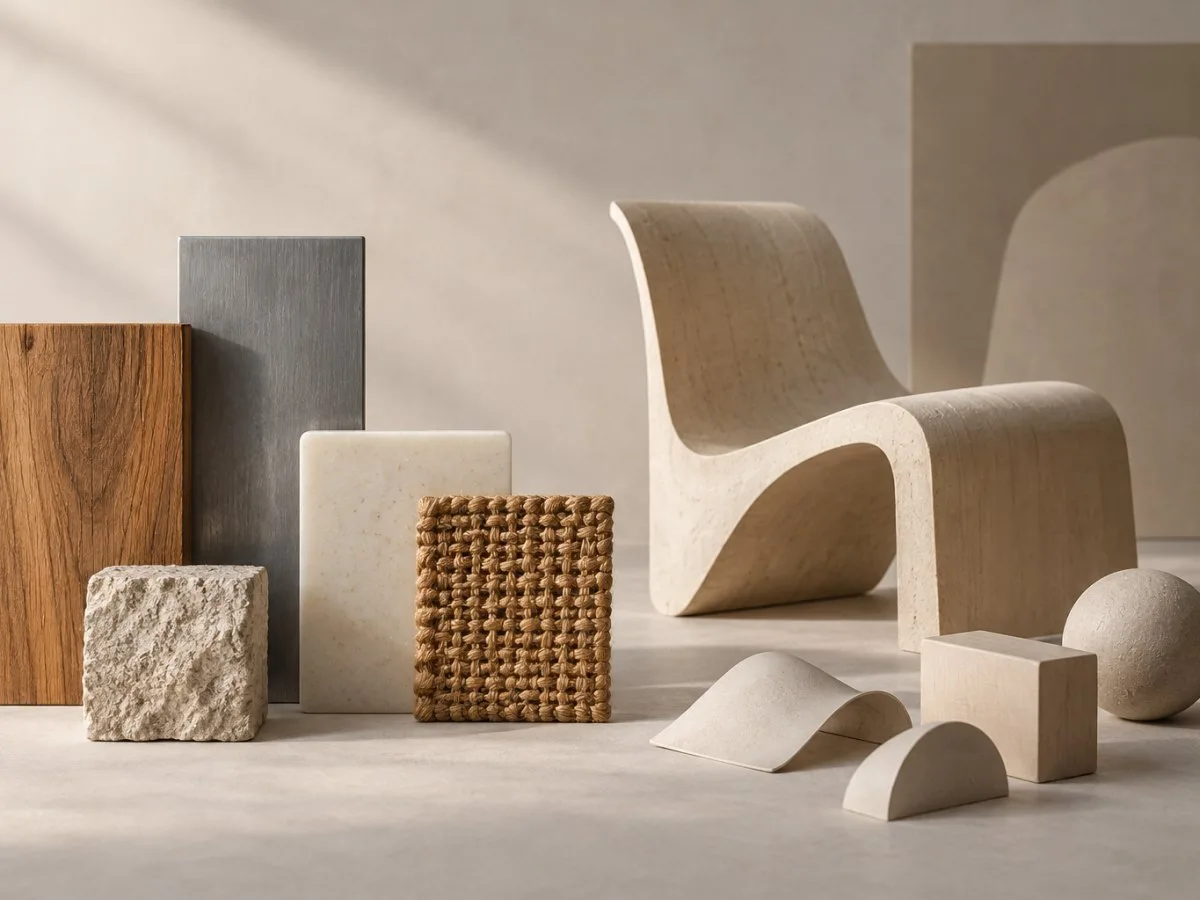
Furniture design encompasses a wide range of materials, from papier-mâché to fibres used in space applications, such as carbon fibre and aramid. Wood, metal and plastic are important material groups, but so are the ways they are worked and combined. The Vitra Schaudepot Lab, on the lower ground floor of the Schaudepot, presents this diversity through a Materials Library that visitors can explore and experience directly.
The space encourages visitors to think of furniture not only as a finished form, but also as the outcome of a development process. This may begin in a designer’s studio with drawings, models and experiments. Craft or industrial production methods then play a part, influencing an object’s form and details. The sequence is not identical for every piece: materials and processes contribute to its design in different ways.
A laboratory within the repository
The Lab occupies the lower ground floor of a building that combines exhibition and storage. On the main floor, the Schaudepot presents a changing selection of more than four hundred key objects in modern furniture design, from the nineteenth century to the present. On the lower ground floor, the Lab explores the materials and processes involved in design. Two large windows look into the storage area where most of the collection is kept.
This relationship makes clear that the objects on display are a selection, not the complete collection. The visual connection between the exhibition and the repository places each object in context: alongside individual pieces of furniture, visitors can consider the larger body of work preserved and organized in the building.
A new building with industrial references
Designed by Herzog & de Meuron, the Vitra Schaudepot opened in 2016. The new building replaced the former steel warehouse, whose structural cracks could not be repaired cost-effectively. The project adopted the archetypal form of a house and a restrained architectural language in relation to the former warehouse. The brickwork, in turn, refers to the adjoining factory building, constructed in 1963. The visible fractures in the bricks give the façade texture and make the materiality of the wall perceptible.
Inside, the main floor contains the permanent exhibition, entrance and shop; the Lab is on the lower ground floor. Two large windows on that level offer a view into the repository. The architecture thus connects the public presentation of the furniture with the storage of pieces that are not on display.
Questions for looking at furniture
The Materials Library offers a starting point for looking at everyday objects through specific questions: What is this piece of furniture made of? What possibilities does that material offer? How might production methods influence its form? These questions guide observation; they are not universal answers that apply to every piece.
The Lab connects direct experience of materials with design processes. A chair, a lamp or an experimental model can be read as an object shaped by decisions about materials, testing and making. In the context of the Schaudepot, this perspective broadens: the exhibition shows a selection, while the windows provide a visible point of reference to the repository that holds much of the larger collection.
At a glance
Scope
Editorial reading; this is not a site visit or a technical assessment.
Sources and references
Vitra Schaudepot Lab ↗12/11/2026
Vitra Schaudepot ↗12/11/2026