





Change the object, not the whole space
An everyday difficulty can come down to a detail: reaching a small switch, opening a door or standing up from a low sofa. ThisAbles took situations like these as a starting point for add-ons that modify existing furniture and objects, rather than asking people to replace them with products designed specifically for them.
The project was developed by IKEA Israel together with the organizations Milbat and Access Israel and the agency McCann Tel Aviv. It comprised 13 add-ons for popular IKEA products. Examples include raised sofa legs, a piece that enlarges the surface of a lamp switch, and a bumper intended to reduce the risk of a wheelchair damaging the glass of a cabinet.
The proposal has a concrete effect on the space: the adaptation becomes part of furniture already in the home. Rather than treating accessibility as a separate category of objects, the project tests localized changes to familiar elements of domestic life.
Working together to identify barriers
The initial idea came from a McCann Tel Aviv employee with cerebral palsy, who suggested raising a sofa to make it easier to stand up. The team then worked with the two organizations and held a hackathon at an IKEA store in Tel Aviv. Product engineers and people with varied disabilities explored how furniture and objects could be modified.
Working together helped identify obstacles and potential design flaws that others might not notice. Examples include small switches that can be difficult to operate for some people with reduced motor control, and the need to protect cabinet glass from possible impacts by a wheelchair.
The process brought together people with varied disabilities and engineers to explore modifications to existing products. It is a way of approaching design through specific barriers to use, rather than assuming one solution will suit everyone.
Shareable files and the limits of the proposal
The add-ons were intended to be made using 3D printing. The files could be downloaded for free, and the project included instructional videos; it also invited suggestions for new designs. This format paired a physical intervention—the piece added to the furniture—with a way of distributing it that did not depend on buying an entirely new object.
The team said it aimed to reduce the amount of material used in each piece and conducted quality checks and repeated tests before launch. Development and preparation before launch took around a year and a half. These details describe the process at the time; on their own, they do not establish the current safety, compatibility or availability of each design.
ThisAbles can therefore be understood as an adaptation strategy, not a universal solution. The add-ons were devised for specific products and varied needs. The available information is insufficient to determine which files, products or instructions are still accessible today, or to establish the safety of each combination of piece and furniture. The central idea, however, is clear: observing how everyday objects are used and modifying their details can open up possibilities without replacing all the furniture.
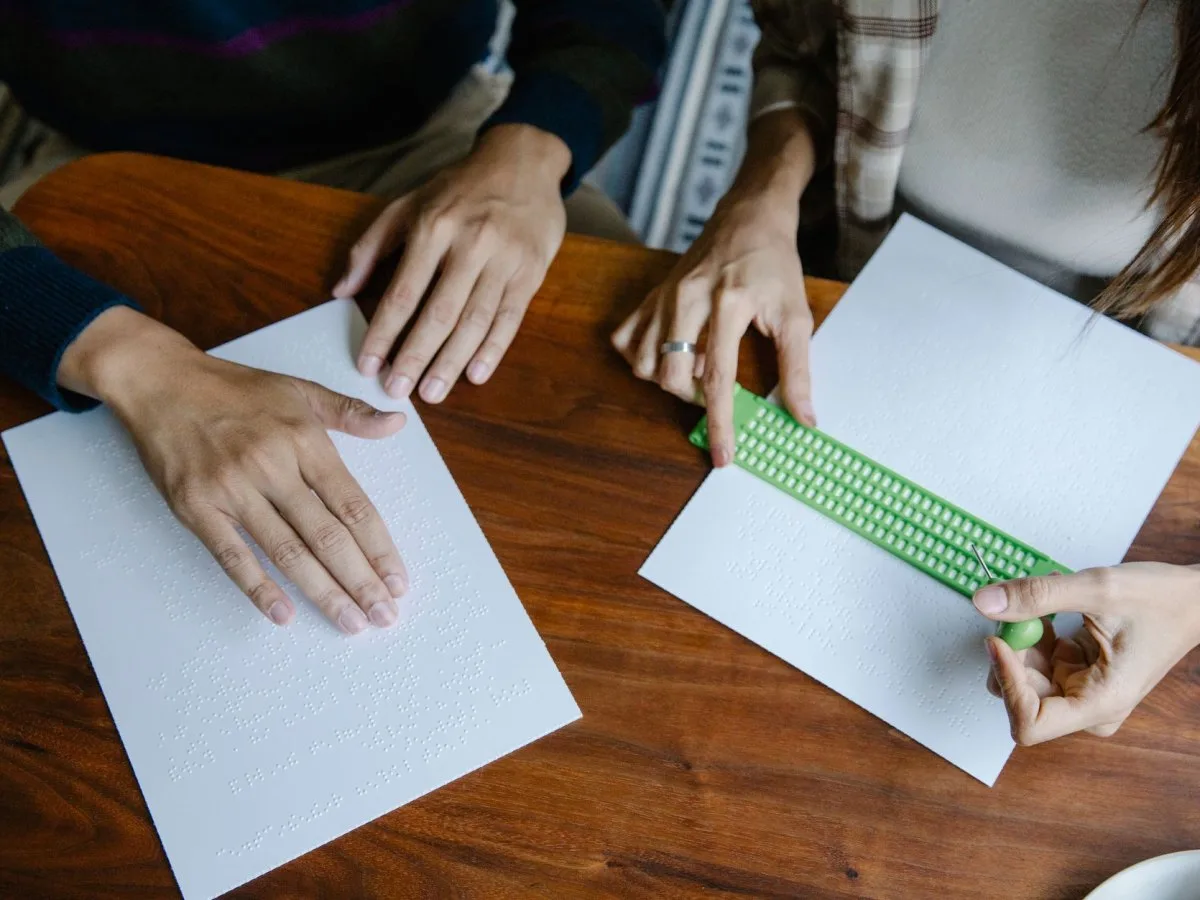
The accompanying image is illustrative: it shows hands with white sheets marked with raised dots, a green perforated ruler and a stylus on a table. It does not document an activity from the ThisAbles project.
At a glance
Scope
Editorial reading; this does not constitute a visit or a technical evaluation.
Sources and references
Q&A – IKEA ThisABles ↗12/11/2026 Design Museum, “Q&A – IKEA ThisABles”.
Case Study: ThisAbles ↗13/11/2026 D&AD, “Case Study: ThisAbles”.
Ikea, ThisAbles ↗13/11/2026 Contagious, “Ikea, ThisAbles”.
Ikea's new product-hacking products makes furniture accessible for people with disabilities ↗13/11/2026 It’s Nice That, “Ikea's new product-hacking products makes furniture accessible for people with disabilities”.
Photograph · Photo by Eren Li on Pexels · Pexels License · Sources and references · Centred crop to 4:3, resizing and conversion to JPEG for House Angle.