





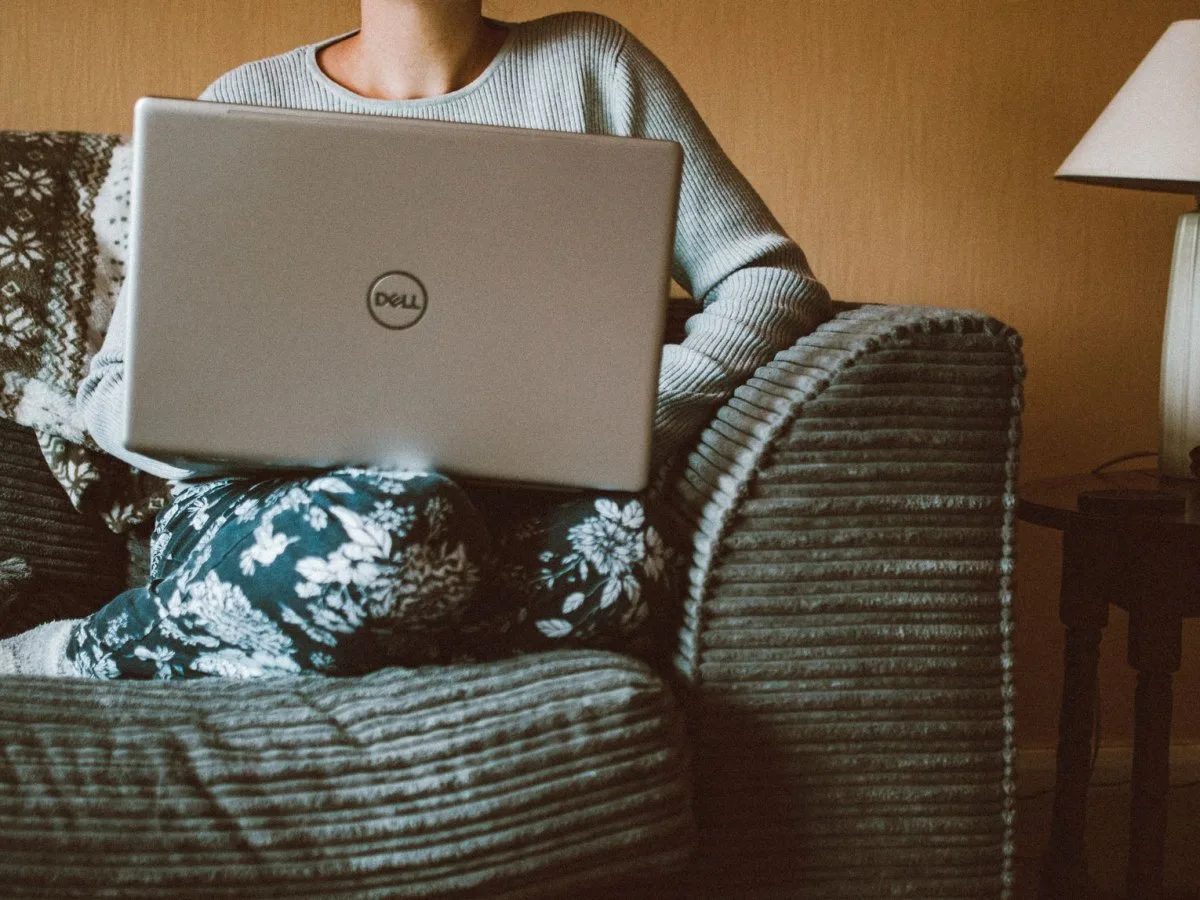
A home for different moments
When many activities take place under one roof, a home is no longer just a backdrop. Its layout and the placement of objects can make some routines easier and others more difficult. In her 2020 essay, designer Ilse Crawford proposes understanding home as both a personal refuge and an environment that influences how we feel, act and relate to one another. She also argues that lockdown led many people to reconsider what works in their homes and how they use them.
The question of how we live at home can also be viewed in perspective: Home Futures asks whether domestic life today resembles the visions of home imagined by twentieth-century architects and designers. Together, these ideas invite us to think of a home not as a fixed form, but as a space whose uses and expectations change. The everyday question is which activities are best shared and which benefit from some separation. The answer depends on the home and the people who live in it. A room can serve different purposes throughout the day, but that flexibility does not diminish the importance of privacy, togetherness and rest.
Privacy for working and learning
Working at home can bring into focus the value of being able to step away, even briefly, from shared activity. Crawford notes that a room with a door can help separate activities, particularly during video calls. When there is no separate room, she mentions lightweight, easy-to-move furniture as one way to reorganise a shared area.
She also encourages attention to the workspace: occasionally using a table is not the same as having a desk and chair suited to the task, and lighting is part of that environment. The essay does not set measurements, assess products or prescribe a universal solution. Its point is to remind us that a home workspace deserves consideration rather than being assumed to work simply because a surface is available.
The background to a video call adds another dimension: how much of private life becomes visible depends on the preferences of the person taking part and the possibilities offered by their home. Interior organisation can therefore influence the boundaries between home and work, without there being one correct way to draw them.
Adaptability and pauses
An adaptable space need not be one that never changes. Working, learning, exercising or eating in the same area can require transitions. Moving a table aside, putting away materials for an activity or clearing a surface are all ways to change how a place is used; where space allows, separating activities can make a change of pace more noticeable.
The question posed by Home Futures—whether we live today as people in the past expected us to—puts the distance between design ideas and everyday life into perspective. Read alongside Crawford’s proposal, it invites us to notice how expectations about home meet its actual uses, without assuming that one vision of the future has become a formula for everyone.
Crawford also emphasises rest and the everyday activities that give shape to the day: reading, cooking, tending plants or doing laundry. Looking at them through the lens of everyday design prompts practical questions: Is there a comfortable place to read? Can you find utensils when you need them? Which objects remain in view because they have no storage place?
Not every home has a spare room, a balcony or space for additional storage. These questions are not a list of requirements; they help us notice where friction arises and consider changes that fit the home’s actual conditions.
Materials and sensory experience
Our relationship with a home also involves touch and routines of care. Crawford treats cleaning as a practice rather than an appearance, and mentions cork, copper and brass when discussing surfaces that are easy to clean or have antimicrobial properties. These observations reflect the essay’s perspective; they are not health advice and do not demonstrate that a household material prevents infections. The text provides neither a full technical comparison nor disinfection instructions.
Sensory experience involves more than surfaces. Crawford contrasts hours spent in front of screens with the tactile pleasure of reading a book and argues that the physical qualities of a home deserve attention. This idea does not require choosing between technology and domestic life; it suggests considering how different experiences come together in the spaces we inhabit.
Use before image
The reflection shifts attention from what a home looks like to what it makes possible: working, resting, sharing space and managing everyday routines. The question posed by Home Futures adds a temporal dimension: ideas about what housing should be can change, while their relationship to the ways people actually inhabit it remains open.
Rather than treating these reflections as a model for an ideal home, we can use them as a starting point for observing our own surroundings: which activities interfere with one another, which objects are hard to put away, and when privacy or a pause is lacking. The possibilities for change vary from one home to another. To think of a home as a lived-in environment is to pay attention to its uses, its limits and the needs of the people who share it.
At a glance
Scope
Editorial reading; this is not a site visit or technical assessment.
Sources and references
The Domestic New Deal | Official Vitra® Website LP ↗25/10/2026 Ilse Crawford, “The Domestic New Deal,” Vitra, published August 10, 2020.
How’s work? | Official Vitra® Online Shop NO ↗28/10/2026
Letting the idea grow | Official Vitra® Online Shop DK ↗28/10/2026
Home Futures ↗11/11/2026 �Home Futures,” Design Museum.
Home Futures Highlights - Design Museum ↗11/11/2026
Home Futures In-Depth - Design Museum ↗11/11/2026
The light switch - Design Museum ↗11/11/2026
The Bubble - Design Museum ↗11/11/2026
Fire - Design Museum ↗11/11/2026
The bed - Design Museum ↗11/11/2026
Ilse Crawford on designing homes for cleanliness, comfort and community ↗12/11/2026 �Ilse Crawford on designing homes for cleanliness, comfort and community,” Monocle.
Photograph · Photo by Lisa Fotios on Pexels · Pexels License · Sources and references · Centred crop to 4:3, resizing and conversion to JPEG for House Angle.