





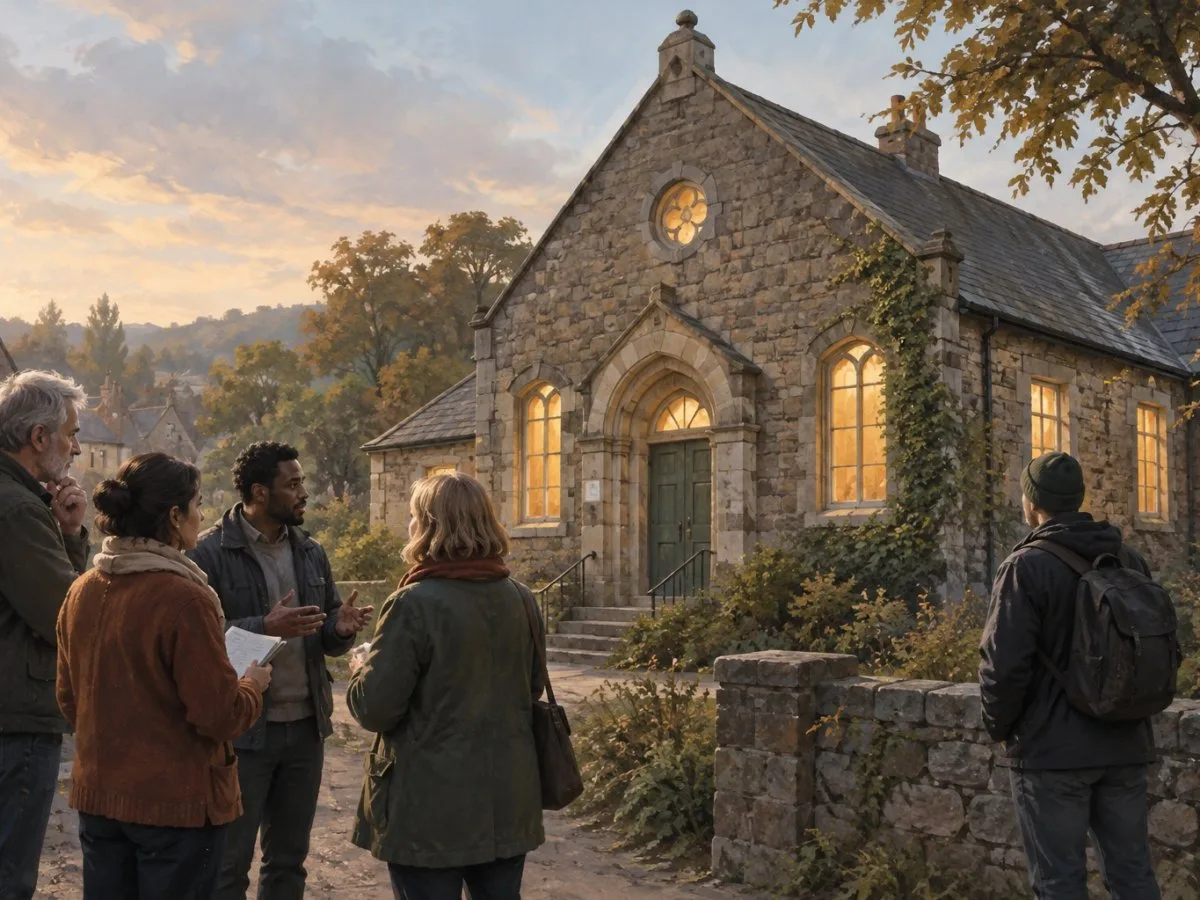
Giving a historic building a new use can help conserve a place valued by the community and provide space for local activities and services. But an empty building, or one appreciated by its neighbours, is not enough to make a project viable. A viable plan must connect a real need with a use compatible with the building, an organisation able to manage it, and a plan that takes account of the building’s condition, permissions, costs and long-term income.
This guide offers an initial framework for community, charitable and social enterprise organisations in the UK. Support programme terms can vary; check the criteria and availability directly with each organisation before committing resources or preparing an application.
1. Start with community need
Define the local need the project would address. It could be a lack of space for community or cultural activities, or for delivering services. Explain who would use the building, what the new use would provide and how the views of people affected have been taken into account.
Conservation alone does not demonstrate that a project meets a need. A reuse proposal should link heritage care with community benefit and an activity that can be sustained. Test ideas with potential users and local organisations, and find out whether existing services or spaces already meet that need.
2. Clarify governance and organisational capacity
The organisation must be able to make decisions, take responsibility and manage both the building and the planned activities. There is no single legal structure that suits every project: the Heritage Development Trust model, for example, does not prescribe a particular legal form and can take different forms as a charity or social enterprise.
Before proceeding, clarify who can approve important decisions, what capabilities and partnerships will be needed, and who will handle day-to-day management, maintenance and finances. Also consider how community participation will be sustained throughout the project’s development and operation.
Requirements concerning incorporation, previous activity or income may vary between programmes. Do not assume the requirements of one funding round apply to another: check each programme’s guidance separately.
3. Find out who controls the building and what is known about it
Confirm who owns the building, whether it is available, and what conditions might apply to its purchase or lease. If the project depends on acquiring or leasing the building, it will need a realistic route to securing control of it and financing that step.
Gather information about the building’s physical condition and its historical or architectural significance. A building survey can help identify issues that affect the intended use, works and costs. Information about its heritage significance may also inform design decisions and help assess its suitability for particular support programmes.
The AHF says it typically supports listed buildings or buildings in conservation areas, but may also consider unlisted buildings outside those areas if the applicant can demonstrate their historical or architectural significance. This general guidance does not determine eligibility for a specific programme.
4. Compare options before committing
A useful initial assessment compares options rather than simply justifying a use already chosen. Ask what alternatives could meet local needs and be compatible with the building. Consider the likely scale of the works, who would use the spaces and whether the organisation could sustain the planned activities.
The AHF’s guidance lists possible uses of its grants, including feasibility assessments, building surveys, valuations, legal advice for acquisition, business plans, architectural drawings up to RIBA stage 4 and fundraising plans. The availability and scope of this support depend on the programme and its terms.
At this stage, identify what technical information is missing, what risks could affect costs or timing, and which decisions it would be prudent to defer until surveys or specialist advice are available. Comparing alternatives before commissioning more developed designs can also help.
The AHF offers advice, grants and loans to charities and social enterprises working to establish sustainable uses for historic buildings. It says it has specialist staff across the four nations of the UK and recommends completing an initial enquiry form to help direct the response. Its Funding Finder allows users to explore options by location and project stage.
5. Plan the works and ongoing operation
The budget should not be limited to repairing the building. Depending on the project, it may need to account for acquisition or leasing, surveys, design, management and the resources required to open and operate. Include maintenance and ongoing running costs after the works are completed.
Link anticipated income sources to the proposed use and explain the assumptions behind your forecasts. If the building will host several activities, consider how they will work together and whether the organisation has the capacity to manage them. Potential income does not guarantee financial sustainability: the plan should make uncertainties, risks and outstanding funding needs visible.
The AHF describes financial support for different project stages, from early studies and development to capital works and some operational needs. Its loans may be used for acquisition, redevelopment, working capital and improvements related to energy resilience. Availability, terms and eligibility depend on the programme and the assessment of each application.
6. Distinguish between a grant and a loan
A grant may help cover approved activities, such as studies, project development or certain works. It does not have to be repaid like a loan, but an award is subject to programme criteria, application assessment and the terms of the offer. The AHF says its grant programmes vary by region and may change from year to year.
A loan must be repaid according to its terms. The AHF offers specialist lending to charities and social enterprises working on historic buildings. According to its general description, loans may be used for acquisition, redevelopment, working capital and other project needs. Do not assume a repayment term, interest rate, repayment holiday or that an application will be approved: check the specific terms.
When comparing options, review the permitted purpose, costs, drawdown schedule, repayment obligations and risks to the organisation. Do not include expected funding as secured income until you have checked that the programme is available, the organisation and project meet its requirements, and a formal offer has been made.
7. Check permissions and restrictions
Physical works and changes of use may raise planning issues, and interventions to protected buildings may require additional consents. Requirements depend on the building, the proposed work and the location; the information available here is not enough to determine which specific permissions a project would need.
Before commissioning works or making commitments, consult the local planning authority and the bodies responsible for conserving the site. It may also be necessary to check ownership restrictions or other authorisations. Heritage planning should begin with an understanding of the building’s significance, since both its physical features and its setting may be relevant to assessing the effects of change.
8. Explore funding without assuming eligibility
The AHF describes several routes to support, and programme details can change. Its general page describes, among others, grant programmes for feasibility and development in Scotland, Wales and Northern Ireland, as well as regional programmes in England. That general description is not enough to confirm that an application round is open or that a particular project meets its terms.
As a next step, use the Funding Finder and consult the current guidance for any programme that appears relevant. Confirm eligible locations, project stage, permitted purpose, organisational requirements and whether the application round is open. If a criterion or condition is unclear, ask the funder directly before basing a budget or schedule on that option.
9. Hypothetical example: organising the decisions
Imagine a local organisation considering the reuse of a historic building for community activities. First, it consults residents and local groups to define the need it would address. It then finds out who controls the building and gathers information about its condition and heritage significance.
With that information, it compares several possible uses and assesses what further surveys it needs before settling on a design. It then prepares a plan that sets out capital and operating costs, possible income, risks and funding needs. Finally, it looks into support options that may fit the location, project stage and type of organisation, and checks their terms directly.
This example does not imply that the project will receive funding or permission. It shows how to organise the questions before making commitments. It is not a substitute for any legal, financial, technical or planning advice an organisation may need.
Initial checklist
- Has the local need been defined, and have the people who would use or be affected by the project been heard?
- Can the organisation govern, develop and operate the project?
- Are the building’s ownership and availability known?
- Is there enough information about its condition and historical or architectural significance?
- Have possible uses been compared before committing to a design?
- Does the plan consider works, acquisition or leasing, management and operating costs?
- Are potential income, risks and funding needs set out without presenting them as certain?
- Have the relevant authorities been consulted about applicable permissions and restrictions?
- Have the current availability and criteria of any support programme been checked directly?
- Have grants been distinguished from funding that must be repaid?
At a glance
nexo id
206
Sources and references
https://ahfund.org.uk/what-we-do/support/ ↗15/11/2026
https://ahfund.org.uk/what-we-do/fund/ ↗15/11/2026
Our Story | The Architectural Heritage Fund ↗15/11/2026
Historic environment - GOV.UK ↗15/11/2026
Planning (Listed Buildings and Conservation Areas) Act 1990 ↗15/11/2026
When is permission required? - GOV.UK ↗15/11/2026