





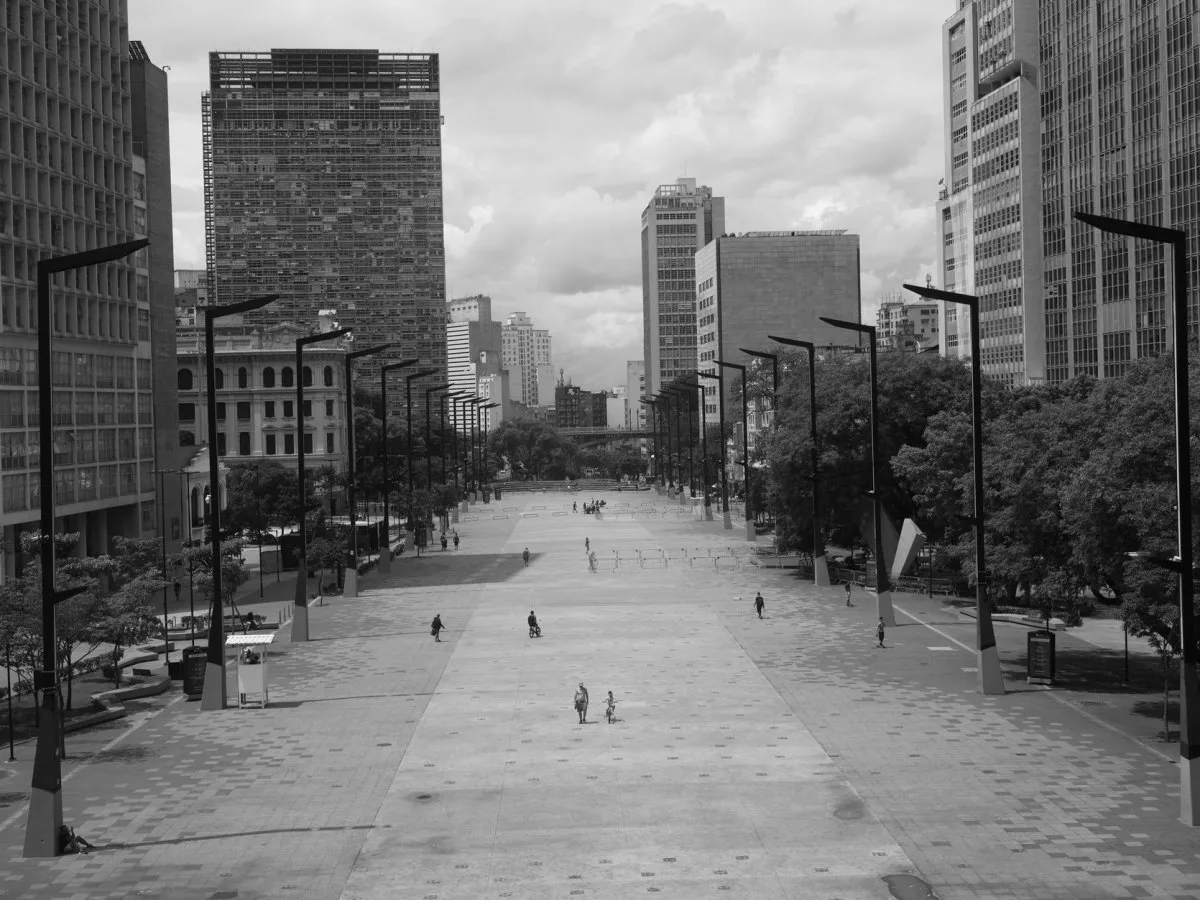
Public space is a fundamental part of shaping sustainable cities. It is not limited to green areas or squares, but encompasses a complex system of streets, sidewalks, cycling lanes, parks, waterfronts, courtyards and other facilities open for common use. Its presence and quality directly affect health, well-being, social inclusion and the economic dynamics of urban environments.
The quantitative dimension of public space
Documented data indicate that around 50% of the surface area of well-functioning cities should be dedicated to public space. Few cities around the world meet this target. The gap between this benchmark and practice has measurable consequences: a lack of quality public spaces is associated with lower urban quality of life, increased crime, social tensions, negative health impacts and congestion.
Streets make up the largest share of public space in cities, representing around 75% of the total. This proportion underscores the importance of street infrastructure not only as a means of transport, but also as a place for encounter and everyday life. Historical data show a decline: in urban areas built between 1990 and 2015, streets accounted for 20.8% of the surface area, below the 25% recorded in the early 1990s.
Regional differences are significant. In Sub-Saharan Africa, the share of built-up area dedicated to streets is the lowest, at just 16%. By contrast, cities in the Middle East and North Africa reached 26% in 2015. These variations reflect differing urban-planning priorities and socioeconomic contexts.
Social and economic impact
Public space is not a luxury but a driver of development. Well-planned and managed public spaces generate substantial economic value. They have been documented to positively affect the prices of nearby residential and commercial properties. They are also essential to environmental sustainability, providing ecosystem services and contributing to urban resilience.
From a social perspective, public space fosters inclusion, civic identity and quality of life. Its absence, or inadequate design and privatization, can generate exclusion and marginalization. City-wide policies and strategies should therefore ensure the planning, design and management of public spaces at different scales, making them safe, inclusive and accessible to everyone, especially women, children, older people and people with disabilities.
Programmes and action networks
Since 2012, UN-Habitat has run the Global Public Space Programme (GPSP) to support cities in creating safe, inclusive and accessible public spaces. The programme has completed more than 150 improvement projects in over 100 cities, benefiting more than 2.8 million people. In addition, more than 52,000 people—including young people, children, women and girls—have taken part in co-designing and co-building these spaces.
These efforts are supported by a wide network of partners, including local and national governments, civil society, academia and the private sector. UN-Habitat’s global public space network includes more than 800 actors who meet regularly to advance the public-space agenda. Regeneration projects are usually carried out in collaboration with UN-Habitat, local government and a civil-society organization, and in some cases with other UN agencies.
Measurement and the Sustainable Development Goals
Measuring public space is key to its effective management. Sustainable Development Goal (SDG) Indicator 11.7.1 measures the average share of cities’ built-up area that is open space for public use, disaggregated by sex, age and disability. This indicator enables cities to establish baselines and monitor progress towards the 2030 target of universal access to safe, inclusive and accessible public spaces.
Tools such as the city-wide public space assessment toolkit enable communities to conduct digital inventories and assessments, supporting evidence-based decision-making. These tools are important for identifying areas for improvement and ensuring that public spaces meet quality and accessibility standards.
Conclusion
Public space is much more than an aesthetic or recreational feature; it is essential infrastructure for cities to function efficiently, equitably and sustainably. Preserving and improving it requires an integrated approach that combines urban planning, community participation and rigorous measurement. Documented experience shows that investment in quality public space can improve residents’ lives while also supporting economic development and social cohesion.
At a glance
Scope
Editorial account; it does not constitute a site visit or technical assessment.
Sources and references
Public Space | UN-Habitat ↗23/10/2026
Global Public Space Network | UN-Habitat ↗23/10/2026
11.7 Public space | UN-Habitat ↗23/10/2026