





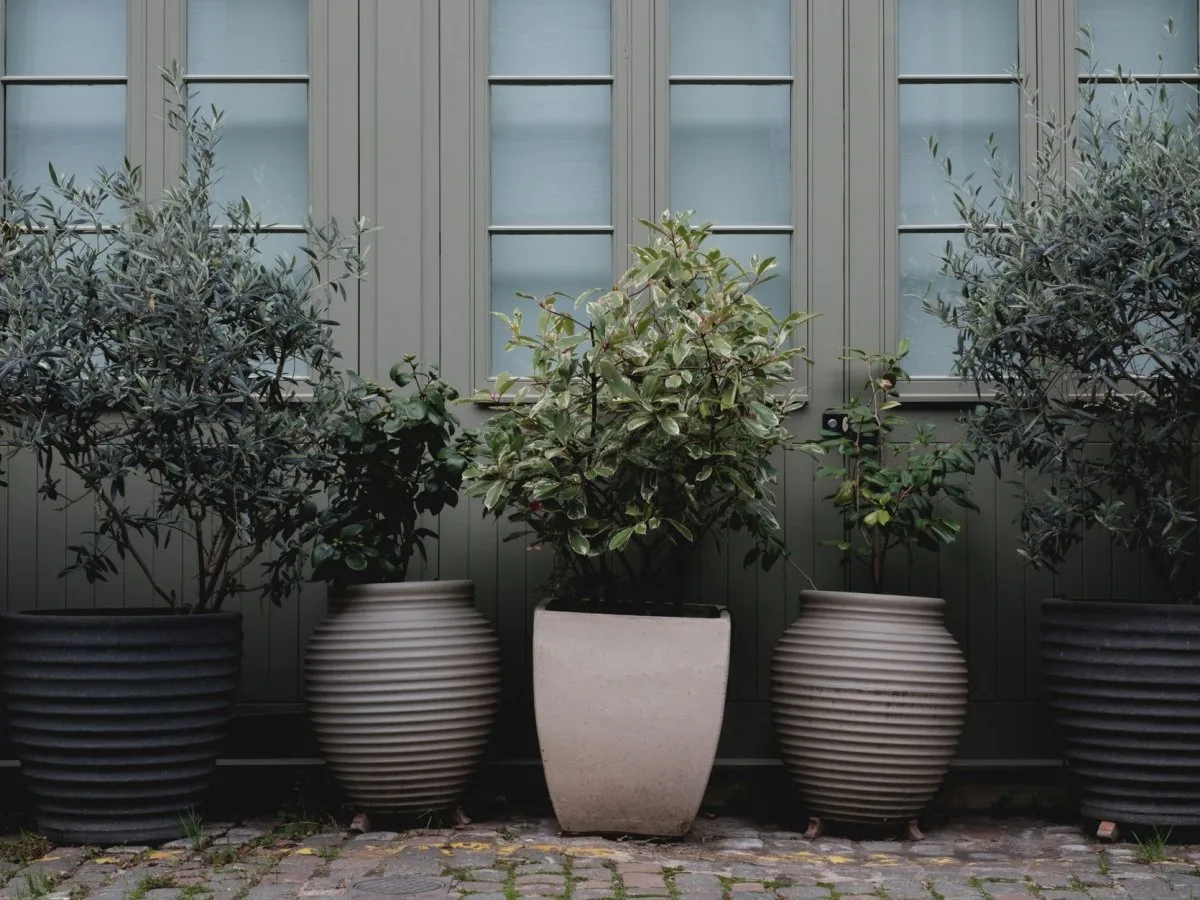
Winter transforms how outdoor spaces are perceived. Reduced light and slower plant growth call for a rethink of what containers do. Rather than relying on the exuberant flowering associated with summer, visual interest shifts to structure, foliage colour and material texture. This transition is not merely aesthetic; it is also a practical response to the season’s biological and climatic constraints.
The geometry of the container
Choosing a planter is the first step in defining a space. Containers are not merely vessels: they are architectural elements that interact with their surroundings. Their material affects how they respond to temperature fluctuations and moisture.
- Terracotta: Porous and lightweight, it allows roots to breathe, but is susceptible to cracking in freezing conditions. It needs extra protection in severe climates.
- Plastic and fibreglass: These offer greater thermal stability and are more resistant to breakage. Their light weight makes it easier to move arrangements to suit the available light.
- Wood and metal: These create a strong textural contrast. Wood ages over time, developing natural patinas, while metal can heat up or cool down quickly, affecting the root zone.
Shape also affects stability. Tall, narrow containers are prone to tipping unless secured or placed in sheltered areas. Wider, lower pots provide a more stable base and a greater volume of growing medium, helping to buffer fluctuations in moisture.
Light as a design resource
In the colder months, the sun sits lower in the sky and the days are shorter. Containers should be positioned to maximise light exposure and help keep foliage healthy. Potted plants are more vulnerable to light stress than those growing in open ground because their root systems are confined.
Placing containers where they receive as much light as possible during winter helps leaves stay green and prevents discolouration. However, strong sunlight on bright days can dry out the growing medium quickly, especially in small pots. Balancing light and moisture is key.
Winter textures and colours
The winter palette is more subdued, dominated by greens, greys, browns and whites. Plant choices should create contrast between these tones and the texture of the leaves.
Evergreen foliage
Evergreen plants form the foundation of winter structure, maintaining their visual presence throughout the year. Examples include:
- Heuchera: Offers shades ranging from green to plum, often with delicate markings.
- Ferns: Such as Polystichum setiferum, which brings soft texture and deep green to shaded areas.
- Shrubs: Box (Buxus sempervirens) and bay (Laurus nobilis) provide a dense, formal structure.
Floral and fruiting interest
Although flowering is sparse, some plants offer moments of colour. Violets and pansies may flower intermittently during mild spells. Bulbs planted in autumn promise a burst of colour in spring, even if their visual impact in winter is minimal. Berries on shrubs such as Gaultheria mucronata add red or white accents against dark foliage.
Managing moisture and cold
Growing medium in a pot behaves differently from garden soil. It can dry out quickly in windy spells or remain waterlogged on rainy days, making careful watering essential.
- Drainage: Raising containers off the ground on feet or bricks is important. This improves air circulation and helps prevent waterlogging, which can cause roots to rot.
- Protection: In climates with severe frosts, wrapping containers in insulating material can reduce root damage and help prevent the pot from cracking.
- Watering: Potted plants need careful watering in winter. The growing medium should remain moist but not waterlogged. Small plants are more sensitive to extremes of drought or excess water.
Composition and balance
Winter container design is not about density, but balance. Less is more. A successful arrangement combines a structural plant, such as an evergreen shrub; a textural plant, such as a fern or grass; and a splash of colour, such as a flower or berry. The proportion of plants to empty space is essential to avoid a crowded effect.
Being able to move containers makes it possible to adjust an arrangement as weather conditions change. A container that works in a sunny spot may need to be moved to a more sheltered area if frosts intensify. This flexibility is one of the main advantages of container gardening.
Conclusion
Winter container gardening is an opportunity to explore stillness and structure. By focusing on texture, light and growing-medium management, it is possible to create outdoor spaces that retain visual interest and function through the colder months. The key is to observe the conditions of each particular site and choose plants and materials suited to them.
At a glance
Scope
Editorial reading; this is not a site visit or a technical assessment.
Sources and references
Containers: Winter Planting Ideas | RHS Advice ↗05/11/2026 Royal Horticultural Society, “Containers: Winter Planting Ideas.”
Growing plants in containers: Expert Guide | RHS Advice ↗05/11/2026 Royal Horticultural Society, “Growing plants in containers: Expert Guide.”
Plants for winter interest | RHS Advice ↗05/11/2026 Royal Horticultural Society, “Plants for winter interest.”