





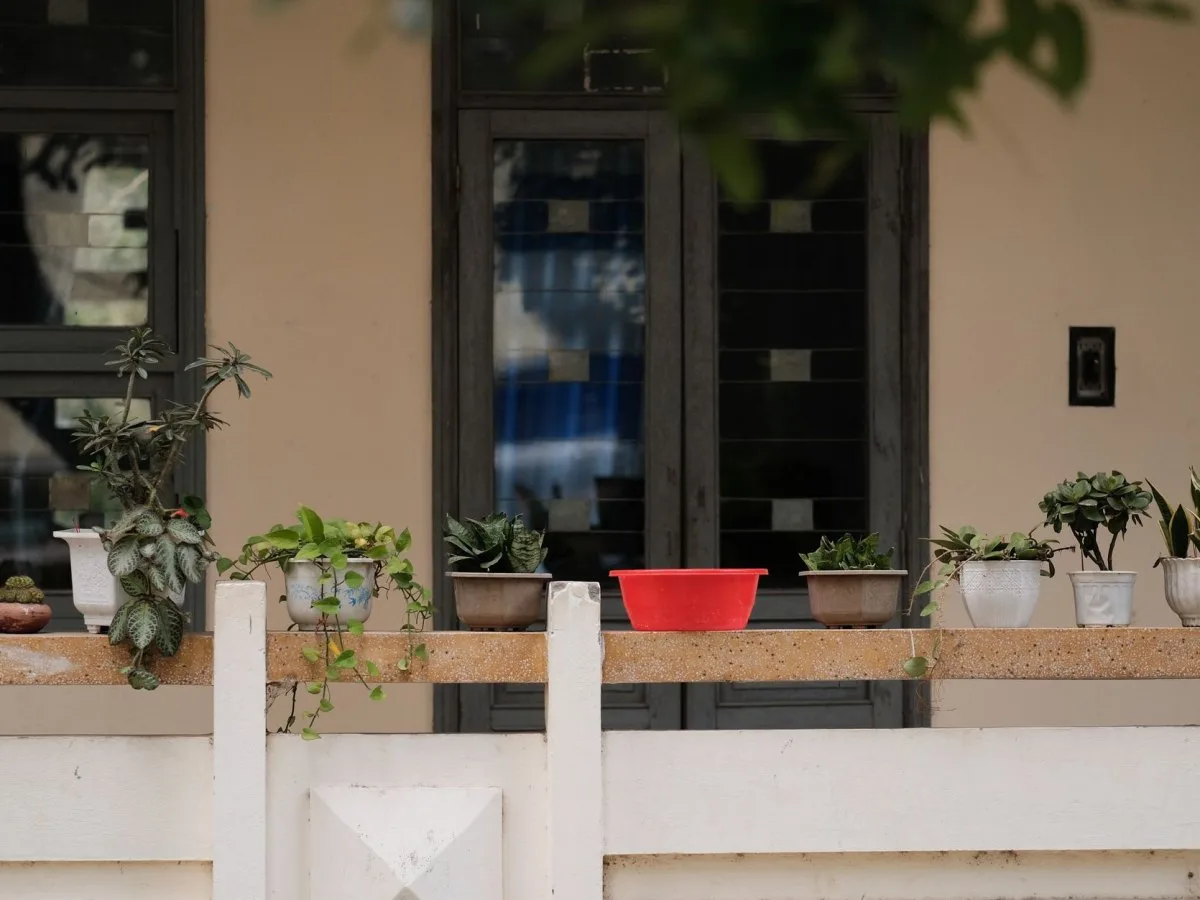
Pots make it possible to bring greenery to places where there is no soil available: on a balcony, beside a doorway or in a patio. They also let you move plants and create focal points. But that flexibility has a trade-off: roots have less room and only a limited amount of compost, so plants in containers generally need more attention than those growing in the ground.
A container is more than a visual support. Its size, material, shape and drainage affect how quickly the compost dries, how stable the plant is and how much maintenance it needs. Considering these factors from the outset can help make a planting practical as well as attractive.
Choosing a pot also means choosing a routine
A large container usually dries out more slowly than a small one and can reduce how often it needs watering. In return, it weighs more and takes up more space. Shallow containers dry out quickly; tall, narrow ones can tip over more easily, especially if they hold tall plants. For a single plant, consider the size of the rootball and avoid a disproportionately large volume of compost: excess compost can stay too wet. As a general guide for a specimen plant, the pot may be only slightly larger than the rootball; the right choice also depends on the plant and how it grows.
The material also affects care. Unglazed terracotta is porous and loses moisture more quickly than other materials; some terracotta pots can also crack in winter. Plastic is usually lighter and retains moisture better, though it can deteriorate in the sun. Metal is durable, but can become very hot in summer and cold in winter. Wood offers other possibilities, but breaks down over time. There is no universally best option: the choice depends on the location, the plant and the maintenance that is practical.
Whatever the material, drainage is essential. Holes in the base let excess water escape. A container without an outlet can leave the compost saturated and harm the roots. Proportion matters too: a pot only slightly larger than the rootball may suit a specimen plant, while a plant that has already filled its container may need more room or fresh compost.
Water: observe rather than follow a calendar
Plants in pots depend on watering because their root space and reserve of compost are limited. There is no fixed frequency that works for every plant: weather, exposure, the container’s material and size, and the plant itself all have an influence. Drying can accelerate on warm or windy days; a brief shower does not necessarily mean moisture has reached the inside of the container.
Rather than watering by routine, check the compost’s moisture first by feeling it about one-third of the way down the pot. If it is dry at that depth, watering is needed. Water slowly and close to the compost to limit runoff. Stop just before water flows from the drainage holes, or as soon as you see it starting to flow.
Grouping pots can make them easier to care for: the foliage of some plants can shade the surface of the compost in others, and grouping can raise local humidity. A layer of mulch also reduces evaporation from the surface. During dry periods in summer, a tray beneath the pot can catch runoff and help reduce water use; empty it a few hours after watering to prevent the compost from staying saturated. In winter, remove the trays.
Feeding and refreshing the compost
A container holds less compost for roots to explore than the ground, and its nutrients are used up over time. Many plants in pots therefore benefit from some fertiliser, though the type and frequency depend on the plant, the season and whether the compost already contains fertiliser. For long-term plantings, consider a controlled-release product when planting, refreshing the compost or repotting; seasonal and edible plants may have different needs. Follow the product instructions and do not treat every plant as if it grows at the same rate.
Compost also changes physically: its organic components break down, and it can lose structure and air spaces. If roots fill the container, growth may slow and water may drain less effectively. A plant that has been in the same pot for years does not always need a larger container: depending on the circumstances, it may be enough to refresh some of the compost, move it to a slightly larger pot or prune the roots. The decision depends on the species, its vigour and the condition of the rootball.
Two seasons, different priorities
In summer
Heat and wind can make compost dry out quickly. During warm spells, it is useful to check moisture regularly; check daily in warm or windy weather, and twice a day when it is very hot. Young or newly planted plants may need more attention. Grouping containers, protecting the compost from direct sun and using mulch can reduce moisture loss, but do not replace checking each pot.
Feeding is also often concentrated in the growing season, though this varies by plant and product. Fast-growing plants and edible crops may benefit from regular feeding during part of spring and summer. This is not a universal rule: consider the instructions for the compost and fertiliser, as well as the particular needs of each plant.
In winter
Roots in containers are less protected from cold than roots underground. Grouping pots near a wall can help shelter them; tender plants can also be moved to a protected place or covered with biodegradable horticultural fleece. During very wet periods, a plant can be moved under temporary cover if the compost becomes sodden, until it dries out a little.
Winter watering depends on the plant and its location. Evergreen plants, including evergreen trees and conifers, may need water during dry periods, especially if they are under cover. Deciduous or dormant plants usually need little. Avoid watering when frost is forecast and remove trays so water does not collect beneath the pot. Feeding is normally stopped during the winter months.
Maintenance as part of design
A container arrangement works best when designed alongside its care. Grouping fewer large pots can simplify watering compared with having many small ones, though the choice should suit the space and the weight you can manage. Pots in a sunny or exposed, windy spot may need checking more often than those in a cool, sheltered place. Choosing a plant suited to the location and a container with adequate drainage is usually more useful than trying to compensate for a poor match with constant care.
Care is therefore not separate from the appearance of a space: the material, scale and position of each container shape both the composition and the attention it will need. Exact needs cannot be set without knowing the plants, climate and conditions of each location; observing moisture, drainage and growth makes it possible to adjust care without turning general guidance into a rigid rule.
At a glance
Scope
Editorial reading; it does not constitute a visit or technical assessment.
Sources and references
Container maintenance: Expert Guide | RHS Advice ↗13/11/2026 Royal Horticultural Society (RHS), Container maintenance: Expert Guide.
Growing plants in containers: Expert Guide | RHS Advice ↗13/11/2026 Royal Horticultural Society (RHS), Growing plants in containers: Expert Guide.
How to repot a plant: Expert Guide | RHS Advice ↗13/11/2026 Royal Horticultural Society (RHS), How to repot a plant: Expert Guide.
How to plant up a container: Expert Guide | RHS Advice ↗13/11/2026 Royal Horticultural Society (RHS), How to plant up a container: Expert Guide.
How to water containers: Expert Guide | RHS Advice ↗13/11/2026 Royal Horticultural Society (RHS), How to water containers: Expert Guide.
Photograph · Photo by Pew Nguyen on Pexels · Pexels License · Sources and references · Centred crop to 4:3, resizing and conversion to JPEG for House Angle.