





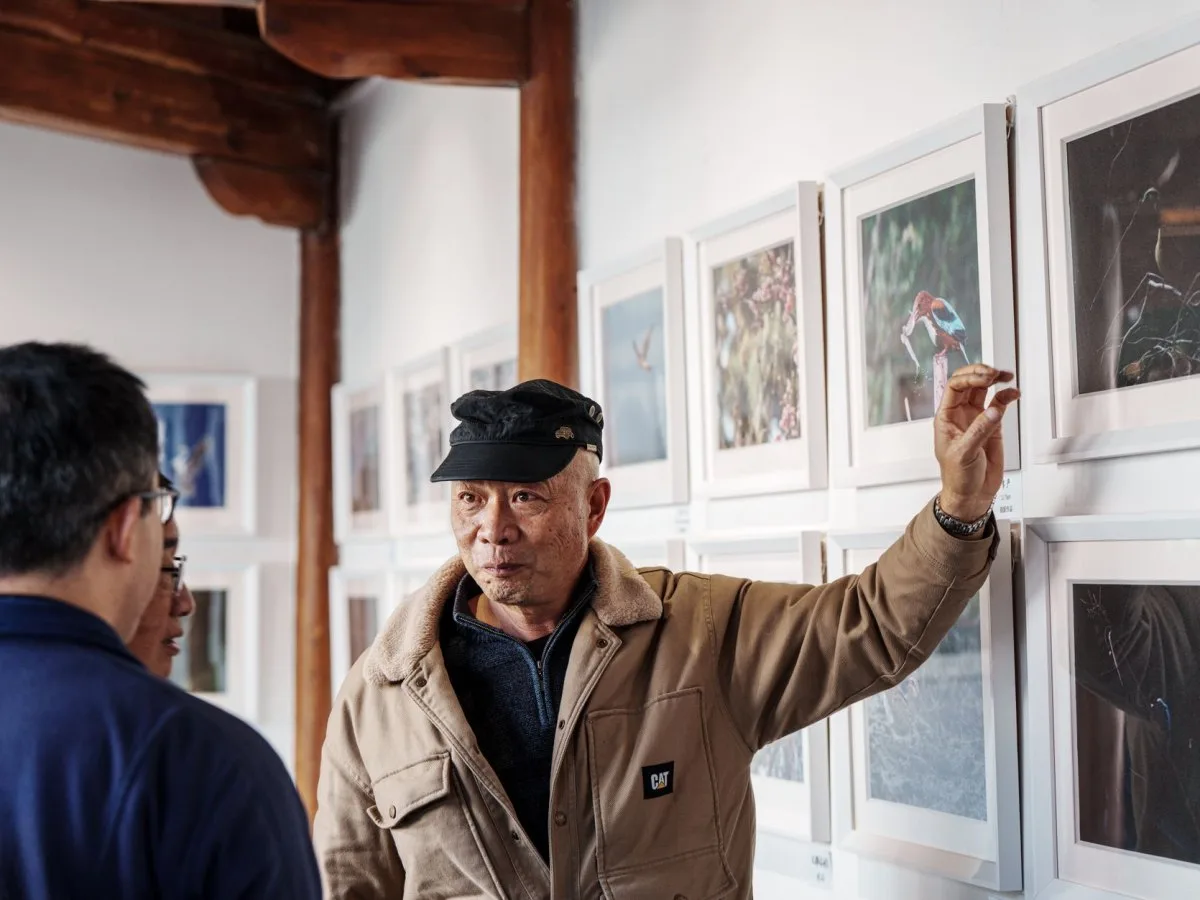
Exploring design at different scales
At the Vitra Campus, architecture, gardens and exhibitions offer different starting points for observing design. The Vitra Design Museum’s programme brings together guided tours of the campus and its exhibition spaces, as well as workshops, talks and other events. There is no single itinerary: each format directs attention in a different way.
An architectural tour connects buildings with the history of the company and the campus. An exhibition tour focuses attention on objects, selections and contexts. Workshops, in turn, can bring some questions about design into a practical activity.
Architecture as an ensemble
The campus architecture tour lasts two hours and introduces buildings by different designers. Highlights include Zaha Hadid’s Fire Station, Tadao Ando’s Conference Pavilion and the Vitra Schaudepot by Herzog & de Meuron. The tour also includes factory buildings by Frank Gehry, Nicholas Grimshaw, Álvaro Siza and SANAA, as well as Kazuo Shinohara’s Umbrella House, Jean Prouvé’s petrol station and the Doshi Retreat, designed by Balkrishna Doshi with Khushnu Panthaki Hoof and Sönke Hoof.
This selection presents the campus as an ensemble of different architectural responses, rather than a work by a single designer. Comparing the buildings is one way to observe contrasts in form, function and architectural language. The VitraHaus, also designed by Herzog & de Meuron, is open to the public, and visitors can explore its interiors after the tour.
Another tour, dedicated to gardens and sculpture, includes projects such as the Tane Garden House by Tsuyoshi Tane, Piet Oudolf’s Oudolf Garten and Diogene, Renzo Piano’s tiny house. In this format, the landscape and architectural interventions are viewed in relation to the campus surroundings.
From buildings to objects
The exhibitions at the Vitra Design Museum and Vitra Schaudepot can be visited independently or with a guide. Here the scale shifts: instead of linking buildings, a tour may bring together objects, prototypes and historical references. The collection tour, for example, highlights works by Gerrit Rietveld, Alvar Aalto, and Charles and Ray Eames, alongside lesser-known, anonymous or unusual designs.
The programme described also includes tours connected with temporary exhibitions. The tour on Geoffrey Bawa considers work that combines principles of Modernism with regional and traditional elements, and addresses the relationship between architecture, place, local materials and cultural identities. Separately, the curatorial special tour on Verner Panton focuses on the exhibition concept, the selection of objects and archival materials, and the research that helps shape an interpretation of his work.
An exhibition does not present only isolated pieces: selection and arrangement create relationships among objects, eras and contexts. This guided interpretation differs from observing a building in its surroundings, but both approaches can draw attention to connections between form, context and use.
Activities for varied audiences
The educational programme is intended for children and young people, students, specialists and others interested in design and architecture. Alongside guided tours, it includes workshops, talks and other events. Workshops can explore the design process through practical exercises. Among the activities described are a photography workshop focused on the campus architecture and workshops in which participants build objects, such as a chair.
Guided tours are offered in German, English, French, Italian, Spanish, Dutch, Swedish, Russian, Chinese and Japanese. Only guides from the Vitra Design Museum are permitted to lead tours through the exhibitions and around the campus.
Choosing what to observe
The programme raises several questions: How do buildings by different designers contrast? How do gardens and landscape relate to architecture? How does the reading of an object change when it is presented alongside others or within a historical narrative?
An architectural tour relates buildings and spaces across the campus. An exhibition tour focuses on objects and the criteria that bring them together. Workshops offer another route: exploring aspects of design through practice. These formats do not exhaust the ways of interpreting design, but they make different points of entry visible.
The exhibition, tour and workshop examples described relate to activities scheduled for specific dates or seasons; schedules and conditions depend on each activity and may change. For planning a visit, consult the museum’s current information. The exhibitions at the Vitra Design Museum, Vitra Schaudepot and Vitra Design Museum Gallery can also be visited without a guide. General visitor information states that the campus is accessible to visitors with limited mobility and wheelchair users, and that these three exhibition spaces are fully accessible.
At a glance
Scope
Editorial reading; this is not a visit or a technical assessment.
Sources and references
Guided Tours ↗23/10/2026
Your Visit ↗24/10/2026
Workshops ↗28/10/2026
The Vitra Design Museum ↗11/11/2026
Vitra Campus ↗11/11/2026
Photograph · Photo by dsdcw on Pexels · Pexels License · Sources and references · Centred crop to 4:3, resizing and conversion to JPEG for House Angle.