





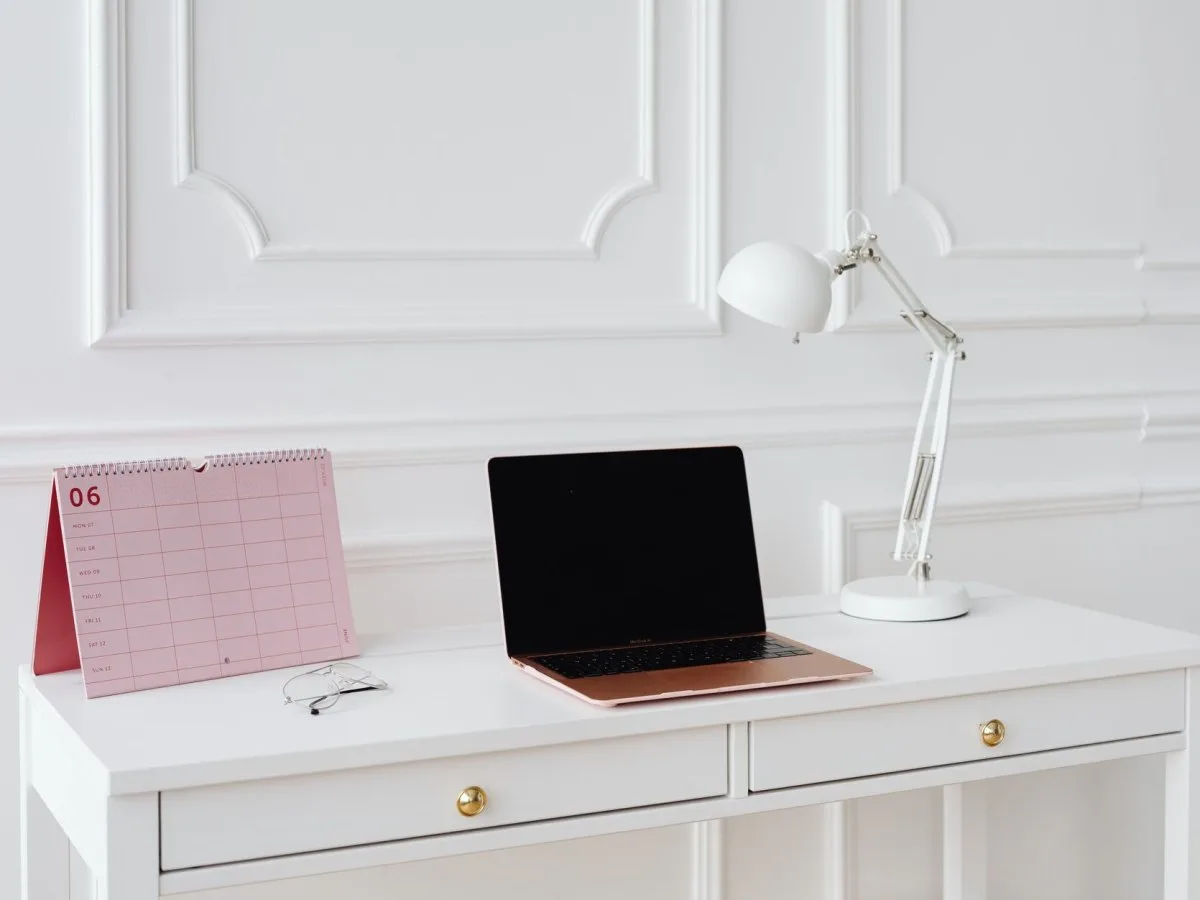
A studio that changes with its needs
Konstantin Grcic describes his studio as a space that has evolved as needs arose and furniture was added. He does not present it as a corporate office or a universal model. When designing for larger organizations, he distinguishes that personal experience from environments with hundreds of employees, where teams may expand, contract, and change composition.
That contrast prompts a practical question: what does a space need in order to remain useful as people or tasks change? The answer need not be a uniform image of an office. In Grcic’s account, a table that is available, two trestles, or even a ping-pong table can provide support. These are not equivalent solutions for every activity; they are examples of an arrangement less bound to preconceived ideas of formality or good taste.
A table as support for different activities
In his conversation about Scout, a system of work and meeting tables, Grcic describes the table as one of the simplest and most versatile pieces of furniture: it can be used for working, eating, playing, or sitting. Rather than suggesting that it needs to be reinvented, he invites us to consider what activities it can accommodate and how it relates to the people using the space.
Flexibility, however, does not mean that any piece of furniture suits every purpose. A piece may work differently depending on the task, the arrangement, and the people. In this sense, simplicity does not remove the need to make decisions; it leaves room to configure the environment according to its use.
Flexibility without a single office model
Grcic does not suggest that every company should adopt an agile office or that traditional workstations are obsolete. As he describes it, Scout can support a team dynamic or a particular task, or form part of the organization of a larger space. Scale and configuration depend on context.
The system combines fixed, modular, and mobile tables. Its structure is intended to define a place around the person sitting there without enclosing it completely: the boundary can offer some sense of personal space while keeping the setting open to interaction. Some accessories can function as acoustic screens. These are described design features, not a guarantee that the furniture alone will meet a workplace’s needs.
Observe before prescribing
Grcic identifies observing behaviour as part of the design process: how people move, work, and interact. Attending to these movements makes it possible to consider furniture in relation to activities, rather than assigning each piece one fixed use.
One open-ended reading of these ideas is that a space can be put together with ordinary furniture, pieces designed for multiple uses, or a combination of both. The point is not to reproduce a particular style, but to consider what the space needs to do and leave room to adjust it as conditions change.
At a glance
Scope
Editorial reading; it is not a site visit or a technical assessment.
Sources and references
Honest Furniture | Official Vitra® Website LP ↗08/11/2026
A framework for daily learning and flexible work | Official Vitra® Online Shop US ↗08/11/2026
Eye Towards the Future | Official Vitra® Online Shop FI ↗08/11/2026