





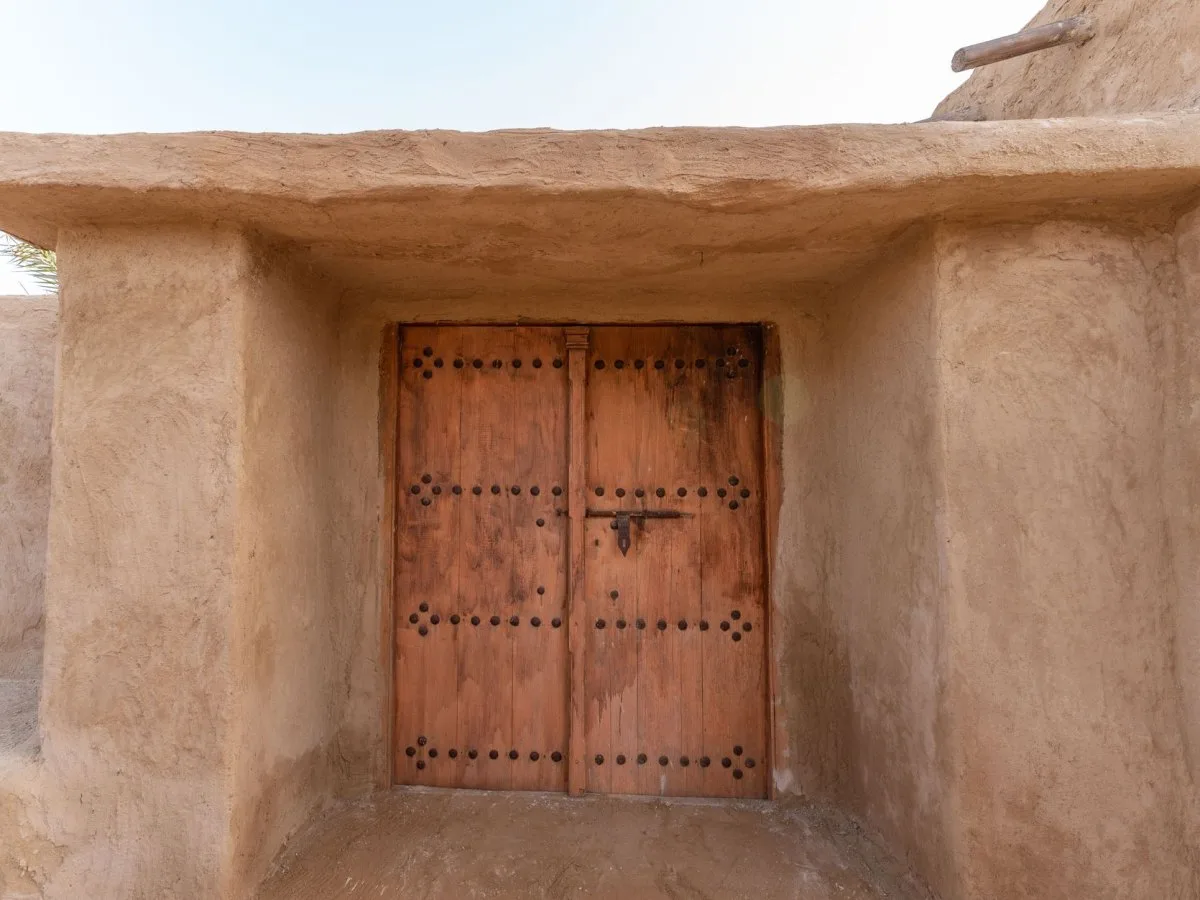
Earthen architecture is one of humanity’s oldest and most widespread ways of shaping the built environment with locally available materials. It is not a marginal or exclusively rural tradition: earthen construction appears in mosques, palaces, granaries, historic urban centres, cultural landscapes and archaeological sites. Its presence in the World Heritage List is substantial: in 2011, more than 10% of listed properties incorporated earthen structures. Earth is therefore not simply a building material; it is a construction tradition that has helped shape communities across continents.
Material qualities and specific vulnerabilities
Earth is widely available and economically accessible, giving it potential to contribute to poverty reduction and sustainable development. Yet its availability does not make earthen structures self-protecting. They are vulnerable to both natural hazards and human-driven change, including floods, earthquakes, industrialization, urbanization and the adoption of modern construction technologies. The loss of traditional conservation practices can compound these pressures.
The historical WHEAP programme presentation gives an approximate share of one quarter for earthen sites on the List of World Heritage in Danger. This figure describes the programme’s documentary context; it is not an updated count of the list. Such vulnerability requires conservation adapted to the material and the site. Resilience depends on sustained maintenance, management and skills.
A coordinated framework: WHEAP
The World Heritage Earthen Architecture Programme (WHEAP) was established to improve the conservation and management of earthen architecture sites worldwide. The World Heritage Committee approved the programme’s launch at its 31st session in 2007. Pilot projects at properties on the World Heritage List or on States Parties’ Tentative Lists were intended to identify good practices and develop suitable approaches to conservation, management and capacity-building.
The programme was planned in four progressive phases, with a changing geographical focus intended to support context-sensitive work:
| Phase | Period | Focus | Documented activities |
|---|---|---|---|
| 1 | 2007–2008 | Global | Official launch at Terra 2008 in Mali; start of the inventory project. |
| 2 | 2009–2011 | Africa and the Arab States | Conservation work at Lalibela in Ethiopia; draft building regulations for Djenné and Timbuktu in Mali; safeguarding of New Gourna in Egypt. |
| 3 | 2012–2014 | Latin America and Central Asia | Strategic planning with the Lúcio Costa Centre in Brazil; artisans’ workshop in Tlaxcala, Mexico; restoration work at Bam in Iran. |
| 4 | 2015–2017 | Europe and Asia | Expansion of the global network and dissemination of results. |
The programme’s activities also included the rehabilitation of the Youth House in Djenné, regional training materials, and work involving heritage institutions in Africa. Such partnerships matter because conservation methods need to fit local cultural, climatic and administrative conditions. A common threat does not imply a single universal solution.
The inventory as a management tool
A major programme outcome was the completion in 2012 of the World Heritage Inventory of Earthen Architecture. It identifies 150 World Heritage properties that include earthen architecture, organized by region. The inventory brings together information supplied by site managers in illustrated entries that set each property in its geographic and cultural context. It is therefore more than a list: it provides a basis for understanding the range and condition of the properties and for setting priorities.
The analysis behind the inventory was organized around four themes:
- Construction types and methods: identifying the techniques used at each property.
- Current condition: describing the state of conservation.
- Threats: considering natural and human-driven risks.
- Priorities for action: identifying where intervention is most urgent.
This structure can help site managers and national authorities direct attention and resources toward identified needs. A site-specific picture of construction, condition and risk is more useful for planning than a generic intervention that may leave the causes of deterioration unaddressed. The inventory’s information, however, is a basis for analysis rather than a substitute for ongoing assessment and management at each site.
Contemporary pressures and the meaning of resilience
Conserving earthen architecture involves more than retaining historic structures. It also raises questions about sustainable development and adapting to environmental change. Many earthen sites face hazards such as flooding and drought. Managing these risks requires understanding the material and the building techniques used, including local knowledge relevant to water management and structural stability.
The same material tradition also has a contemporary dimension. Earth construction continues to be explored in new and renovated buildings, including approaches that combine earth with plant fibres. The TERRAFIBRA award, for example, was established to highlight contemporary architecture using earth and plant fibres and to promote material combinations. This contemporary practice places earthen architecture in a continuing field of design and construction rather than treating it solely as a remnant of the past.
That continuity does not mean that a new material combination automatically solves conservation problems at historic sites. Historic structures and contemporary buildings have different purposes and conditions. The broader implication is that knowledge and practice can develop: conservation benefits from understanding traditional construction, while contemporary experimentation can keep earthen building skills and materials in active use.
What effective heritage management entails
The programme’s documented activities point to an integrated approach: research, practical conservation, skills development and community engagement work together. Pilot projects can reveal site-specific needs; inventories can organize information; training can support the people responsible for conservation; and networks can enable the exchange of experience. Workshops, exhibitions, conferences and technical publications are also ways to build awareness and pass knowledge to new generations of practitioners.
A global network is useful not because every site should follow an identical method, but because practitioners can share lessons while adapting them to local circumstances. The programme brought together international conservation bodies and regional institutions, with cooperation also sought from national and local authorities. This makes institutional coordination part of the conservation task, alongside technical knowledge and sustained local involvement.
Resilience in earthen heritage is best understood as a continuing process, not a fixed condition. It depends on regular maintenance, management responsive to changing environmental and social circumstances, and the preservation and transmission of relevant skills. Recording practical experience and making research findings accessible can help inform that work, but each property still requires attention to its own materials, risks and context.
Further reading
The programme’s technical publications and mission reports include material on the rehabilitation of the Youth House in Djenné and studies of the mausoleums of Timbuktu. These provide more detailed case-specific information about conservation work than a global overview can offer. For a site-level understanding, illustrated inventory entries and technical reports are useful starting points; they should be read alongside the needs and conditions of the particular property.
At a glance
Scope
Editorial reading; this is not a site visit or technical assessment.
Sources and references
World Heritage Earthen Architecture Programme (WHEAP) ↗20/10/2026 World Heritage Earthen Architecture Programme (WHEAP) — Programme aims, phases, activities, inventory and related publications.
Support for the World Heritage Earthen Architecture Programme (WHEAP) ↗23/10/2026 Support for the World Heritage Earthen Architecture Programme (WHEAP) — Background to the inventory, its four analytical themes and the 150 listed properties.
UNESCO publishes proceedings of the International Colloquium on the World Heritage Earthen Architecture Programme (WHEAP) ↗23/10/2026 Proceedings of the International Colloquium on WHEAP — Overview of the 2012 colloquium and its conservation, management and sustainable-development themes.