Expanded and reviewed with additional sources on
Shade does not describe a place on its own
A shaded zone may be suitable for resting, difficult for cultivation, or both at different times. The word shade does not indicate whether the soil is moist, whether the air feels cool, or how many hours of direct light the area receives. To understand the space, it is useful to separate these questions and observe them directly rather than deducing one answer from another.
The origin of the shade matters. Under trees, root competition may coincide with dry soil; shade projected by a building does not imply the same root competition. However, knowing which element casts the shade is not enough to determine the actual state of the ground: it serves to identify which aspects to observe in each zone.
Usage also matters. The place where someone wants to sit is not necessarily the best space for planting, and a zone appropriate for plants does not necessarily offer a comfortable path. Orientation is a characteristic of the site; direct light changes with the hours and seasons; available water and soil moisture require separate observation. Keeping these variables separate prevents turning an impression—“there is shade here”—into an unverified conclusion—“it will be cool here” or “the soil will be moist.”
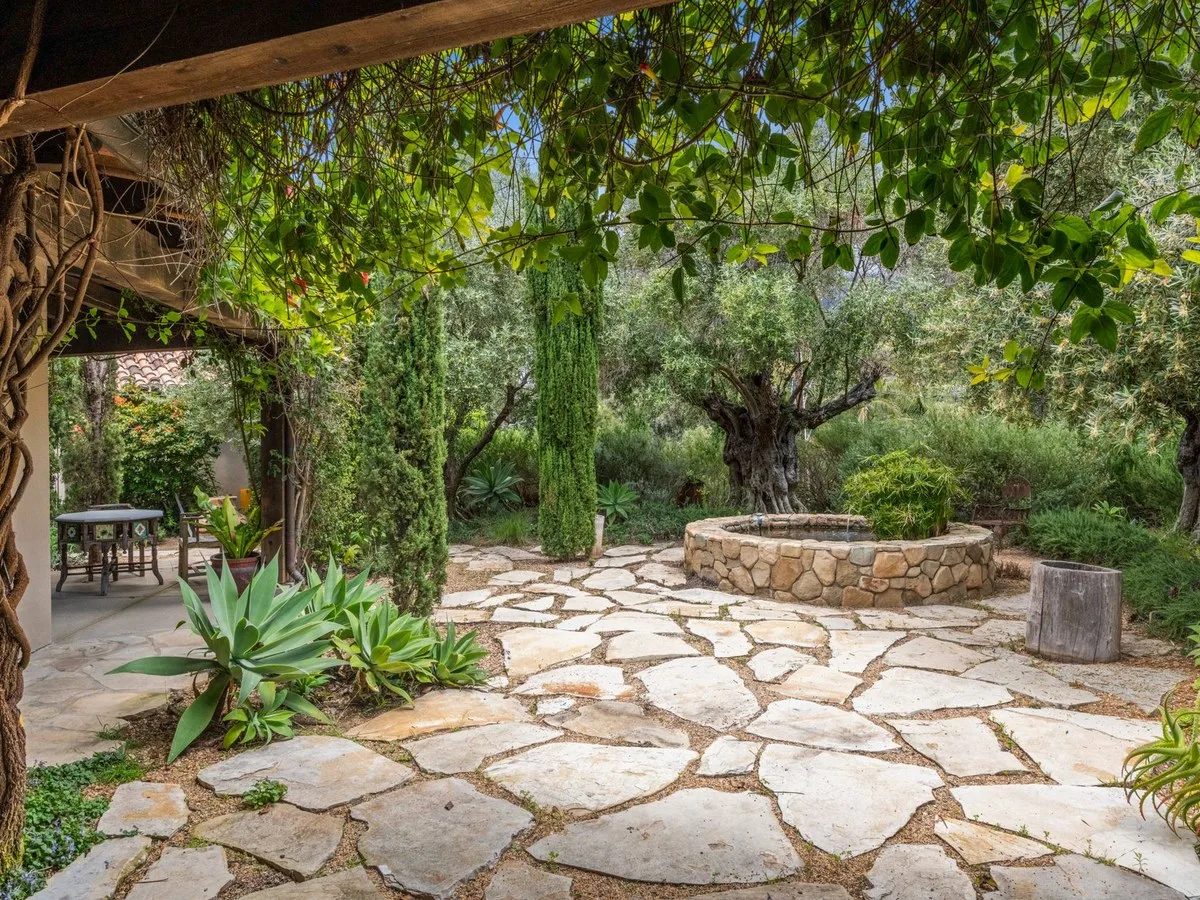
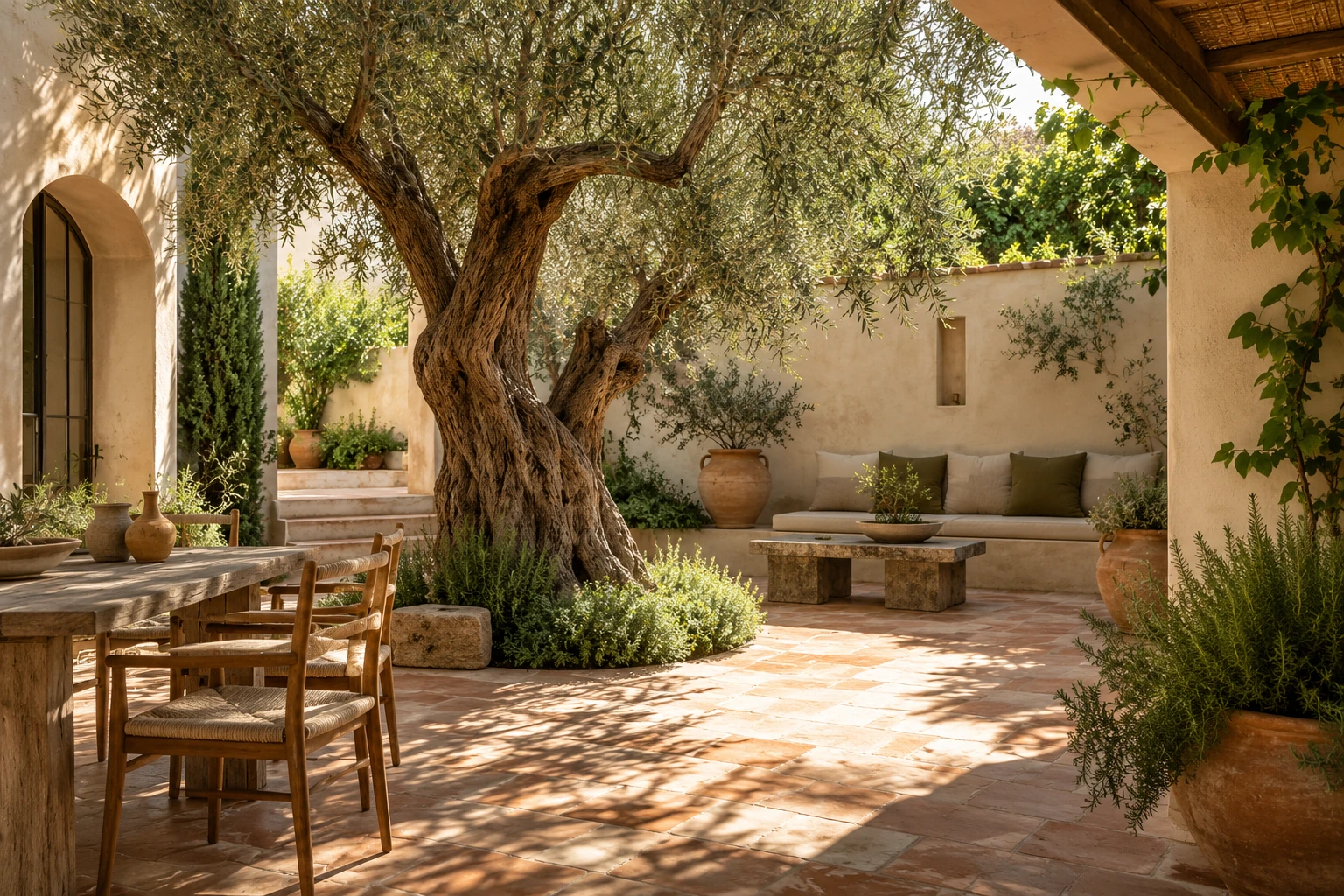
The example in this article is conceptual: it does not describe a built garden, a visit, a measurement, or a validated technical solution. The method it follows is a proposal for organizing one’s own questions and data, not an evaluation of the site or a recommendation of species.
Observing by zones, hours, and seasons
Start by mentally dividing the garden into recognizable zones, without yet assigning them a destination. You can name them by a visible reference—for example, “next to the tree” or “near the building”—instead of assuming that all parts share the same conditions. The origin of the shade helps decide what to observe: under a tree, it is interesting to consider the soil and possible root competition; next to a wall, the absence of that competition does not prove that the ground retains water.
Next, record when direct light appears and when the zone is in shade. Note observations at times that are feasible for you, always indicating the time and date. An isolated record describes only that moment; it is not enough to establish the pattern of another season. Repeating the observation at different times and seasons helps distinguish a recurrent condition from a punctual impression, without turning the diary into a scientific measurement.
It is advisable to note four aspects separately:
- Obstacle and shade: which element appears to cast the shade and when you observed the change.
- Direct light: whether the zone receives direct sun during the observation, without inferring other conditions from it.
- Water and soil: directly observed signs, such as soil that appears dry or moist upon checking. If you have not checked it, write “not observed” instead of completing the data by intuition.
- Use and path: where you would like to be, where people usually pass, and what relationship that zone has with daily destinations.
Shade does not have a single relationship with the soil. Some shade plants are associated with soils that retain moisture, and others with better drainage; this is why distinctions between dry shade and moist shade are useful. These categories are only useful if the soil condition has been observed: they are not deduced from the type of obstacle. Light, moisture, and drainage are related variables, but not interchangeable, and a dark place is not enough to decide what to plant.
Comparing situations without diagnosing the ground
The table distinguishes two situations to guide observation, not to diagnose a soil or predict its temperatures. “Dry shade” and “moist shade” are categories useful only when the soil condition has been verified.
| Aspect | Shade associated with a tree | Shade associated with a building | What to record before concluding |
|---|---|---|---|
| Possible origin of the shade | The canopy may cast it; roots may compete for resources and coincide with dry soil. | The building casts shade without introducing the same root competition as a tree. | Which element casts the shade and which part of the space it affects. |
| Light over time | May vary depending on the time observed and the season. | May also vary depending on the time observed and the season. | Date, time, and observed presence or absence of direct light. |
| Soil moisture | Should not be inferred solely from the presence of the tree or the shade. | Should not be inferred solely from the building's shade. | Direct observation of the soil; if missing, note that it was not observed. |
| Planting decision | Requires considering shade, soil, and water separately. | Requires considering shade, soil, and water separately. | Contrast observed conditions with information appropriate for the location; a general list is not universal. |
The comparison does not offer quantitative values or allow deciding which species to plant. Differences between shade and soil situations do not justify a universal list for gardens in Spain.
Designing the place for staying and for passing
A garden is not composed solely of planting surfaces. It also has paths, entrances, and places to stop. Alongside observing light and soil, it is useful to ask what activities one wishes to accommodate and whether the usual path crosses the zone one wants to transform.
A useful way to think about movement is as a network connecting destinations, rather than considering each path separately. It also allows looking beyond displacement: accessibility, crossings, and orientation can influence how a space is used, and a place can serve both for passing and for staying. Applied cautiously to a garden, this approach suggests observing the destination and the route: can one reach the place to sit without crossing a zone reserved for plants? Is it clear where one enters and exits? Does the space allow the intended use?
These questions serve to analyze possibilities, but they do not guarantee accessibility, safety, or comfort. The answers depend on the specific garden. If the project affects access, levels, or specific needs, this diary does not replace a professional evaluation or the applicable regulations in the location.
Observation diary: reusable sheet
The following template is designed to be copied or printed. Leave it blank until each observation is made. Do not fill in pending fields based on an approximate orientation, a conceptual image, or an assumption about the climate.
| Date | Time | Zone or visible reference | Element casting shade, if identified | Was direct light observed? | Verified soil state | Observed use or path | Pending data or doubt |
|---|---|---|---|---|---|---|---|
For the record to be useful, describe what you saw and separate it from your interpretations. “Shade next to the wall at the noted time” is an observation; “it will be a good place for any shade plant” is a conclusion that the record does not prove. If you compare two zones, try to describe them equivalently and at identified times. Do not add temperatures, hours of insolation, or amounts of water if you have not measured them.
Working list before making a decision
Use these questions as a preparation exercise. They do not constitute a technical inspection or a construction recommendation.
- Delimit: Which zones can I recognize without assuming they have the same conditions?
- Identify: Does the shade appear to come from trees, buildings, or another element? Do I know this for certain, or is it a possibility?
- Record time: Did I note the date and time? Am I comparing observations from different moments without confusing them with a seasonal pattern?
- Separate variables: Did I distinguish orientation, direct light, soil moisture, and drainage, instead of treating them as a single condition?
- Check the soil: Did I observe if it was dry or moist, or do I still not have that data?
- Define the use: What place do I want for staying and what space do I need for passing?
- Review the relationship between uses: Does the usual path connect the entrance with the destinations I use, or is there an interference I need to understand better?
- Note what is conserved: Which elements and paths should be considered before proposing changes?
- Mark the limits: Which conclusions can I not draw from my notes, such as a specific temperature or the suitability of a species?
- Seek pertinent information: If I consider plants or an intervention, does the information correspond to the climate, soil, and real conditions of the location?
From notes to a prudent proposal
When reviewing the diary, look for patterns without forcing them. A note may suggest a question for the next observation, but it does not justify an intervention on its own. If a zone appears to receive shade from a tree and the soil is observed to be dry, the combination merits differentiated attention; it does not prove that all zones under trees are dry. Similarly, a shaded zone next to a building cannot be classified as moist without checking the soil.
The most reliable sequence is simple: describe, compare, recognize what is missing, and only then propose options. For plants, this implies gathering information that considers light, moisture, and soil together, without assuming that a selection created for another climate applies automatically. For a place of stay, it implies considering use and path in addition to shade. If the data remains insufficient, the useful answer is to leave the decision open and note what still needs to be found out.
This method does not transform a conceptual proposal into a built project. Its utility is concrete and limited: it helps formulate better questions, preserve the difference between observation and supposition, and prepare a subsequent conversation with information appropriate to the location.
At a glance
Editorial series
Another angle
Documented gallery
Sources and references
Royal Horticultural Society · Shade gardening ↗Consulta documental de 19 de octubre de 2026 · 19/10/2026
Royal Horticultural Society · Sustainable planting combinations, shade ↗Consulta documental de 19 de octubre de 2026 · 19/10/2026
GOV.UK · National design guide, Movement y Public spaces ↗Consulta documental de 19 de octubre de 2026 · 19/10/2026