Expanded and reviewed with additional sources on
Preservation starts with questions
Deciding what to change in a building or everyday space is not just a matter of appearance. It also means choosing which elements, uses and meanings to retain, and which problems need attention. Before proposing a transformation, it helps to understand the existing conditions and listen to the people who use or care for the place.
This article offers a conceptual framework; it does not document a completed project, test a product or provide a technically validated recommendation. Ideas from heritage conservation can help structure questions about an everyday space, but that does not make a home renovation equivalent to managing a protected site.
Four separate questions: age, significance, condition and use
An old element is not automatically valuable to everyone; something new may matter because of its function or what it represents. Nor does significance determine physical condition by itself: a meaningful element may be deteriorated, while one in good condition may no longer meet current needs.
Separating these questions can help avoid rushed decisions:
- Age: What is known about when the element was added? If there is no documentation, record the date as unknown rather than guessing.
- Significance: What aesthetic, historical, social, spiritual or other meaning do people associate with it? People who share a place may value its elements differently. Recognizing those perspectives can help identify what they want to retain and where disagreements remain.
- Condition: What can be observed, and what information is still missing? An initial observation is not a safety diagnosis or specialist assessment.
- Use: How is the space used today, and what needs must it meet? When considering an adaptation, it helps to relate the meanings attributed to the place and its material attributes to the needs of its users, rather than treating each aspect in isolation.
These categories do not produce an answer on their own. They help clarify the decision and distinguish an aesthetic preference from a functional need, a shared concern or an issue requiring professional assessment.
Listen before settling on a solution
People who use, maintain or care for a space may know things that are not apparent in a photograph: familiar routes, maintenance tasks, uses that change over time or elements that matter to a community. Asking about these experiences can bring information into view that might otherwise be left out of an inventory.
Perspectives do not have to align. People and communities may have different values and priorities regarding the same place. For an everyday decision, record who contributed each observation and which questions remain under discussion, without presenting one opinion as a consensus.
A useful conversation can begin with open questions: What works well here? What is difficult to maintain or use? Which element would be important not to lose? Which proposed change is concerning, and why? The answers can inform deliberation; they do not automatically constitute approval of an intervention.
Make an inventory before intervening
An inventory made beforehand helps describe what exists before a change alters its appearance or location. It might include photographs, a straightforward description, measurements taken with the means available and references to related documents. Clearly distinguish observed facts, documented information and outstanding questions.
An identification record can be organized around categories such as type, materials and techniques, measurements, inscriptions, distinctive features, date and authorship. A practical process is to photograph the element, complete the relevant categories, write a description and store the documentation securely. This structure can inform a household record, but it does not make the person completing it an expert or establish authenticity, monetary value or safety.
Suggested inventory record
- Element or area: A descriptive name, without attributing authorship or a date unless documented.
- Location: Where it is and, if useful, how it relates to other parts of the space.
- Visible description: Shape, apparent materials, finish, inscriptions or distinctive features. Separate what you observe from what you infer.
- Visual record: Identified photographs stored with the date they were taken, if known.
- Measurements: Record measurements actually taken and their units; say if they have not been verified.
- Use and maintenance: Describe how the element is used and what care tasks are known, without inferring technical performance.
- Meanings and perspectives: Note who considers the element important and why, including differing views.
- Apparent condition and questions: Record what has been observed and separate out questions requiring specialist assessment.
- Related documents: Securely store available records such as information sheets, plans, permits or receipts, identifying where they came from.
The record is a tool for organizing information, not a certification. It is useful only if observations are distinguished from uncertainties and documents are kept safely.
An initial decision: preserve, adapt or seek advice
The following table is a deliberation tool, not a technical classification or authorization to intervene. The same element may call for more than one response: for example, preserving its appearance while seeking advice on how to address a need related to its use.
| Option | When it may be useful as an initial question | What to record before proceeding | Important limitation |
|---|---|---|---|
| Preserve | When people identify a meaning, function or attribute they want to retain, and there is not yet a clear need to change it. | What should be retained, who considers it important and what is known about its care. | An intention to preserve does not show that the element is in good condition or needs no assessment. |
| Adapt | When a use or maintenance need has been identified that the current space does not meet, and it may be possible to explore changes compatible with what people value. | Which need the change would address, which attributes might be affected and which alternatives need study. | A design idea does not establish feasibility, material compatibility, safety or regulatory compliance. |
| Seek advice | When information is missing, there is significant disagreement, observed conditions cause concern or the decision could have technical or regulatory consequences. | The specific question, the information available and the documents that may be useful to share. | This guide does not determine who should be involved and does not replace consultation with relevant professionals or authorities. |
The table avoids treating “preserve” and “change” as opposing answers. Sometimes the most responsible initial decision is to document the situation, keep several options open or postpone a choice until better information is available. Here, reversibility is a proposed method: aim to ensure that early decisions do not unnecessarily close off alternatives. This does not guarantee that an action is technically reversible or appropriate.
Document decisions and changes
When a decision moves from discussion to an intervention, a record can preserve its context: what was observed, what someone wanted to improve, which alternatives were considered and what information informed the choice. A later note describing what was actually done helps distinguish the plan from its execution. In this conceptual case, there is no real intervention to document.
A simple chronology can be organized by stage, without filling in dates that are not known:
| Stage | Suggested record | Check-in question |
|---|---|---|
| Before | Inventory, available photographs, expressed needs and outstanding questions. | What do we know, and what are we only assuming? |
| When deciding | Chosen option, reasons, alternatives considered and consultations held. | Have preferences, needs and constraints been kept distinct? |
| After an actual intervention | Description of what was carried out, available documents and observable changes. | Does the record describe what happened, not just what was expected? |
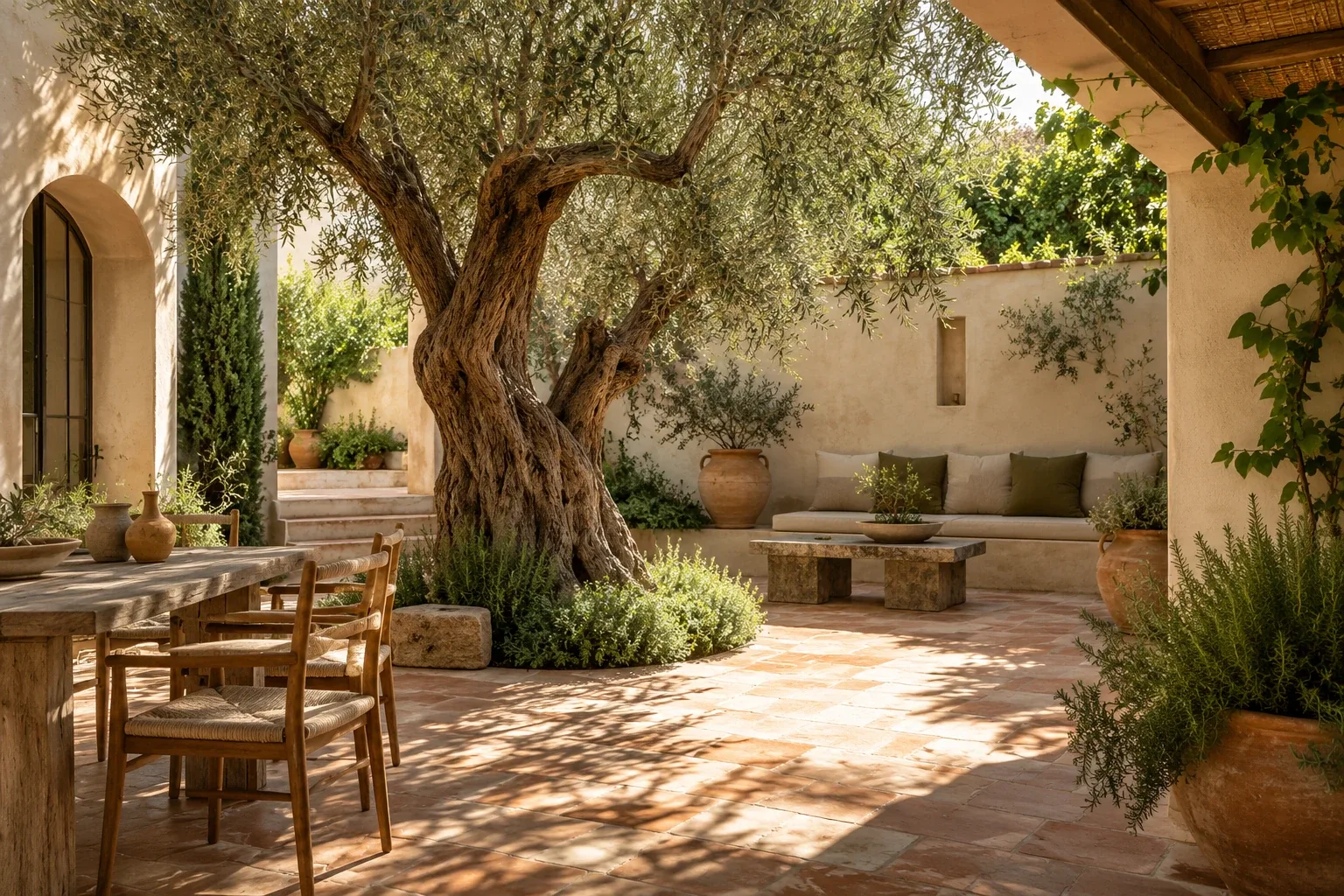
Keep records organized and secure, and retain information about where it came from. A conceptual image can communicate an intention, but it does not establish performance, authorization or a built result. Likewise, a household record does not prove authenticity or value and does not replace documents or assessments that the situation may require.
Technical limits and next steps
An inventory and a conversation can help prepare a decision, but they are not enough to assess stability, safety, material compatibility, building services, accessibility or regulatory requirements. This guide cannot establish whether an element should be repaired, replaced or left as it is. Those conclusions depend on the specific situation and, where relevant, on a professional assessment and applicable rules.
Before taking action, gather the information available and frame the question precisely: which element is a concern, what has been observed, what use is needed and which documents exist. If the place has a protected status or other regulatory designation, find out which requirements apply in that jurisdiction.
Worksheet: prepare a decision
This worksheet is an editorial proposal for organizing questions, not a diagnostic form. It can be completed in conversation with people who use or care for the space.
- Define the issue. Describe the element or area without jumping to a solution.
- Record what can be observed. Note apparent materials, features, location and measurements only if they have actually been taken. Identify available photographs and documents.
- Separate facts from hypotheses. Mark what is supported by a document, what is an observation and what remains an assumption.
- Ask who uses it and who cares for it. Record needs, maintenance tasks and expressed meanings; note differences in perspective.
- Describe the need. Explain which problem or change in use prompted the decision, and what would happen if you waited for more information.
- Compare the options. Consider preserving, adapting or seeking advice. For each option, note what would remain, what might change and what is still unknown.
- Identify limits and consultations. Note any questions about safety, structure, materials or regulations, and what information it would be useful to request from a suitably qualified person.
- Keep the record. Store the inventory and related documents safely. If an intervention takes place later, document what actually happened separately from the initial proposal.
The central question is not simply whether an element looks old or attractive. It is what is known about it, what it means to the people involved, how it contributes to the use of the space and what information is missing before a responsible decision can be made. Preservation is also a design decision when it means recognizing these relationships before making changes.
At a glance
Editorial series
Caring for What You Have
Documented gallery

Sources and references
Getty Conservation Institute · Values in Heritage Management, introduction ↗Document consulted on October 19, 2026 · 19/10/2026
Getty Conservation Institute · Buildings and Sites, Overview ↗Document consulted on October 19, 2026 · 19/10/2026
ICOM · Object ID ↗Document consulted on October 19, 2026 · 19/10/2026 International Council of Museums (ICOM), Object ID.