





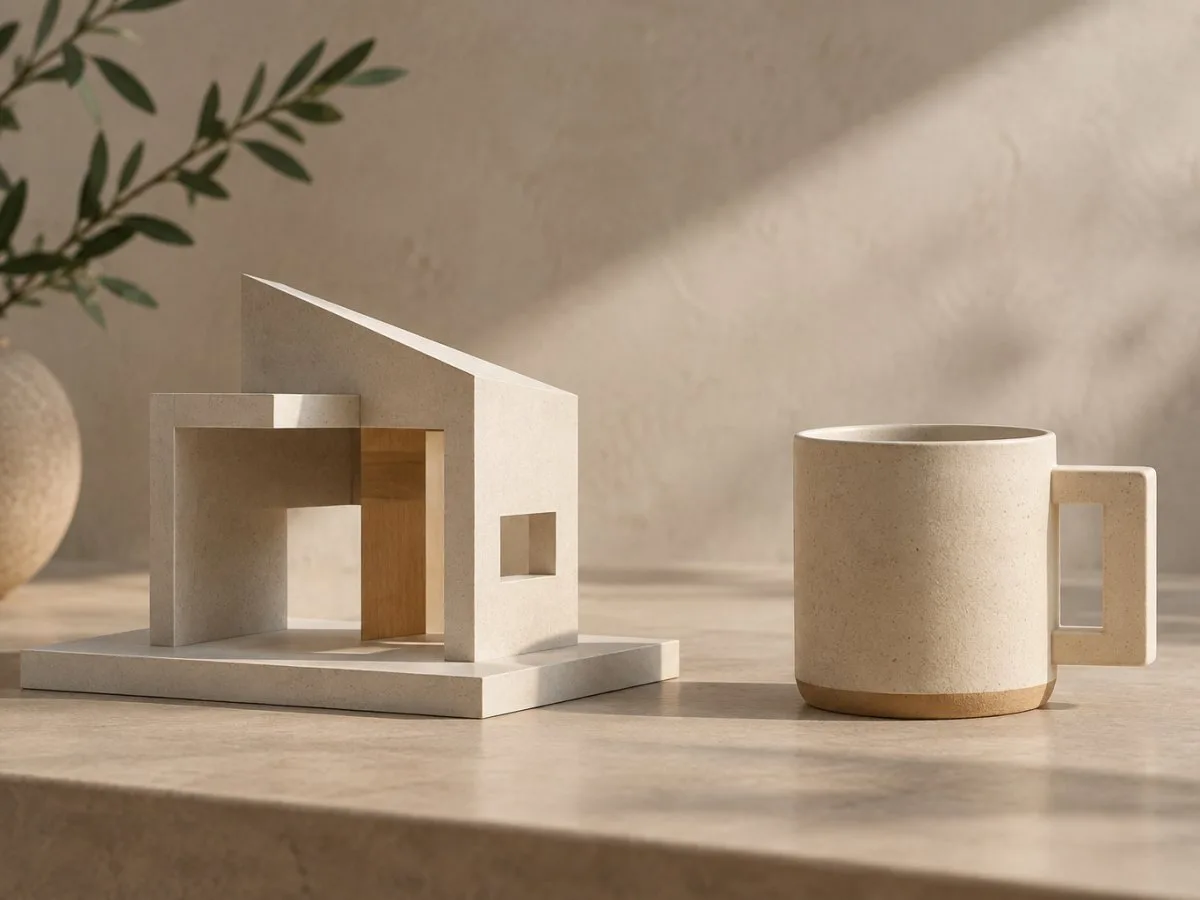
Design is not limited to the aesthetics of an object or the form of a building; it is the invisible structure that organizes everyday life. At the Museum of Modern Art in New York (MoMA), this understanding takes shape in the Department of Architecture and Design, the world’s first curatorial department devoted specifically to these disciplines. Established in 1932, the department has operated on a founding premise: architecture and design are allied and interdependent arts. This vision has made it possible to build a collection that does not separate the large scale of construction from the small scale of everyday objects, but examines them as parts of the same cultural ecosystem.
The premise of synthesis
The history of modern design is often told as a succession of styles or movements. MoMA’s collection, however, offers a different reading: one of synthesis. From its beginnings, the museum has recognized that the form of a chair, the typography of a poster, and the structure of a skyscraper share a common language of problem-solving. This interdependence underpins a collection of more than 28,000 works, documenting figures and movements from the mid-19th century to the present.
This breadth is not simply an archive but a tool for observation. By placing an architectural model alongside a household appliance or a piece of ceramics, the museum invites viewers to perceive continuities in the ways people design their surroundings. The collection begins with the reform ideology established by the Arts and Crafts movement, a crucial starting point that linked craft with industry and laid the groundwork for the modern movements of the 20th century.
The everyday object as a historical document
One of the most distinctive features of MoMA’s design collection is its inclusion of objects that are part of everyday life. The collection comprises thousands of pieces, ranging from appliances, furniture, and tableware to tools, textiles, and sports cars. It even includes a helicopter. This variety underscores that design is not a luxury but a functional necessity that permeates every aspect of existence.
Treating an everyday object, such as a chair or a cup, as worthy of museum preservation changes how we perceive our relationship with the things we use. These objects are not merely functional; they are documents of their time, reflecting the technologies available, social conditions, and aesthetic aspirations of their era. Studying them can help us understand how design has evolved in response to changes in production, consumption, and urban life.
Architecture documented: beyond the building
MoMA’s architecture collection is not limited to photographs of completed buildings. It documents buildings through models, drawings, and photographs, and includes the Mies van der Rohe Archive. This approach is essential to understanding the creative process behind architecture. Models and drawings make it possible to see ideas in development, the iterations, and the decisions that are not visible in the finished structure.
The Mies van der Rohe Archive is a notable example of this approach. By preserving the working documents of one of the 20th century’s most influential architects, the museum offers a window into the thinking of a creator who helped define modern aesthetics. This allows researchers and the general public to understand not only what was built, but how and why it was designed that way. In this context, architecture is presented as an intellectual and technical process, not merely a physical result.
Typography and graphic design
Graphic design occupies a central place in the collection, with notable examples of typography, posters, and other combinations of text and image. Typography, often considered a secondary element, is recognized here as a form of art and design that structures visual communication. The inclusion of digital typefaces, such as the 23 new faces acquired by the museum, demonstrates the collection’s capacity to adapt to new technologies.
The acquisition of typefaces such as Verdana, Gotham, and OCR-A illustrates how typography has become ubiquitous in digital life. These fonts are not just design tools; they are part of society’s visual infrastructure. By including them in the collection, MoMA recognizes that graphic design has moved beyond the printed page to become an essential component of the digital experience. In this sense, typography is the visual language mediating between users and information, a crucial aspect of modern design.
Design as a response to contemporary challenges
MoMA’s collection is not static; it evolves to reflect present-day challenges and innovations. One example of this dynamic is the acquisition of the @ symbol in 2010. Created by Ray Tomlinson in 1971, this work represents a turning point in digital communication. Its inclusion in the collection challenges traditional notions of what constitutes a museum object, expanding the field of design to encompass digital codes and internet addresses.
This acquisition underscores design’s capacity to adapt to new realities. The @ symbol is not a physical object in the traditional sense, but it is a design tool that has transformed how we interact with technology. By preserving it, the museum recognizes that contemporary design can take unexpected forms, from digital codes to sets of instructions transmitted by an artist. This broadens the definition of design to include the logic and structure of digital communication.
Curatorial process and the selection of works
The way MoMA selects works reveals a curatorial philosophy aimed at remaining at the forefront of innovation. Curators such as Paola Antonelli have described the collection as seeking to support emerging talent and ideas that will become part of tomorrow’s designed environment. This proactive approach allows the collection not only to document the past but also to anticipate the future.
Acquiring unconventional works, such as the @ symbol or digital typefaces, requires a reassessment of museum criteria. It raises questions about authorship, reproducibility, and the essence of the work of art. By addressing these challenges, the museum establishes new precedents for the preservation of digital design. This demonstrates that curating is an active process of interpretation, not just preservation.
Interdisciplinarity as a method
Collaboration among MoMA’s Architecture and Design, Exhibition Design, Graphics, and other teams is essential to projects such as Rising Currents. This project, which involved teams of architects in residence, addressed the challenge of rising sea levels in New York. The interaction among architects, engineers, and civic administrators shows how design can be a tool for solving complex social problems.
Interdisciplinarity is not just a curatorial strategy but a reality of contemporary design. Current challenges, such as climate change and digital transformation, require solutions that integrate knowledge from multiple fields. MoMA’s collection reflects this reality by including works that emerge from collaborations across disciplines, demonstrating that design is a field of synthesis par excellence.
Why the collection matters to viewers
For viewers, MoMA’s Architecture and Design collection offers a distinctive opportunity to reflect on the environment they inhabit. Seeing everyday objects presented in a museum context can help the public appreciate the intentionality behind the forms they use daily. This perspective transforms the experience of everyday life, revealing the layer of design that mediates between people and their surroundings.
The collection also serves as an educational resource, allowing students and design professionals to study the evolution of design practices. By accessing original documents, models, and objects, researchers can understand the techniques and ideas that have shaped modern design. This access to primary material is fundamental to educating new generations of designers.
Conclusion
MoMA’s Architecture and Design collection testifies to the importance of design in shaping society. By bringing architecture, object design, and graphic design into a single narrative, the museum offers a holistic view of how design shapes human experience. From 19th-century movements to 21st-century digital innovations, the collection shows that design is a dynamic force responding to technological, social, and cultural change. In an increasingly complex world, the ability to observe and understand design is an essential skill for navigating everyday surroundings.
At a glance
Scope
Editorial reading; this is neither a visit nor a technical evaluation.
Sources and references
Architecture and Design | MoMA ↗24/10/2026
MoMA | Tag: Department of Architecture and Design ↗24/10/2026