





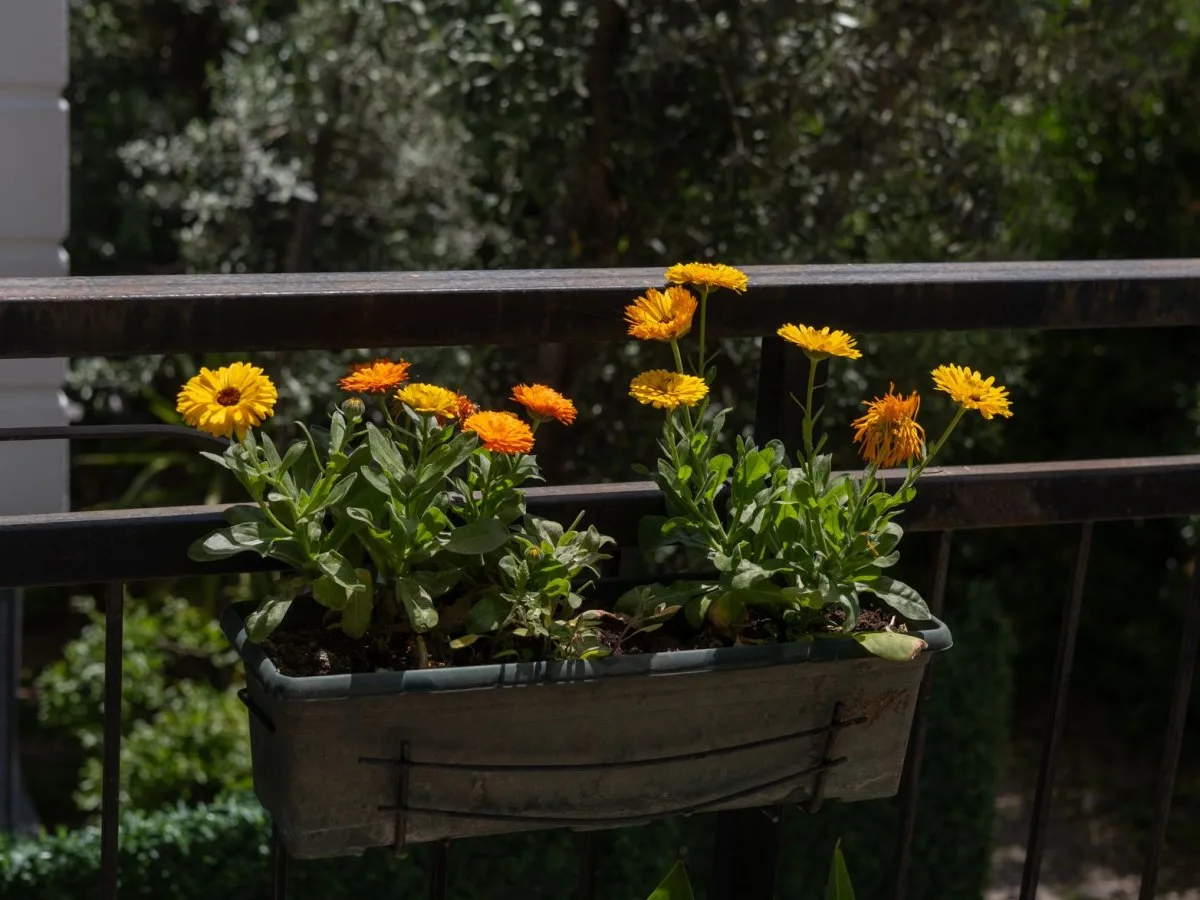
Designing outdoor spaces with containers goes beyond simply placing plants in pots; it is a practice in visual composition and microclimate management. In urban settings or patios, where available soil is limited or nonexistent, the container becomes the fundamental design unit. Creating a successful summer display requires a sound understanding of compositional structure, the physiological compatibility of species and the physical limitations of the container.
Compositional logic: Thriller, Filler and Spiller
The foundation of effective container design is assigning plants functional roles. This method, often summarised by the trio thriller, filler and spiller, arranges plant mass to create depth, movement and cohesion.
- The central element (Thriller): This acts as the focal point or visual anchor. Taller plants or those with an architectural structure define the arrangement’s vertical silhouette. Documented examples include Argyranthemum (marguerite) grown as a standard, Dahlia, Fuchsia, Lantana, Lavandula, Phormium and Salvia. In some designs, a structural shrub or annual climber grown on a small tripod can serve this role.
- The filler (Filler): These medium-height, bushy plants occupy the space between the centre and the edges, visually connecting them. They should be dense enough to conceal the growing medium and the bases of the central plants. Suitable species include Ageratum, Brachyscome iberidifolia, Diascia, Heliotropium, Osteospermum, Pelargonium, Verbena and Zinnia.
- The spiller (Spiller): Trailing or cascading plants spread over the container’s edges, softening the transition between pot and surroundings. This layer adds movement and lightness. Suggested choices include Calibrachoa (Million Bells), ivy-leaved Pelargonium, Lobelia erinus (Cascade Series), Petunia (Surfinia types) and trailing Verbena.
Cohesion and repetition
Repetition is essential for achieving a unified visual effect. For summer displays, planting at least three specimens of each species is recommended. Cohesion can also be achieved by repeating particular species in neighbouring containers and limiting the colour palette. Grouping pots around a shared colour theme creates a high-impact display, turning individual units into a coherent architectural ensemble.
Choosing plants by function and conditions
Plant selection should not be arbitrary: it should reflect each plant’s compositional role and the specific environmental conditions of the site. The table below groups documented plants by their design role and tolerance of climatic conditions.
| Functional category | Documented species | Design notes |
|---|---|---|
| Focal point (structure) | Argyranthemum, Dahlia, Fuchsia, Lantana, Lavandula, Phormium, Salvia | Define height and silhouette. |
| Filler (volume) | Ageratum, Brachyscome, Diascia, Heliotropium, Osteospermum, Pelargonium, Verbena, Zinnia | Fill the middle space. |
| Spiller (movement) | Calibrachoa, Lobelia erinus, Petunia (Surfinia), Verbena (trailing), Pelargonium (ivy-leaved) | Soften edges and add movement. |
| Light shade | Begonia, Glechoma hederacea 'Variegata', Impatiens walleriana, Lysimachia nummularia 'Aurea', Mimulus (Magic Series), Solenostemon scutellaroides, Chaenostoma cordatum 'Snowflake', Torenia | For patios with little direct sun. |
| Drought tolerance | Aeonium 'Zwartkop', Echeveria, Mesembryanthemum, Sedum | Options when daily watering is not possible. |
| Foliage (texture) | Coleus, Dichondra 'Silver Falls', Helichrysum petiolare, Senecio | Add visual interest without flowers. |
| Scented | Heliotropium, Lobularia maritima, Matthiola, Nemesia, Nicotiana | Add a sensory dimension. |
| Tropical style | Begonia (tuberous), Bidens, Canna, Coleus, Gazania, Lantana, Tagetes | For a lush, warm look. |
| Cool and calm style | Lobularia maritima, Lavandula stoechas/dentata, Lobelia, Argyranthemum | Soft palettes and clean lines. |
These plants are generally available in garden centres from late March. However, outdoor planting should wait until the risk of frost has passed in the local area.
Structural considerations for containers
A container is not merely a vessel: it actively affects plant health and the appearance of the arrangement. Material and shape have direct implications for maintenance and the display’s longevity.
Materials and their properties
- Terracotta/clay: Attractive, but porous. It dries out faster than other materials and is prone to cracking in winter. Choose frost-proof options rather than pots described only as frost-resistant.
- Plastic: Lighter and better at retaining moisture. Available in a wide range of shapes and finishes. It can degrade with prolonged exposure to sunlight.
- Metal: Durable and frost-proof, and can create a modern or traditional look (lead). Disadvantages: it heats up quickly in summer and becomes very cold in winter; it can corrode.
- Wood: Barrels, crates and wine boxes are sustainable, economical options. Wood rots over time, but its lifespan can be extended by lining it with an old compost bag and punching holes in the base, or by painting it with wood preservative.
- Recycled materials: Zinc baths, sinks, metal buckets and other items can be reused. Drainage holes must be made in the base.
Geometry and stability
- Size: Large containers, with a greater volume of growing medium, dry out more slowly and need less maintenance. Generally, having fewer large containers is more attractive and practical than having many small ones.
- Depth: Shallow containers dry out quickly and are suited to small, drought-tolerant plants and alpines.
- Stability: Tall, narrow containers are prone to tipping over, especially when planted with tall plants. Adding a layer of bricks or stones at the base can help stabilise them; place them in sheltered spots.
- Urn shape: Avoid urn-shaped containers for long-term planting. Because they are wider in the middle than at the opening, it is difficult to remove the rootball during repotting, which can damage the plant.
Managing growing medium and water
The container environment is inherently more restrictive than garden soil. Roots have limited access to water and nutrients and are more exposed to temperature fluctuations.
Types of growing medium
Garden compost, which improves soil, should not be confused with potting compost. Commercial growing media, ideally peat-free, are used for containers.
- Multipurpose compost: Suitable for short-term plantings, such as summer displays and vegetables.
- Soil-based compost (e.g. John Innes No. 3): Better suited to long-term plantings because it offers greater structural stability and nutrient retention.
- Ericaceous compost: Specifically for plants that prefer acidic soil, such as azaleas, rhododendrons and blueberries.
Watering dynamics
Watering is the critical variable in container maintenance.
- Summer: Evaporation is high. Small containers in full sun may need watering up to twice a day. Trays or saucers beneath pots can catch excess water, but pots should not be left standing in it.
- Winter: The main risk is waterlogging. Excess water displaces air from the growing medium and can suffocate roots, causing them to rot. Keep drainage holes clear and raise pots on bricks or pot feet so they do not sit in standing water.
- Plant selection: If daily watering is not possible, include drought-tolerant plants such as succulents (Echeveria, Sedum and Aeonium), which need less watering.
Design strategies for different settings
Container design makes it possible to adapt planting to space constraints, exposure and the desired level of maintenance.
Lightly shaded spaces
Not every patio receives direct sun. In these areas, choose plants that tolerate partial shade, such as begonias and tobacco plants (Nicotiana), which maintain visual interest in lower light.
Low-maintenance displays
Succulents offer an attractive alternative for those who want colour without the demands of constant watering. Echeveria and Sedum can create effective summer containers with minimal intervention. Drought-tolerant Mediterranean herbs are also well suited to pots, especially in a warming climate.
Hanging baskets as an extension of the design
Hanging baskets add a vertical dimension to a design. Like ground-level containers, they follow the thriller, filler and spiller approach, but with a greater emphasis on spillers to cover the sides. Preparation requires a liner, such as moss or fibrous material, to retain the growing medium. Watering is more critical in hanging baskets: check them daily in summer and use their weight as a simple way to tell whether they need water.
Conclusion
Summer container design brings together botany, architecture and resource management. The key is not the number of plants, but the coherence of the composition, the suitability of each species for the container’s conditions and anticipating watering needs. A well-designed display does more than beautify a space: it becomes a manageable, resource-conscious system that can provide colour and structure throughout the summer season.
At a glance
Scope
Editorial reading; it does not constitute a site visit or a technical assessment.
Sources and references
Containers: Summer Planting Ideas | RHS Advice ↗20/10/2026
Growing plants in containers: Expert Guide | RHS Advice ↗20/10/2026