





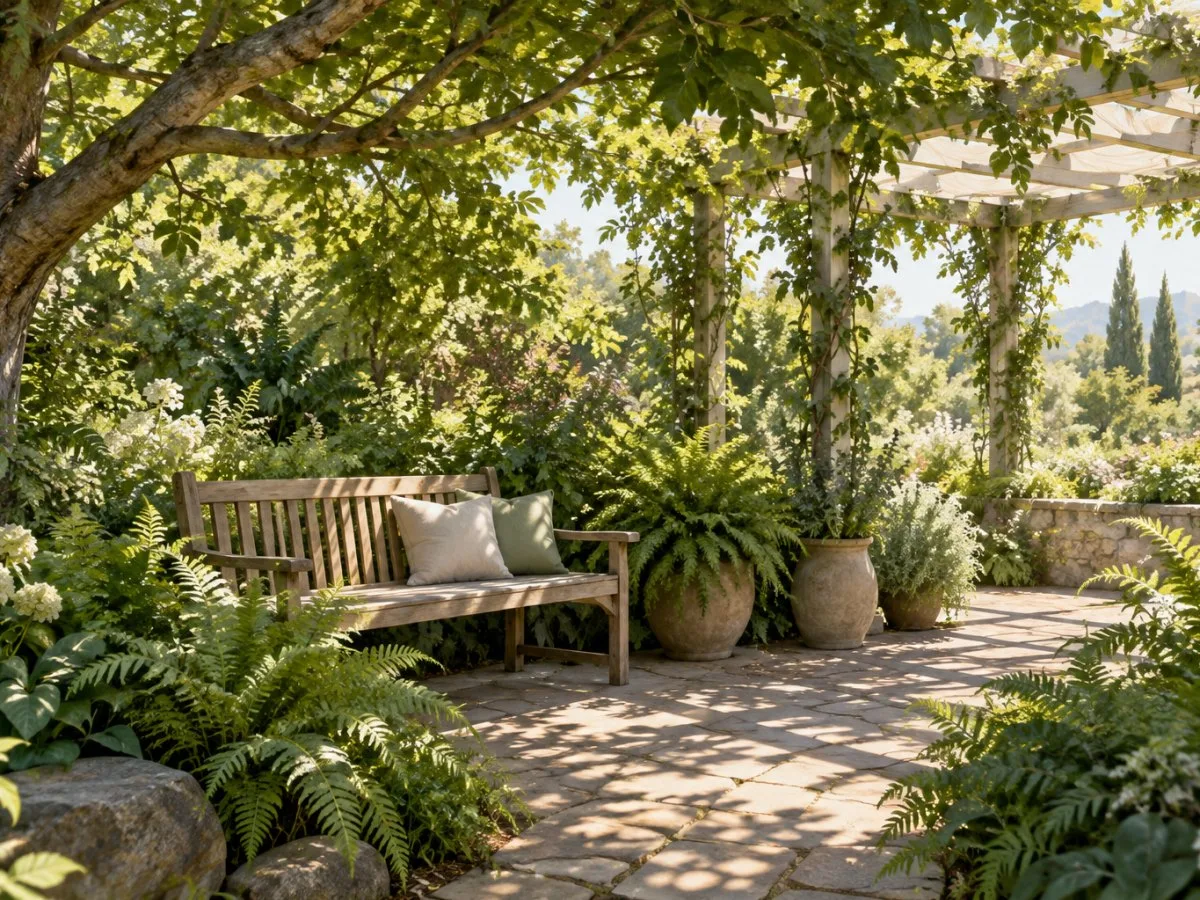
Design around the light you already have
Shade is not a single condition: it can be light, dappled through leaves or dense, and it can change throughout the day. Before deciding where to sit or what to plant, observe how the sun moves and what casts the shade—a building, a structure or a tree canopy. Midday sunlight is more intense than morning or afternoon light, so a place that seems bright for a few hours may offer different conditions at the sunniest time of day.
The soil matters too. A wall can cast shade without competing for water, while a tree’s roots can make the ground beneath its canopy drier. So two corners with a similar amount of light do not necessarily offer the same growing conditions.
Canopies that provide shade and structure
Trees provide changing shade, allowing light to filter through their branches. Multi-stemmed specimens can work in small spaces; a row of small trees can follow a path, and a group arranged around a seat can define a place to rest. Placement matters: observing where the shade falls during the hottest hours helps you assess a location before planting.
A canopy also creates a backdrop for other plants and adds interest to the garden throughout the year. Under dappled shade, a combination of heights, textures and foliage can add depth. For example, in a border with partial shade, shrubs and perennials can be combined with ferns and ground-cover plants. Spring flowers bring colour, while ground cover helps protect the soil.
Mature trees require particular care if drastic pruning is being considered: it is prudent to seek professional advice before making that decision. Crown lifting can open up space for planting or a bench, but any intervention should take account of the existing tree and the shade it provides.
Pergolas, screens and sails
A pergola can become the visual focus of a seating area. It can be adapted to awkward corners and built from wood or metal; a bespoke wooden structure can be tailored to a particular space. Climbing plants can soften its appearance, but the choice should suit the light and conditions on site: not all climbers are well suited to shade.
Willow or bamboo screens suspended between posts offer another way to create shade and add a handcrafted texture. Shade sails introduce a lighter form and a surface of colour. Their appearance can complement the garden’s palette, but it is important to fasten them securely and take them down if strong winds are forecast, to reduce the risk of damage.
A shaded structure need not stand alone. It can frame a bench, follow a path or create a transition between the house and a planted area. The relationship between the shade, the route through the garden and the place where people want to spend time is part of the design.
Plant according to the degree of shade
Choosing plants suited to the site avoids asking them to grow in conditions that do not favour them. Dense shade, especially when combined with dry, poor soil, greatly limits the options. By contrast, many areas of partial or dappled shade can support a varied planting scheme if suitable plants are combined and given attention as they establish.
A border can be arranged in layers: taller shrubs at the back, shorter plants in front, and ferns or ground-cover plants to cover the soil. Leaves of different shapes and tones maintain interest even when there are no flowers. For spring colour, early-flowering plants can be added, taking account of the available space and type of shade.
Organic mulch, such as well-rotted compost, can help improve soil structure and retain surface moisture while plants establish. New plantings in shade may need monitoring and watering during their first seasons, and their needs vary with the ground, nearby roots and climate.
Shade designed for everyday use
A cool corner can come from an existing canopy, a pergola or a screen, but each solution creates a different experience of light, privacy and connection with plants. Observing the site first helps determine whether it needs to be covered completely, protected from direct sun or simply make use of dappled shade.
The aim is not to add shade for its own sake, but to make outdoor spaces work better: a pause beside a path, a seat beneath trees or a border that makes use of a less sunny area. When built and natural shade are considered alongside the soil and plants, the garden gains areas with a character of their own.
At a glance
Scope
Editorial reading; this is not a site visit or technical assessment.
Sources and references
How to create shade in your garden ↗26/10/2026
Shade Gardening Tips and Plant Ideas | RHS Advice ↗26/10/2026