





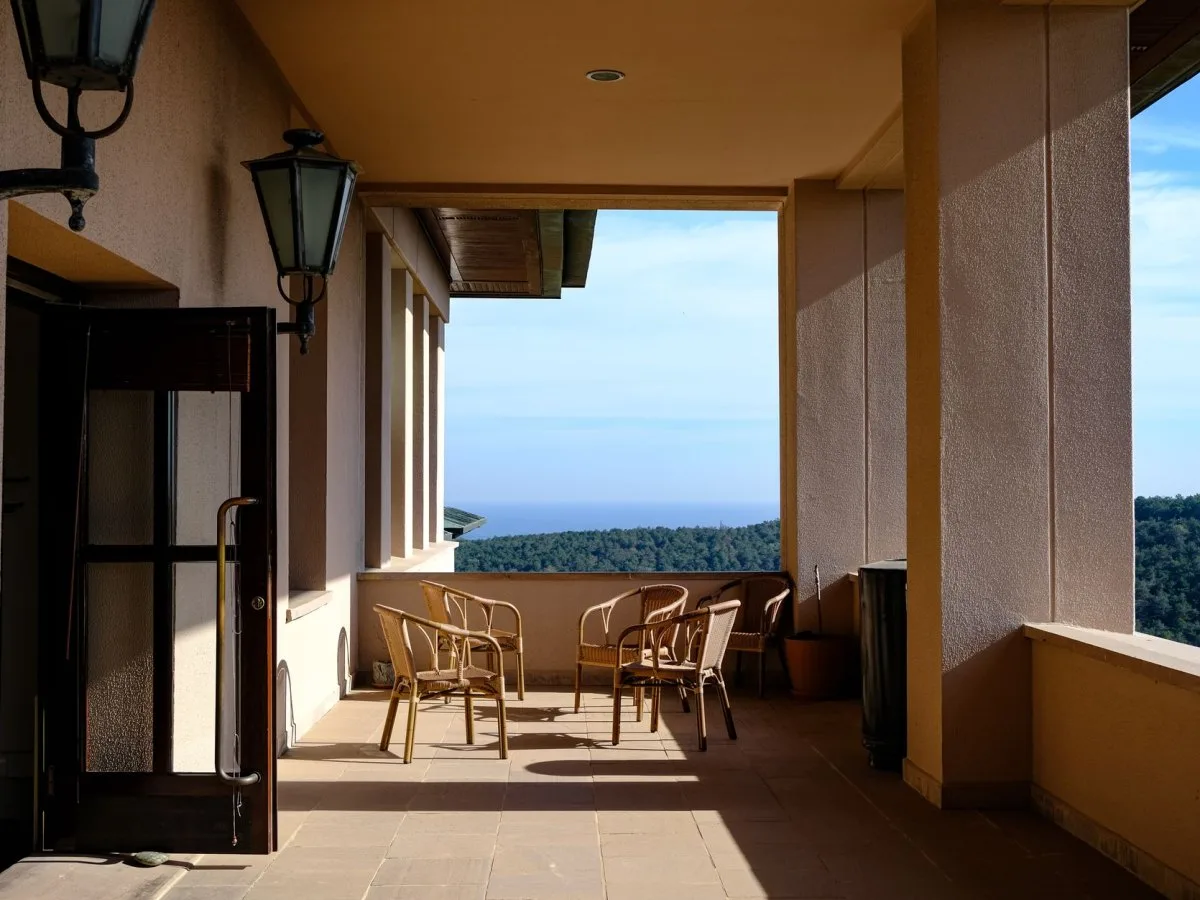
From garden to everyday living space
A balcony or terrace can be seen as part of the home, rather than a space used only when the weather is fine. This makes it possible to choose furniture for the role it plays in daily life—somewhere to sit, a surface to set things down, a place to gather—rather than solely for a conventional garden-furniture look.
Vitra’s outdoor range brings together chairs, tables and side tables based on some of its designs. In practice, however, the distinction is not simply between indoor and outdoor furniture: each piece and material responds differently to sun, moisture, frost and snow. The brand’s guidance makes outdoor use conditional on following care instructions and describes it as temporary or seasonal for some products.
One arrangement, several functions
In a small space, a chair and side table may be enough to create a spot to pause; on a larger terrace, several seats and surfaces can give shape to different activities. This is one possible way to arrange the space, not a layout prescribed by the product information: suitable dimensions and quantities depend on the space, which the documentation does not specify.
The Metal Side Tables Outdoor, designed by Ronan and Erwan Bouroullec, combine a thin tabletop with a pedestal base. They are made from formed and welded sheet steel, galvanised and finished with a textured powder coating. The outdoor version has a matt finish and a colour selection different from the glossy indoor versions. Visually, the contrast between the slender top and solid base can give the table presence without making it the focal point of the arrangement.
The Soft Seats Outdoor offer another way to adapt an unupholstered chair: they are individual seat cushions in three shapes, designed for different models. The product description specifies a two-centimetre-thick, water-permeable polyurethane foam filling and a quick-drying outdoor fabric cover resistant to light, water and mould. The covers are removable and washable at 30°C. Even so, outdoor use is described as temporary or seasonal; after prolonged exposure to the elements, the cushions should be cleaned and stored in a cool, dry place.
These examples suggest composing a space in layers: main pieces establish how it will be used, while accessories add comfort. They do not imply that all furniture in a collection can be used interchangeably indoors and outdoors, or that every piece has the same maintenance requirements.
Exposure is part of the design
Sun and water are not incidental conditions: they affect how materials retain their appearance. General guidance for outdoor furniture warns that prolonged exposure to sunlight can make plastic brittle and dull, and that its colour may change over time, despite the additives used to reduce fading from UV radiation.
Moisture also needs attention. Avoid allowing water to collect on furniture and dry it after rain or snow. Spilled liquids and sunscreen may stain a surface if left on it in direct sunlight. A combination of moisture and heat can damage finishes; even objects that absorb moisture, such as a flowerpot left on a table for a long time, can leave marks. When covering furniture, the guidance recommends breathable materials to reduce condensation.
The product information for the Metal Side Tables Outdoor identifies galvanised steel with a powder coating. This describes the material and finish, but does not amount to a guarantee of unlimited resistance to every kind of weather: the manufacturer specifies temporary or seasonal outdoor use and recommends cleaning the table and storing it in a cool, sheltered place after prolonged exposure.
Storage is part of use, too
How furniture is stored affects its service life. For winter, general guidance recommends cleaning it thoroughly, removing dust, dirt or corrosion, and storing it in a dry, cool place protected from impacts and the elements, with good ventilation. Plastic furniture should be protected from frost, which can cause fine cracks on the surface.
The Soft Seats Outdoor product information says to clean and store the cushions in a cool, dry place after prolonged exposure. The side-table information also recommends cleaning and sheltered storage. Thus, “outdoor” describes intended use under certain conditions, not necessarily permanent installation outside.
Some circumstances call for particular attention. Bird droppings can be corrosive and cause rust or permanent stains, so they should be removed promptly. In areas near the sea, salt in the air can damage steel and aluminium components. The documentation does not provide a specific protocol for every coastal setting or product; for a particular situation, consult the care instructions for that item.
A simple way to assess the space
Before choosing furniture, it can be useful to observe the terrace at different times of day and ask:
- What activities should it accommodate? A quiet moment alone, meals or an extra surface.
- What will be exposed? Direct sunlight, rain, snow, persistent moisture or salty air.
- Which pieces can be stored? Cool, dry and well-ventilated storage is part of the care guidance.
- Which instructions apply to each item? Requirements are not identical for a plastic chair, a metal table or a cushion.
The idea of continuity between indoors and outdoors works best when paired with a realistic understanding of the climate and maintenance. A terrace can feel like another room in the home, but it remains a more exposed environment. Keeping that difference in mind makes it possible to consider both the furniture’s form and the routines needed to preserve it.
At a glance
Scope
Editorial reading; this does not constitute a visit or technical assessment.
Sources and references
Outdoor | Official Vitra® Website UN ↗28/10/2026
Soft Seats Outdoor | Official Vitra® Online Shop ES ↗28/10/2026
Metal Side Tables Outdoor | Official Vitra® Online Shop ES ↗28/10/2026