When facing an architectural image, the natural impulse is to fill in the gaps. We see a facade and immediately imagine the interior temperature, the quality of light in the living room, or the texture of materials hidden behind the glass. However, for a rigorous reading, it is fundamental to distinguish between what the photograph documents, what we can visually infer, and what remains in the realm of hypothesis. This article proposes a method to observe the framing, separate facts from assumptions, and note questions that require additional sources.
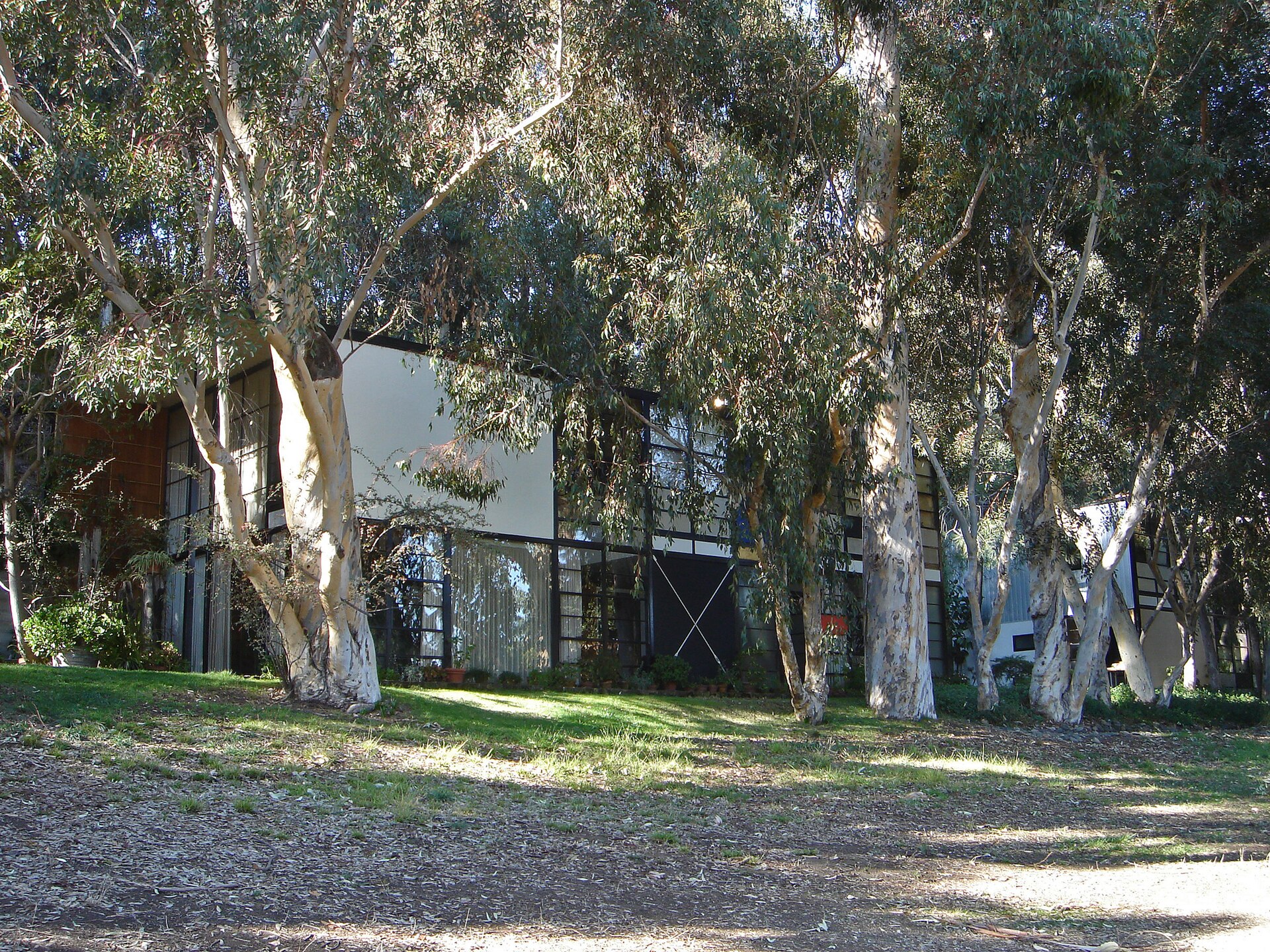
Take, for example, the exterior photograph of the Eames House, documented on Wikimedia Commons. The image, attributed to Flickr user Ilpo’s Sojourn and published under a CC BY 2.0 license, shows the building's facade situated behind a line of trees. This reference allows us to analyze the composition: the relationship between the architectural structure and the surrounding vegetation, the perspective chosen by the photographer, and how the building is inserted into the landscape. These are observable data. The image confirms the presence of the structure and its immediate context, but it offers no information about the interior, the exact dimensions of the spaces, or the technical specifications of the materials.
Here lies the trap of inference. Seeing the trees, we might suppose that the building enjoys constant shade, which would imply specific thermal comfort. Seeing the steel and glass structure, we might deduce that transparency is total, ignoring possible curtains, blinds, or acoustic treatments that are not visible from this angle. These are hypotheses, not facts. A critical reading requires stopping at the limit of the visible. The photograph is evidence of provenance and composition, not a certificate of performance or a guide to user experience.
To apply this method, the reader can follow a three-step exercise. First, describe only what is seen: elements, colors, positions, and spatial relationships. Second, identify the questions arising from that observation: What is behind the trees? How does light behave inside? What materials are used in the joints? Third, seek answers in documentary sources, plans, or in situ visits, without assuming that the image contains them.
This approach does not seek to strip the photograph of its aesthetic or narrative value, but to protect the integrity of the analysis. By recognizing that an image does not prove measurements, performance, or the experience of inhabiting, we avoid building narratives based on assumptions. Architecture is better understood when we accept the limits of visual evidence and open ourselves to complementary research. Reading without completing what is not shown is, ultimately, an act of respect toward the complexity of the object and the precision of language.
At a glance
Scope
Method for reading photographs; not a diagnosis or a visit to the building.
Documented gallery
Sources and references
Wikimedia Commons · Eames House · Ilpo’s Sojourn ↗ · 17/10/2026
Charles & Ray Eames Foundation · History & Legacy ↗ · 17/10/2026